This wraps up my 2025 reading. I’m publishing a little earlier than usual because I’ll be on vacation in early December.
I read fewer books this year than in prior years: 8 non‑fiction in total (vs. 9 last year). The mix ranged from memoir and adventure to software and culture. Here’s the full list:
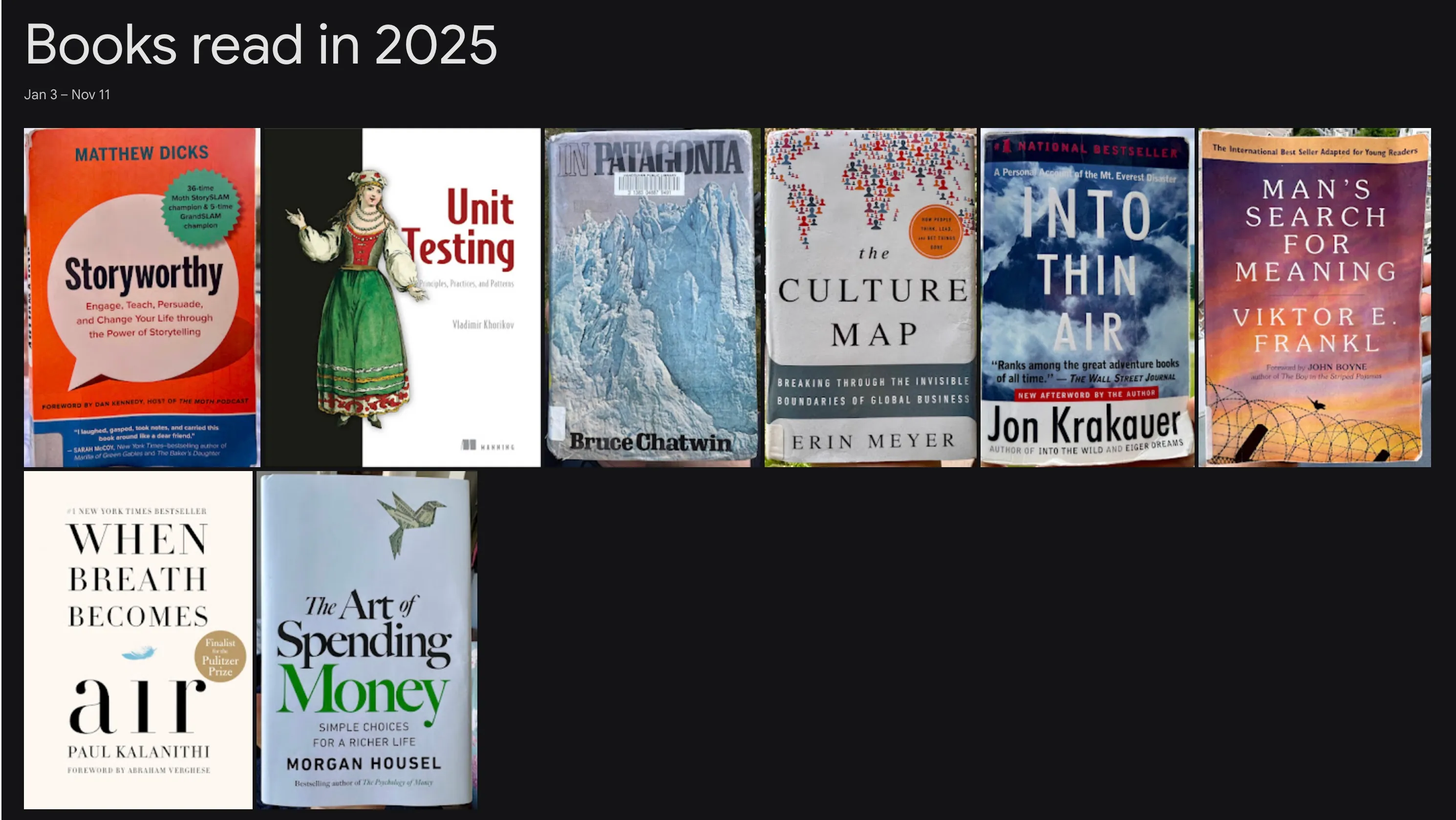
All the books read in 2025
- Storyworthy - Matthew Dicks
- Unit Testing: Principles, Practices, and Patterns - Vladimir Khorikov
- In Patagonia - Bruce Chatwin
- The Culture Map - Erin Meyer
- Into Thin Air - Jon Krakauer
- Man’s Search for Meaning - Viktor E. Frankl
- When Breath Becomes Air - Paul Kalanithi
- The Art of Spending Money - Morgan Housel
I also stopped forcing myself to finish books that weren’t working, something I struggled with before. I abandoned two this year early on; that freed more time for the ones below to actually sink in.
My top 2 favorite books of 2025
With a smaller list, choosing two keeps the recommendations focused.
2. The Culture Map
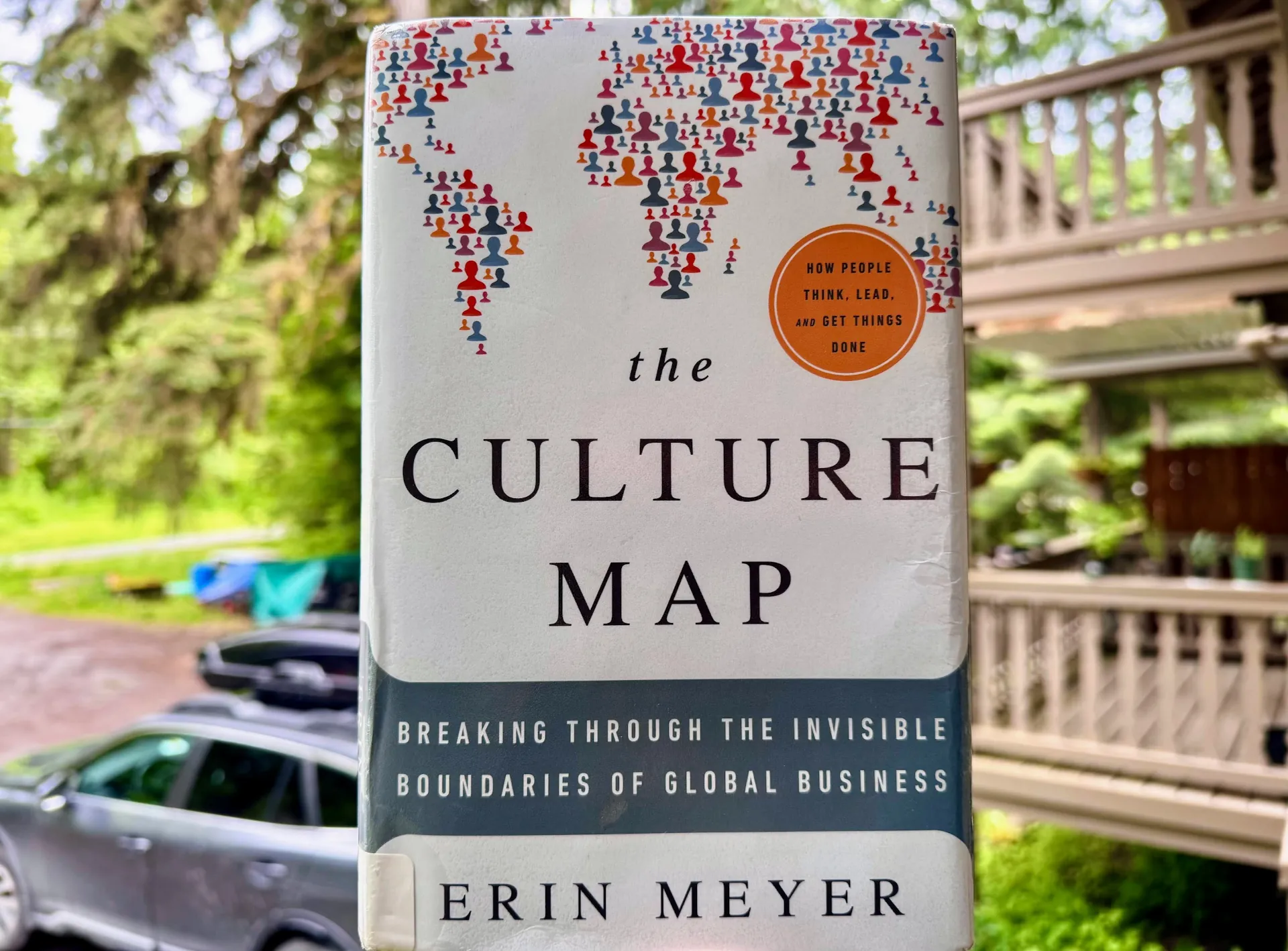
The Culture Map: Breaking Through the Invisible Boundaries of Global Business
I work in a multicultural team in Canada. This book helped me name patterns I’d sensed but couldn’t articulate: why some feedback feels blunt to one person and vague to another; why meetings derail over indirect phrasing.
A big shift was being more explicit by default. In mixed teams, low‑context communication isn’t oversimplifying; it’s leveling the field.
“In multicultural teams, reducing contextual dependence and increasing clarity is not dumbing things down; it’s an act of generosity that ensures everyone is truly on the same page.”
One small change I made: rewriting a fuzzy status update into three clear bullets with owners and dates. It cut follow‑up questions almost entirely. Earlier this year I’d had a thread spiral into misinterpretations because I assumed shared context. This book gave me a vocabulary for avoiding that.
Longer notes: Learnings from The Culture Map.
1. Storyworthy
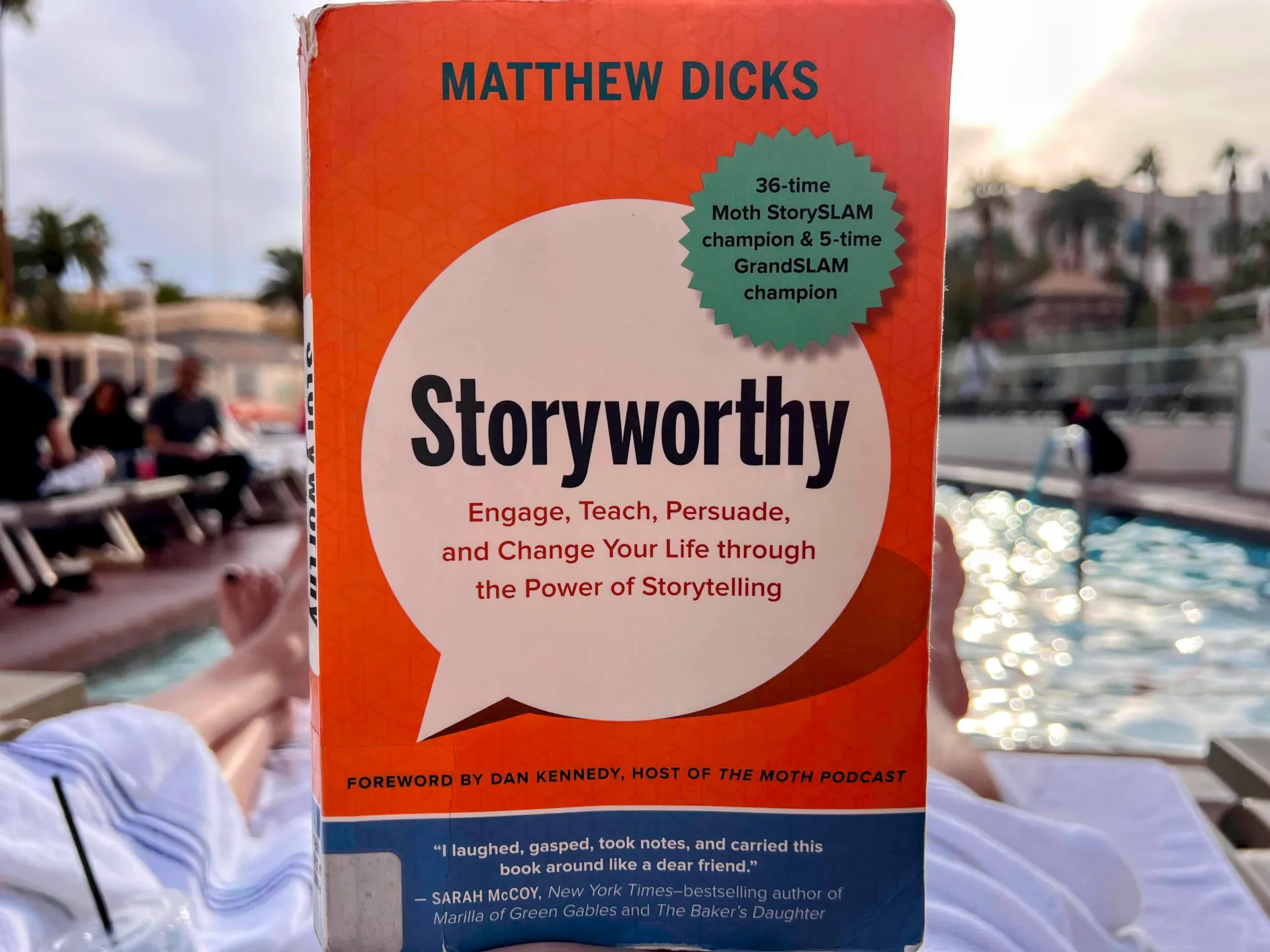
Storyworthy: Engage, Teach, Persuade, and Change Your Life through the Power of Storytelling
I’ve never felt naturally good at telling stories. This book gave me a workable system rather than vague advice: capture one small moment per day and revisit it later.
“Homework for Life will change your life. It teaches you to see the stories you are living every day and capture them before they disappear.”
I started my Homework for Life list in May. Sitting at the end of the day and forcing one line—sometimes boring, sometimes sharp—made ordinary weeks feel less like a blur. A quick note about a teammate jumping in to unblock a deployment later became a short anecdote at a retro—and people leaned in more than when I share metrics.
Including a location when I tell a story (“standing beside the whiteboard, marker uncapped”) helps people picture it. Negative description (“It wasn’t the urgent outage kind of tension, just the quiet, nobody-moving kind”) also seems to land better. I’ve noticed adding one sensory detail (sound of the marker cap, glare on a screen) anchors it without overdoing it.
Longer notes: Learnings from Storyworthy.
Conclusion
Fewer books, but plenty of carryover. The Culture Map gave me language to adjust how I communicate across cultures. Storyworthy nudged me to notice and keep small moments before they vanish. If cross‑cultural collaboration or clearer storytelling matter to you, both are worth your time.
A quieter change: I’m more comfortable quitting a book early and more deliberate about recording small, easily forgotten moments. That combination made the year feel lighter and still meaningful.