We Brazilians love our barbecues, especially people in the south. One of the most iconic versions is costela fogo de chão, which is best described as open-fire roasted beef ribs, or slow-roasted beef ribs. It is a famous and delicious Brazilian barbecue tradition. Even though it is well known, it is not something people make all the time. It needs space, patience, and about six hours of roasting. I have done many regular BBQs, but this was only my second time making this one.
What makes it special is not just the final result, but the whole experience around it. While the meat cooks slowly, people sit around the fire, talk, drink some beers, and enjoy the day together.
Despite being well known, it is not something people make all the time because it requires work, space, and patience. I have done many regular BBQs, but this was only my second time making this one.
It is not especially difficult, but it does take quite a bit of preparation. That said, it is a fun and rewarding thing to do because you get not only the final result, but also the whole experience of spending time with other people while the meat cooks.
After three years without visiting Brazil, and in need of a very good barbecue, I was really looking forward to making one of these again. During that same trip, we also spent New Year’s Eve in Rio de Janeiro, but this was one of the quieter highlights of being back home. Another reason is that it is a great family activity. Since you need to take care of the ribs for many hours, it gives everyone time to sit around the fire, drink some beers, talk, and enjoy being together.
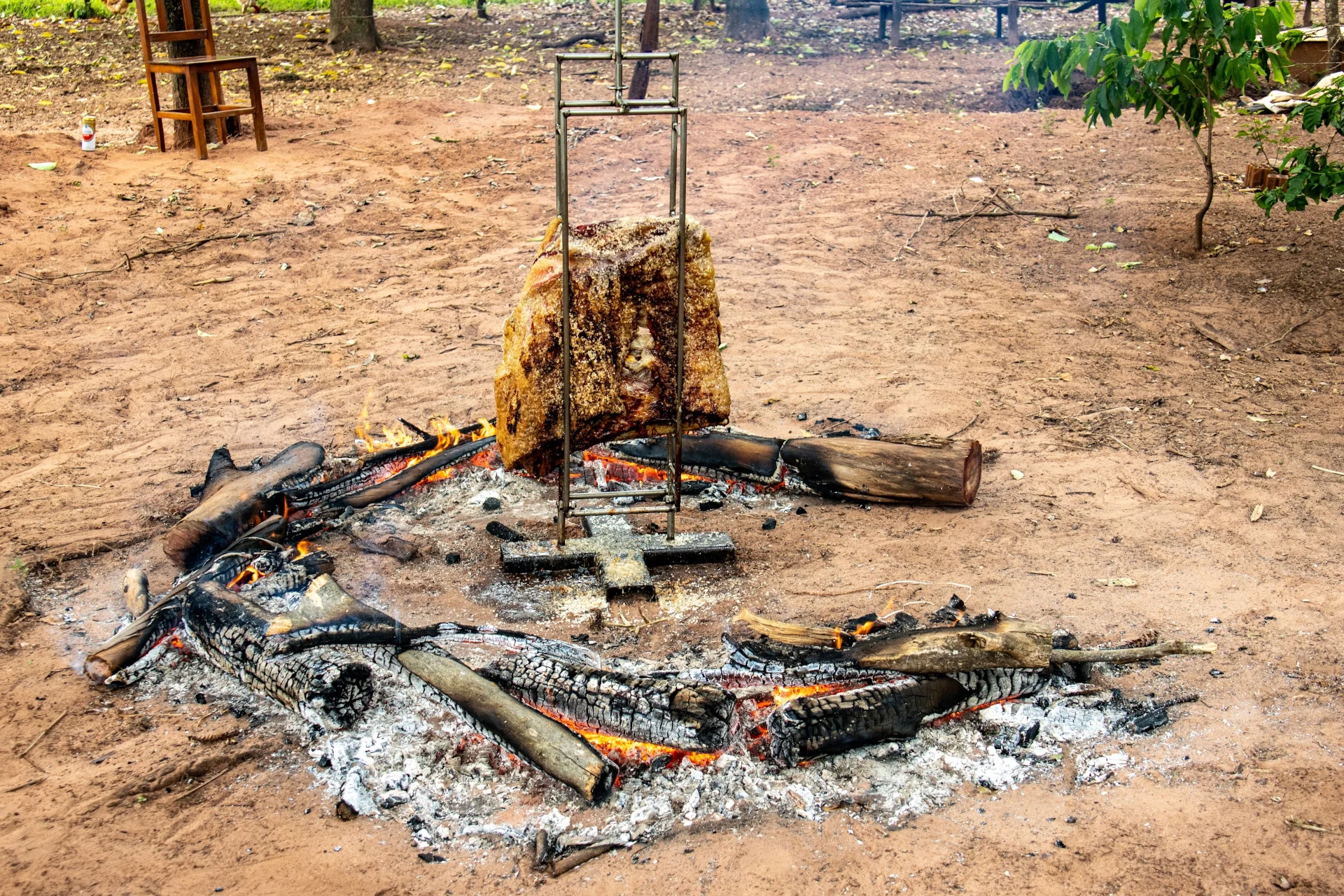
The full rack roasting slowly over the fire
During my visit to Brazil, I suggested to my brothers that we should make it, and they were immediately in.
The process itself is not very complicated, but it does take time. First, you need a full rack of beef ribs like this one. Ours weighed 13 kilograms. In Brazil, it is not exactly easy to find, but it is also not too hard. A good butcher can usually help you get one.
The other difficult part is finding the proper metal support for the ribs. You cannot use a simple skewer because the meat can slide down as it cooks. Thankfully, my father had a friend who owned one, so we were able to borrow it.
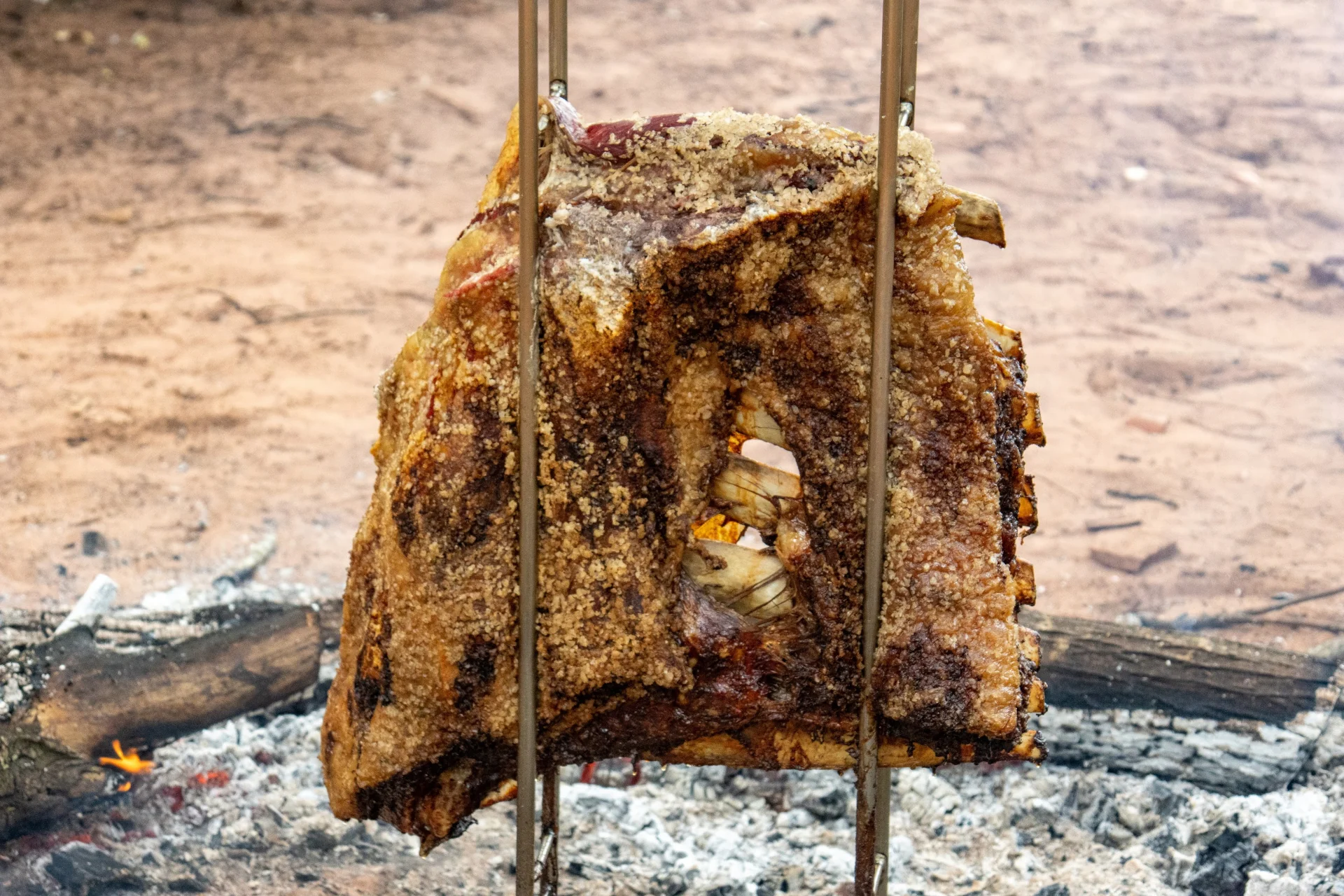
A closer look at the ribs on the metal support
The seasoning is very simple because we usually want to taste the meat itself, not cover it with too many flavors. We used only coarse salt. First, we poured cachaça over the ribs so the salt would stick better. After that, we added the salt, placed the ribs beside the fire, and kept them there for about six hours.
The fire should not be so strong that it touches the meat directly. It needs to stay at a medium-low level, hot enough to cook the ribs slowly without burning them. This is a low and slow kind of barbecue.
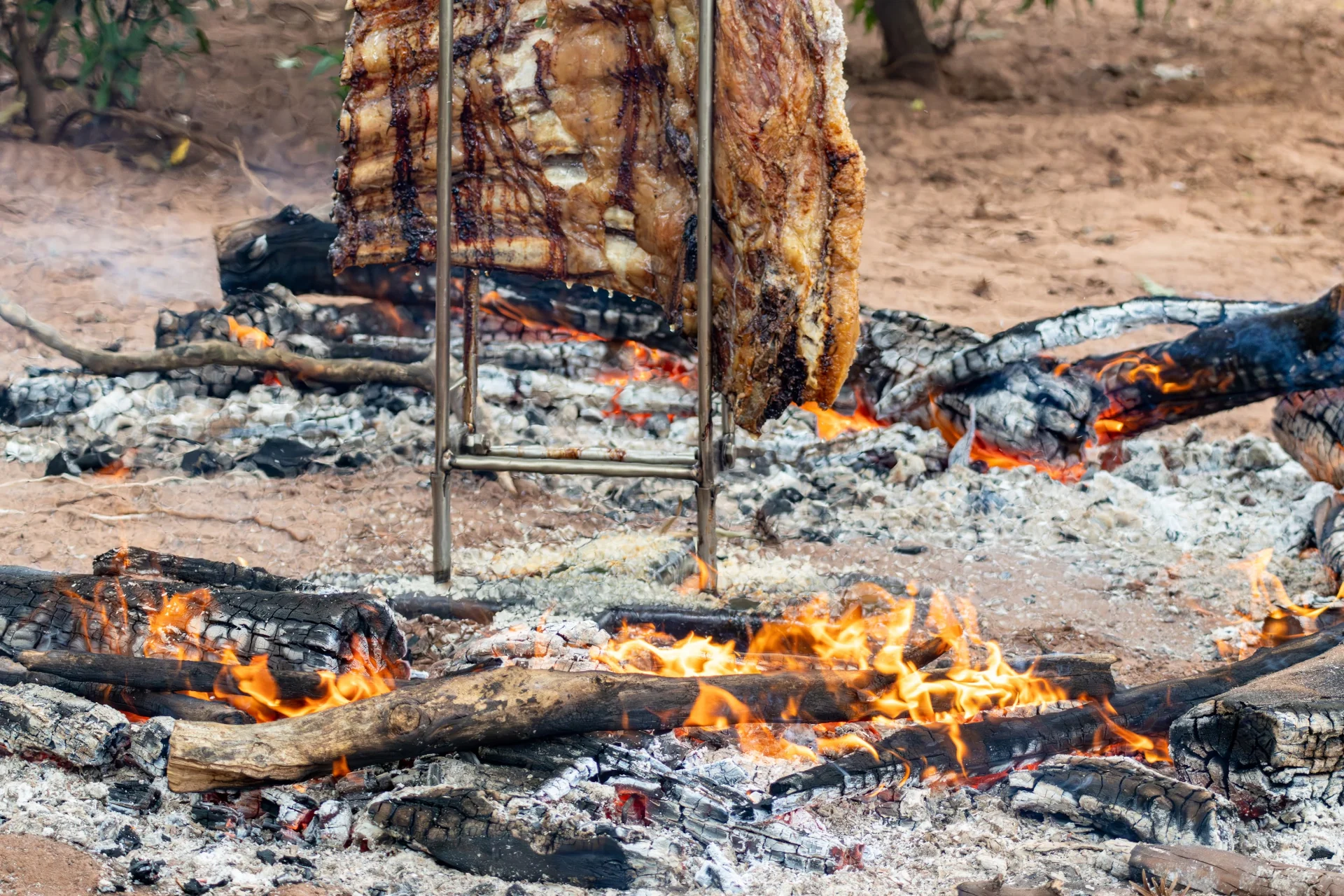
The ribs cooking low and slow beside the fire
After that, the job is mostly to keep feeding the fire with logs and watching the progress. Over time, the meat starts to open up and the bones begin to loosen. Another useful tip is to add more fire if there is wind coming from behind the ribs, because the heat helps warm the bones, and the bones also help cook the meat from the inside.
This is one of the most famous barbecue traditions in Brazil, and it was great to do it again. It took six hours, and the result was delicious. More than that, it was a great excuse to spend time with family around the fire. We had deep conversations, and that is part of what makes it so special.
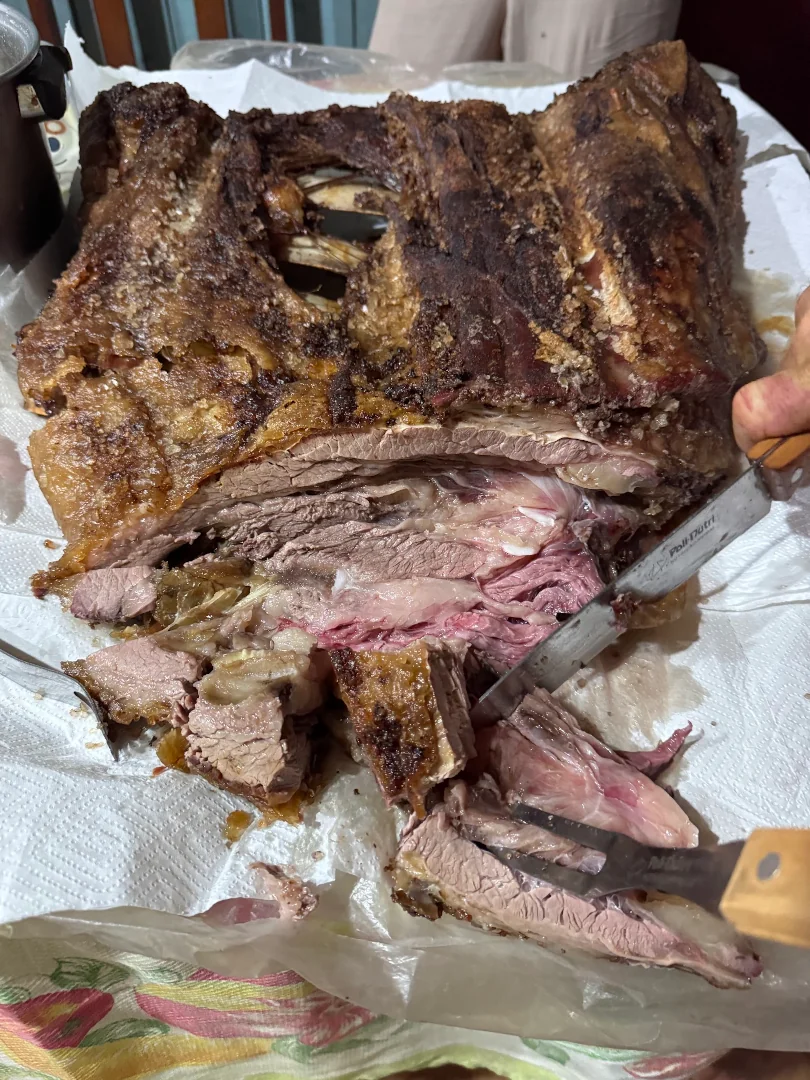
The final result, ready to eat after six hours by the fire
Cheers.