When Mark Twain said that “History doesn’t repeat itself, but it often rhymes,” he didn’t know my weight pattern during the year. In this post, I’ll talk about it and other health achievements from 2025.
I started writing posts like this in 2024 to solidify my achievements and keep myself accountable. A bit of public embarrassment is surprisingly motivating.
Even though my weight was not exactly what I expected, almost everything else was better than in 2024. A new year is also a good moment to reflect on what I really want. Do this exercise with me:
Close your eyes and picture yourself at 80. Are you climbing a hill, chasing after grandkids, or enjoying a life with mobility and energy?
This question stayed with me throughout 2025, building on the foundation I established in 2024. The year was about sticking to what worked and making small adjustments along the way.
Continuing the Journey
After making health a priority in 2024, this year focused on maintaining momentum and finding sustainable rhythms. My Pillars of Health framework continued to guide my decisions and helped me stay focused on what matters most.
Here is a glimpse of what I focused on in 2025. Hopefully, it will inspire you to continue or start your own health journey.
Running
Running remained part of my weekly routine in 2025. I kept my Monday morning runs, usually covering 10 km distances. As I outlined in my Pillars of Health, building cardiovascular fitness is essential for healthspan.
I also ran my first 10 km race, the Vancouver Sun Run, in 2025. Because it was a race, I ran faster thanks to the motivation and adrenaline. I achieved my best 10 km time ever, finishing in 43:43.
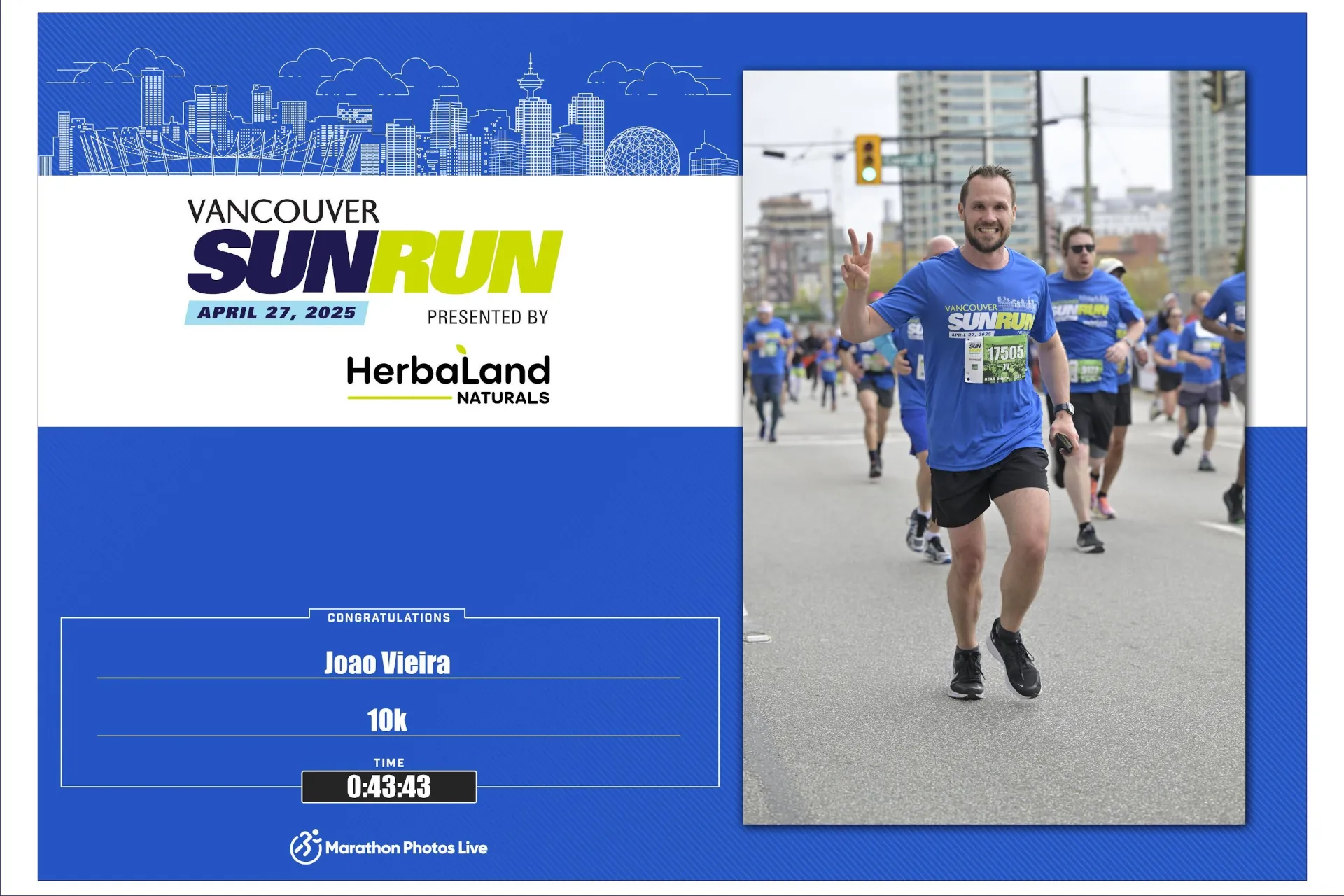
Vancouver Sun Run 2025
I track my runs with an Apple Watch and use Pace mode, which helps me maintain a steady rhythm and stay on target. This feature allows me to gradually increase my pace goal and simply follow it during each run.
Here is a summary of my running throughout the year. I ran about 150 km more in 2025 than in 2024.
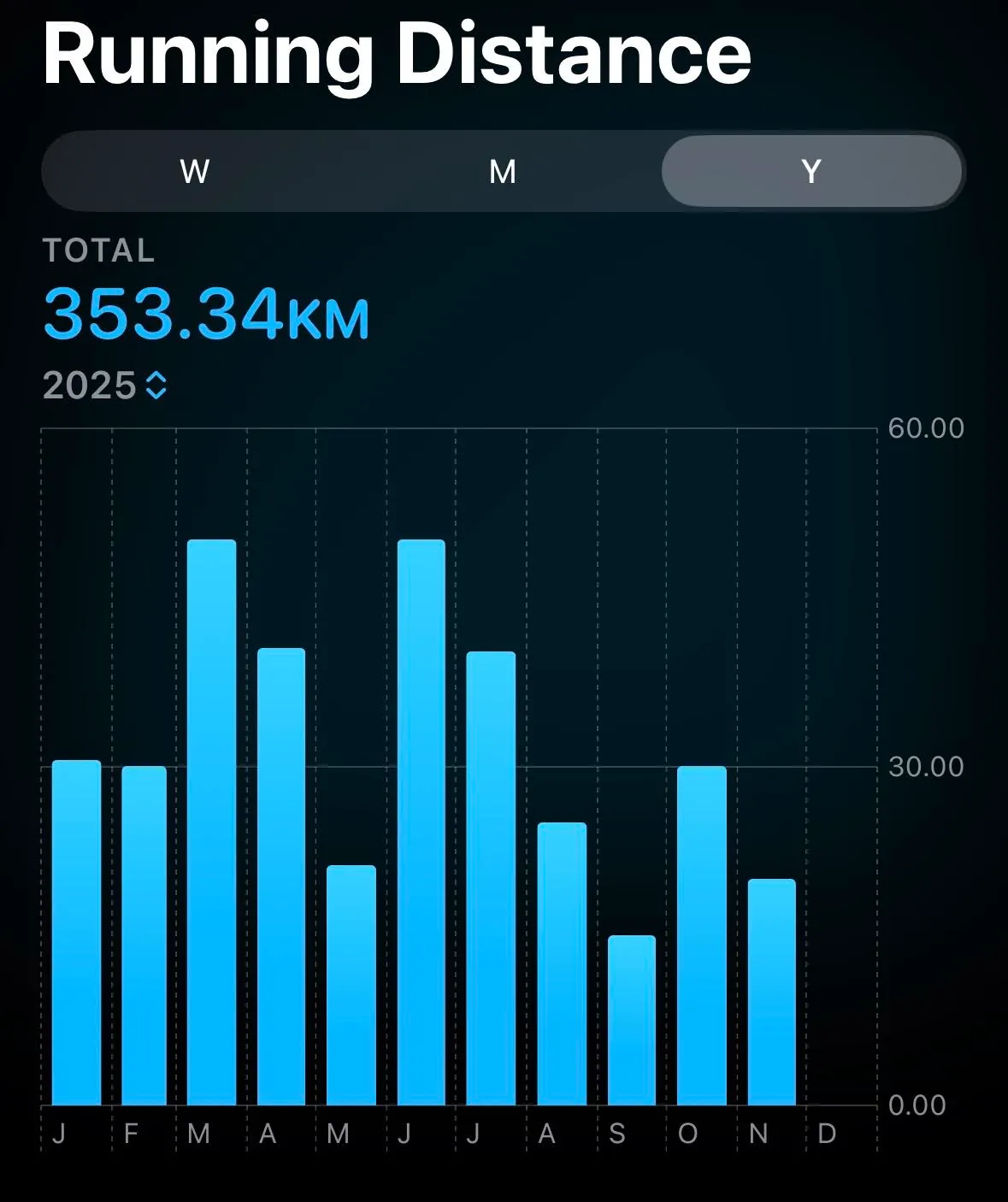
Monthly running distance measured by Apple Watch
Strength Training
Starting strength training in 2024 was a big surprise for both my wife and me. She had been encouraging me to try it for years, but I always resisted, saying I didn’t like it and that it was boring.
Thanks to her persistence and a few podcasts, my mindset slowly shifted. Reading Outlive was the tipping point. Two ideas from the book resonated deeply with me:
- Health compounds over time. Conditions like atherosclerosis develop silently over many years and only become evident when it is often too late. I realized I needed to act now to prevent future problems.
- Aging and strength. As we age, we naturally lose strength and mobility. To stay independent and enjoy life later on, we need to build and maintain strength today.
I now do strength training at least four times a week for about an hour. I started with three days but quickly increased it. Doing it often makes it easier, since it removes the need to decide. It is just part of my routine. As I detailed in my Pillars of Health, strength training is critical for maintaining independence and quality of life as we age.
To support my workouts, I use the Fitbod app, and it has been great. I chose the goal “Improve conditioning,” which focuses on higher repetitions, lower weight resistance exercises, and minimal rest to build endurance.
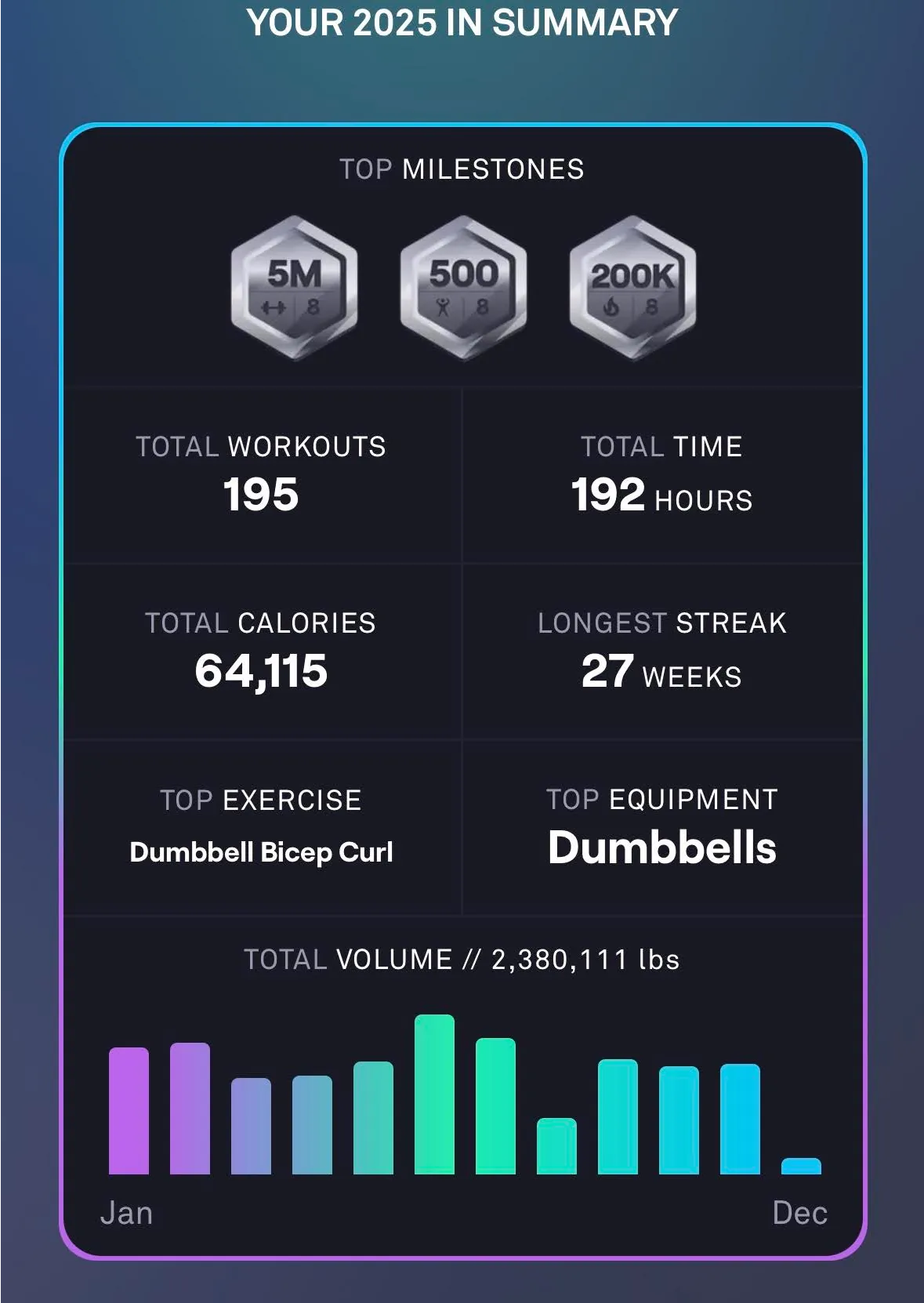
Workout summary from the Fitbod app in 2025
I like updating the effort, or Rate of Perceived Exertion (RPE), so the app can better calculate the weight, number of sets, and repetitions for my next workout. I also appreciate that it tracks muscle recovery and suggests exercises for the muscles that are most recovered. This helps me train my whole body in a balanced and effective way.
I am lucky to have a well-equipped gym in my building, just an elevator ride away, which leaves very few excuses.
Weight Control
Weight management has always been a challenge for me, and it still is. My target weight has been 75 kg for years, but I have struggled to reach it, often hovering in the low 80s or climbing into the high 80s during holidays.
This year, I made some progress and briefly hit my goal before slipping back. The journey continues, but I remain determined to achieve lasting results.
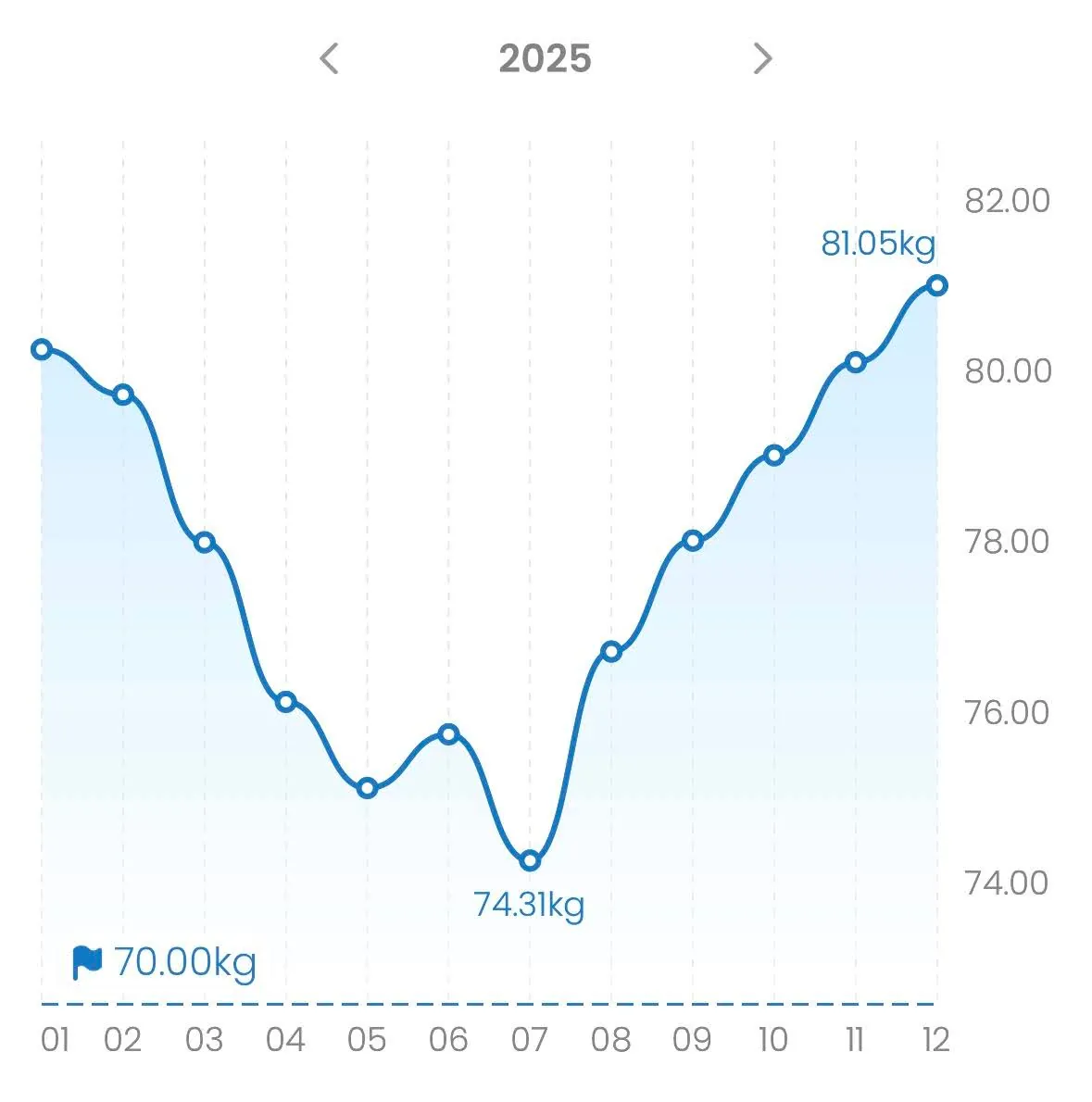
Monthly weight average in 2025
In 2025, I even reached 73 kg. Unfortunately, due to some family issues, I stayed in Brazil for two weeks, and after that, everything derailed.
The cornerstone of my approach is simple: calorie counting. I do not follow trendy diets or extreme regimens. Instead, I track everything I eat and aim for a calorie deficit most days. Weekends are less strict, since maintaining balance is important to us. We like to cook and enjoy our meals.
I use the Cronometer app to track my calories. The free version works well for most people. Since we cook most meals at home, tracking is fairly easy. Eating out is harder because restaurants rarely provide detailed nutrition info.
I weigh myself every morning to better understand and manage my weight. For consistency, I do it right after waking up and using the washroom. I use an affordable RENPHO body fat scale that integrates with Apple Health, which helps me keep a long-term record even if I change scales in the future. I’ve compared it with a DEXA scan and found the accuracy to be quite good for tracking progress over time.
Walking
Walking has been a core habit for me for years. It is how I unwind, think, and listen to podcasts. In a way, it is my form of meditation. It also contributed to my podcast listening stats. It is incredible how much you can absorb during a walk.
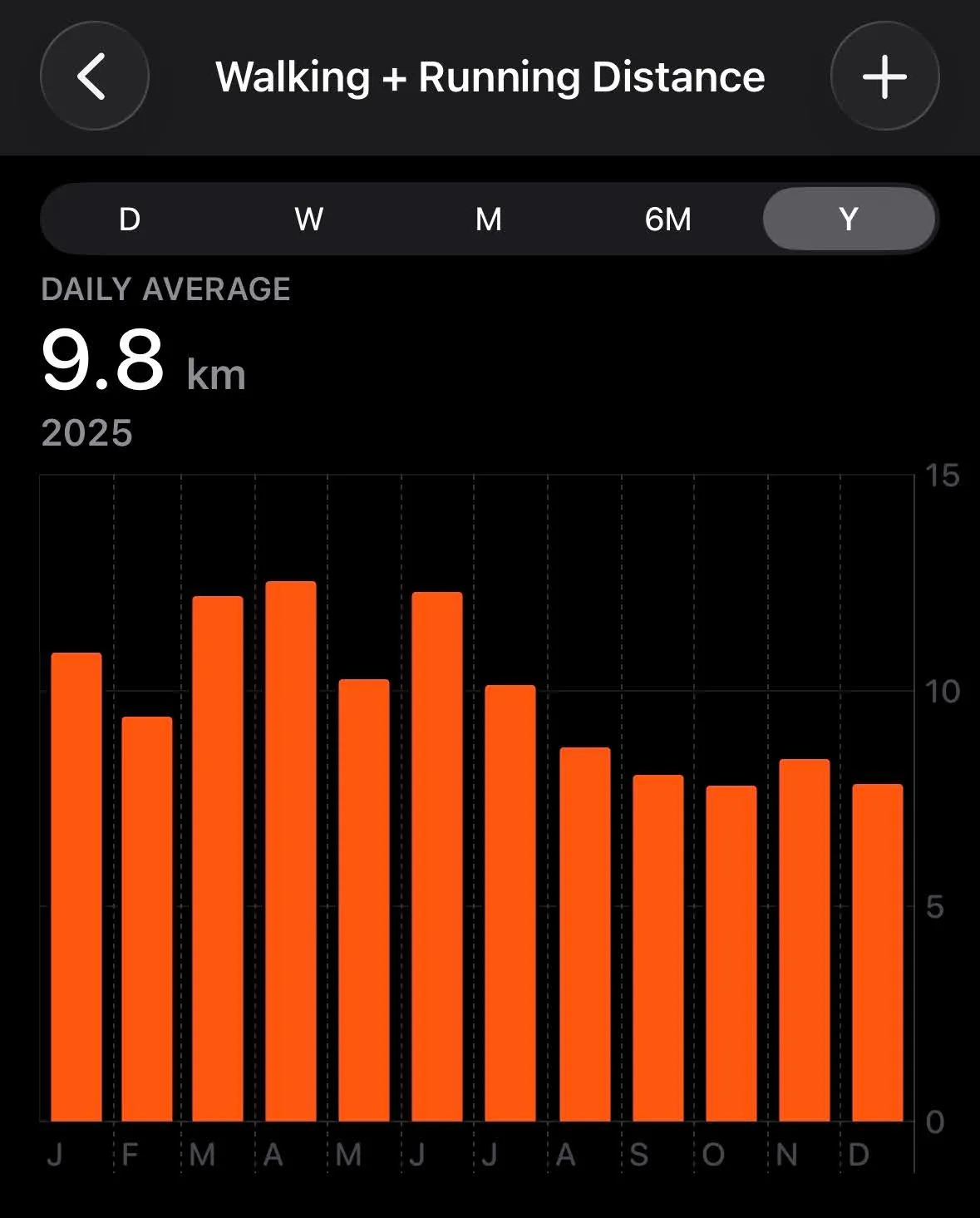
Daily average of walking and running distance in 2025
Whenever possible, I choose nature for my walks. I am lucky to live near a beautiful park and enjoy hiking whenever I can.
Exploring Emotions
After listening to several insightful podcasts about emotions, including Dr. Lisa Feldman Barrett: How to Understand Emotions and Dr. Marc Brackett: How to Increase Your Emotional Intelligence, I discovered the How We Feel app. These insights mirror the emotional health component of my Pillars of Health framework, which emphasizes mental well-being alongside physical fitness. I learned that emotions are far more complex and varied than I had imagined.
The app allows you to log your mood by choosing from 144 emotions, organized into four quadrants: high energy unpleasant, high energy pleasant, low energy unpleasant, and low energy pleasant.
In 2025, I continued tracking my emotions consistently. The image below summarizes how my emotions were distributed across the quadrants.
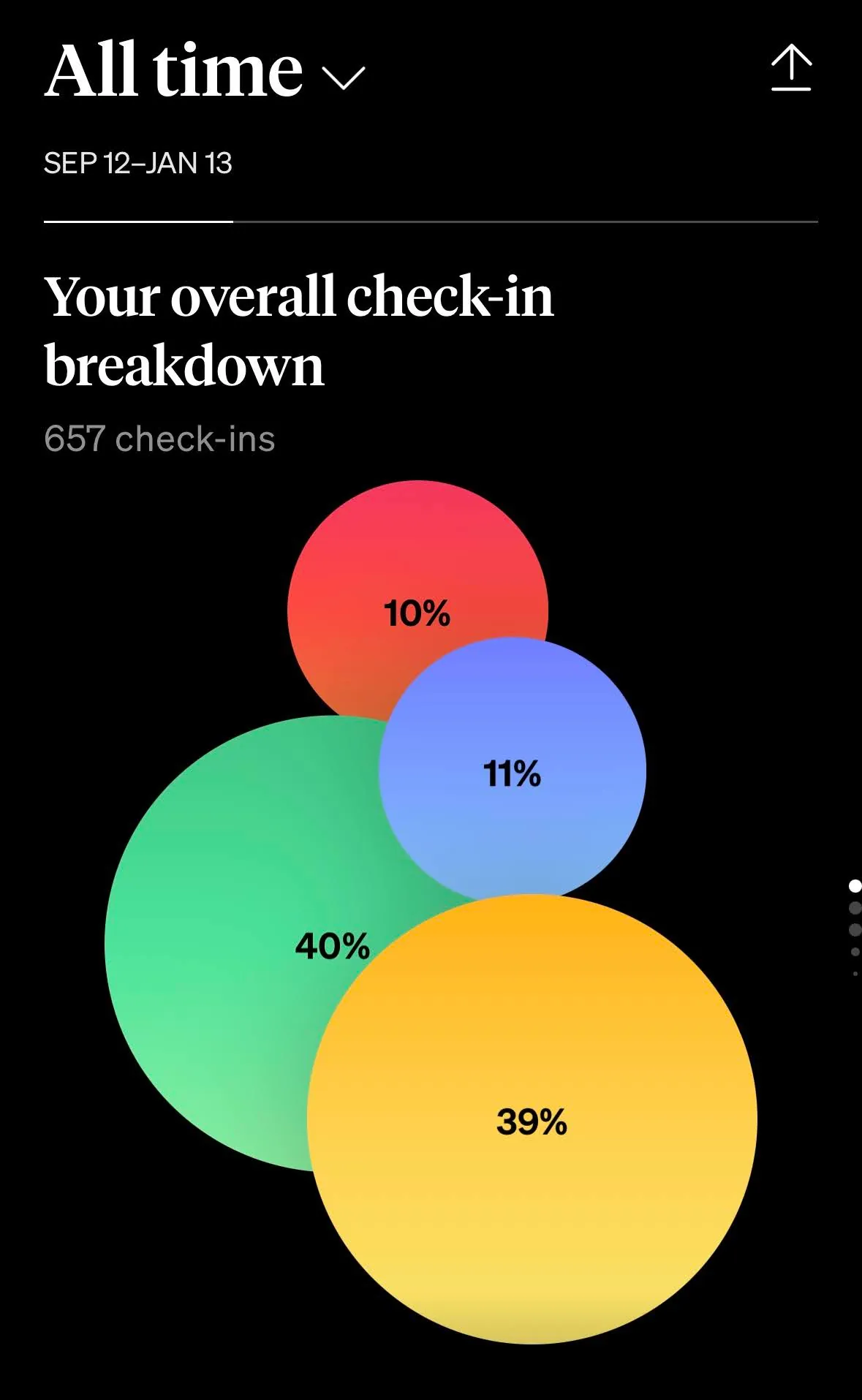
Check in breakdown in the How We Feel app
This practice helps me notice and name my emotions, which makes it easier to respond instead of reacting. It has become one of the most valuable investments in my overall health.
Supplementation
I maintained the same supplement routine from 2024: vitamin D, which is essential during Vancouver’s cloudy winters, a daily multivitamin, and whey protein to support my strength training goals.
With the addition of regular strength training, I started using whey protein to hit my daily target of 2 g of protein per kilogram of body weight. While I eat plenty of meat, it is not enough on its own to reach this goal. I do not have a strong brand preference, so I usually buy the most affordable option at Costco. At the moment, I am using LeanFit.
While not technically a supplement, protein bars have also become a convenient snack. I choose ones with around 20 g of protein and about 190 calories from Pure Protein, and I limit myself to one per day. Ideally, I prefer snacks like fruit, or no snacks at all.
Sleep
Since reading the book Why We Sleep in 2023, sleep has been a key focus for me. As I mentioned in my Pillars of Health, I aim for nine hours of sleep opportunity each night, meaning nine hours in bed. While I do not always hit that target, maintaining a consistent sleep schedule remains a top priority.
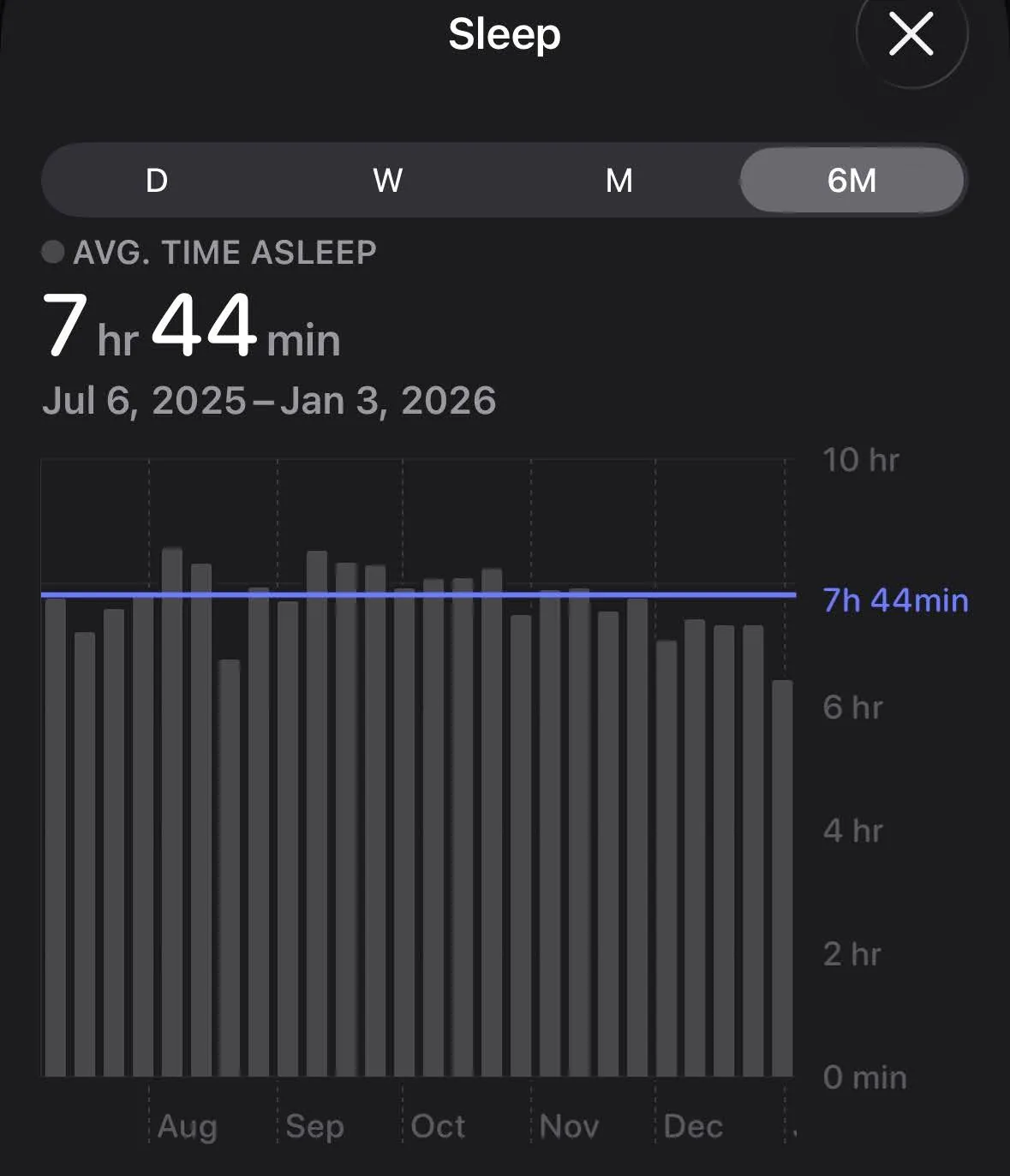
Average time asleep in the last six months
In 2025, I continued building on the foundation I established in 2024. The focus was consistency across weight control, running, strength training, and emotional well-being. These habits felt more natural and required less willpower, with the emphasis on simply showing up.
I kept focusing on sleep, supplementation, and finding a balance between structure and enjoyment. There is always room to improve, but 2025 reinforced an important lesson for me: health is a continuous journey, not a destination.
And just like my goals became purposes, 2025 deepened my understanding that lasting health comes from sustainable habits, not perfect execution.
Cheers.