Africa was number one on my travel list, and in August 2025 my wife and I finally did a 10-day safari in Kenya and Tanzania. That post covers the planning, the lodges and the parks. This one is just about the animals we saw during the trip.
We visited Lake Nakuru, the Masai Mara, the Serengeti, Ngorongoro Crater, Tarangire and Amboseli, and we saw everything we hoped for and more, including the Big Five and the wildebeest crossing the Mara River. In total, there are 57 different animals in this post: 23 mammals, 1 reptile and 33 birds.
Here I will try to collect my photos of the wildlife we saw along the way, all taken with my Canon EOS R7. They are grouped by type, starting with the Big Five.
Here they are:
Big Five
The Big Five are the lion, leopard, elephant, buffalo and rhino. The name comes from hunters, who considered them the most dangerous animals to hunt on foot. Today, it is the list every safari visitor wants to complete, and we were lucky to see all five.
Lion
We saw lions several times, but the Masai Mara and the Serengeti gave us the best moments. In the Mara, we saw lionesses with cubs playing together, and then a male lion appeared slowly and majestically behind the pride. He was limping a little, but he still looked magnificent. We also saw two sleepy males lying in the shade. In the Serengeti, we saw two lionesses with six cubs, and in Amboseli, two young males walking towards a group of wildebeest. They got close but did not charge.
The most amazing scene was in Tarangire, where we watched a lioness hunting. We saw her getting into position and then running after her prey. We missed the exact moment because it happened behind another car, but then we saw her eating a small wildebeest. Seeing a predator hunt is completely different from seeing one resting in the shade.
What surprised me the most was how little they cared about us. Most of the time, they just continued doing their own thing.
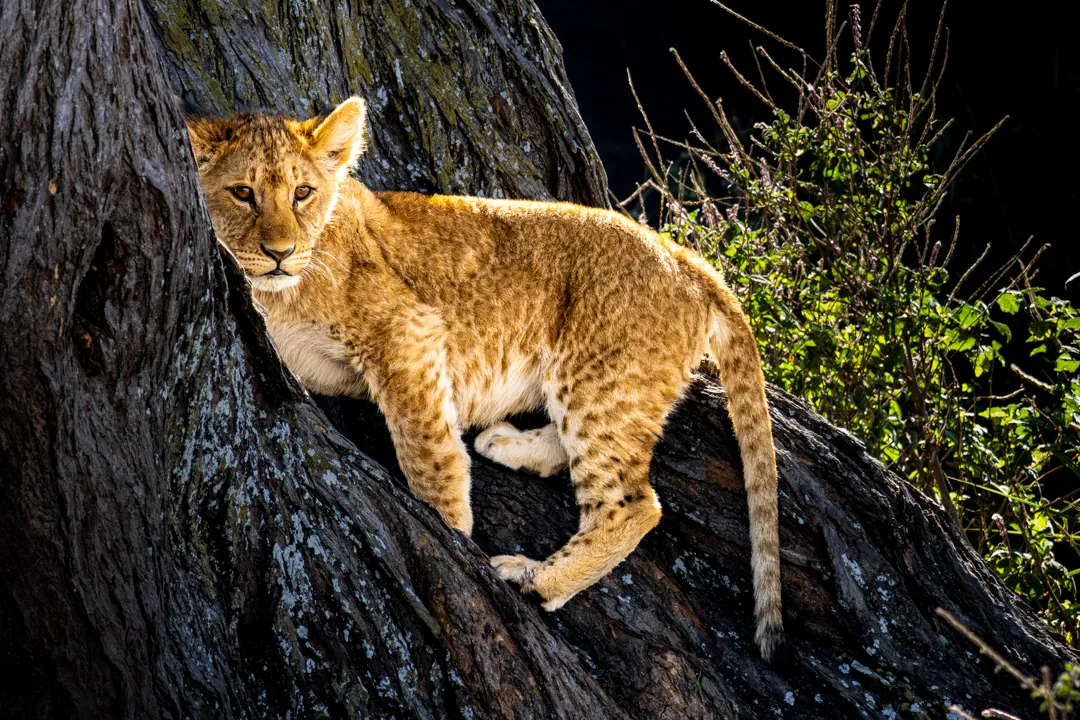
A lion cub resting in a tree in Northern Serengeti. Get this photo on Adobe Stock
Leopard
Our first leopard was Luluca, a well-known leopard in the Masai Mara. She was trying to get away from the people watching her, and the drivers were quite aggressive trying to position their cars closer so everyone could see.
The second one was much more interesting. In the Serengeti, we saw a male leopard in a sausage tree, eating a wildebeest he had taken up into the branches. It was already partly eaten and smelled bad, so it looked like he had been keeping it there for a few days. Leopards do that to keep their food away from hyenas and other predators. It was one of the most memorable animals of the trip.
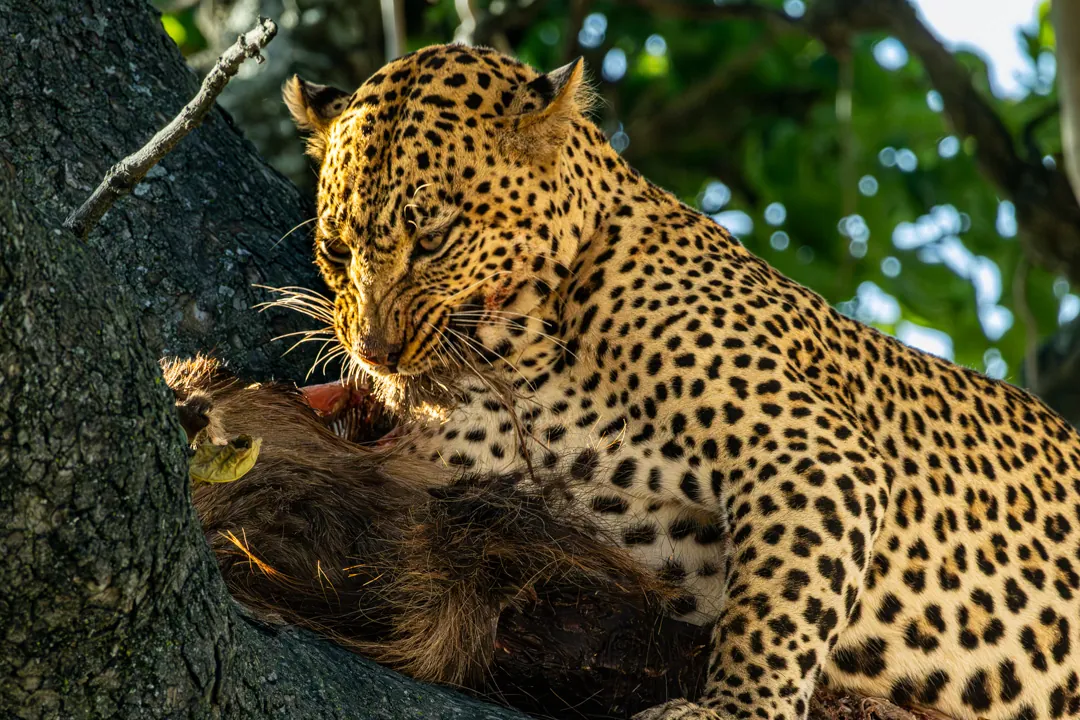
A leopard snarling while eating its kill in the Serengeti. Get this photo on Adobe Stock
African elephant
We saw elephants almost everywhere, but our first ones were at the Sheldrick Elephant Orphanage in Nairobi. We spent about an hour watching them eat, play in the water and interact with each other, and we were even able to touch some of them.
In the Masai Mara, we saw a small herd with a baby grazing. In Tarangire, there were lots of elephants around the river. We watched them drinking, playing and making noises, a baby drinking milk from its mother, and even some trying to mate. One evening, there was even an elephant standing right next to our camp.
One of my favorite moments was in Amboseli, watching baby elephants learning how to use their trunks. They were still figuring out how to control them. We also saw elephants shaking the grass to remove the dirt before eating it.
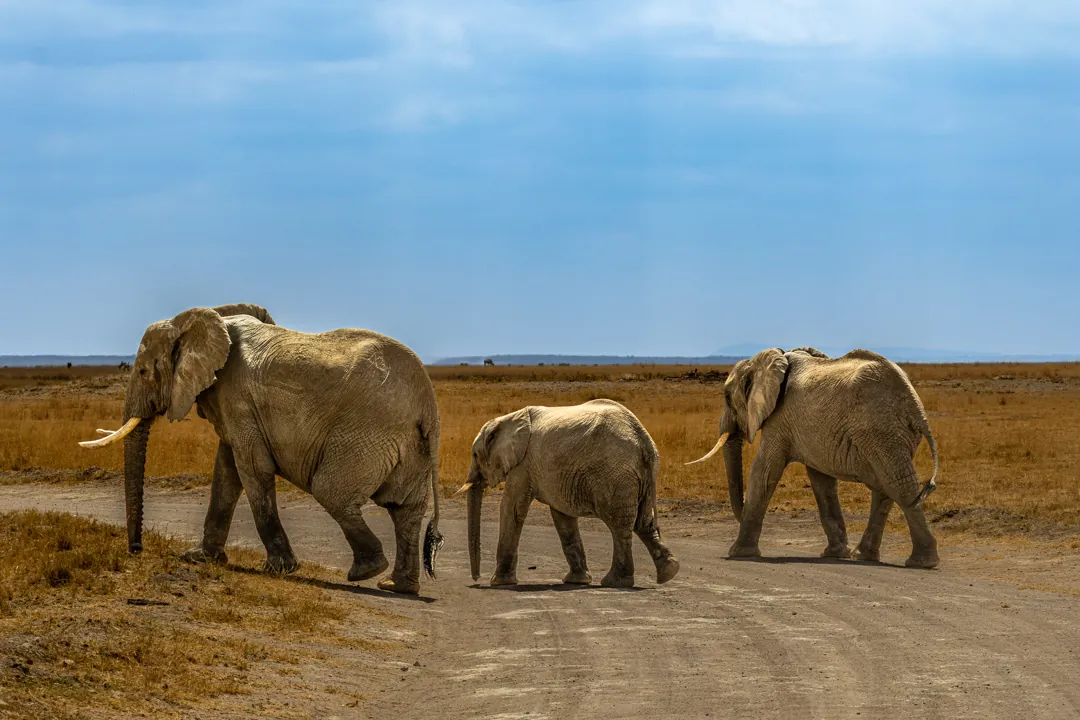
A family of elephants crossing a dirt road in Amboseli. Get this photo on Adobe Stock
Cape buffalo
Buffaloes were very common in Lake Nakuru. We saw them many times during our first game drive, together with zebras, giraffes and impalas. We saw them again in the Masai Mara and Amboseli.
They look calm while grazing, but they are powerful animals and can be unpredictable.
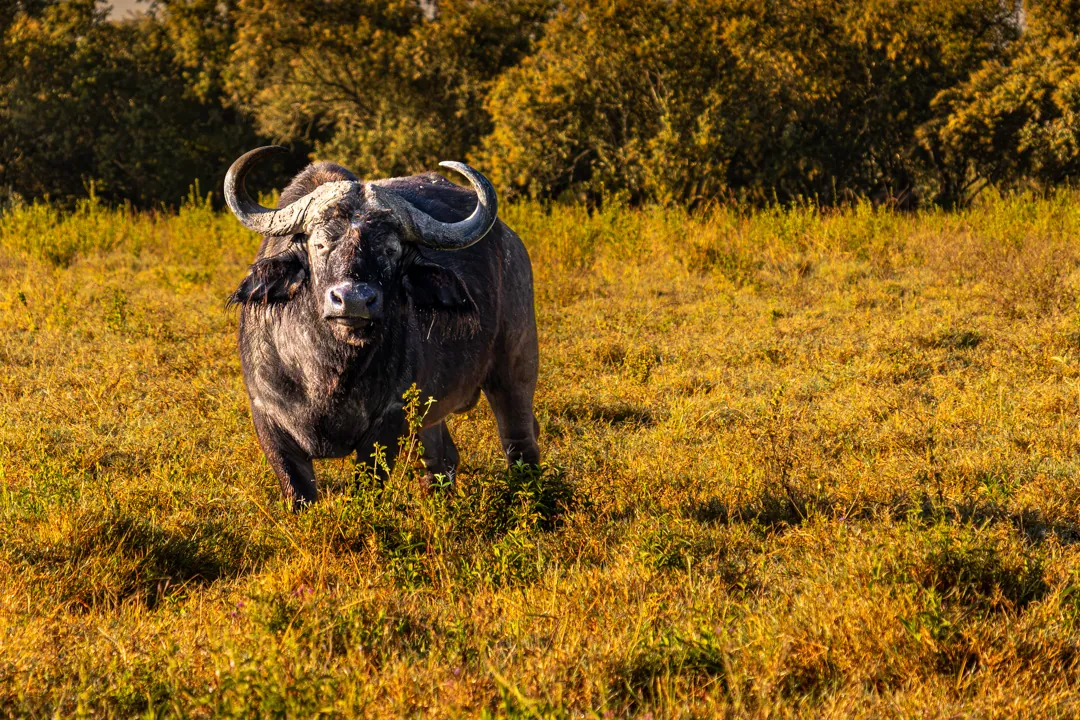
A Cape buffalo grazing on the green plains of Lake Nakuru. See my collection on Adobe Stock
White rhino
We saw our first white rhino even before reaching the hotel at Lake Nakuru, and during the game drive we saw around 15 of them. We had already seen so many animals on that first day that we started wondering what would be left for the rest of the trip.
Unfortunately, we did not see any black rhinos, and Nakuru was the only place where we saw rhinos at all. A fun fact: white rhinos are not white. The popular story is that the name comes from a mistranslation of the Dutch word “wijd”, meaning wide, because of the shape of their mouths, but there is no real evidence for it, and nobody knows for sure.
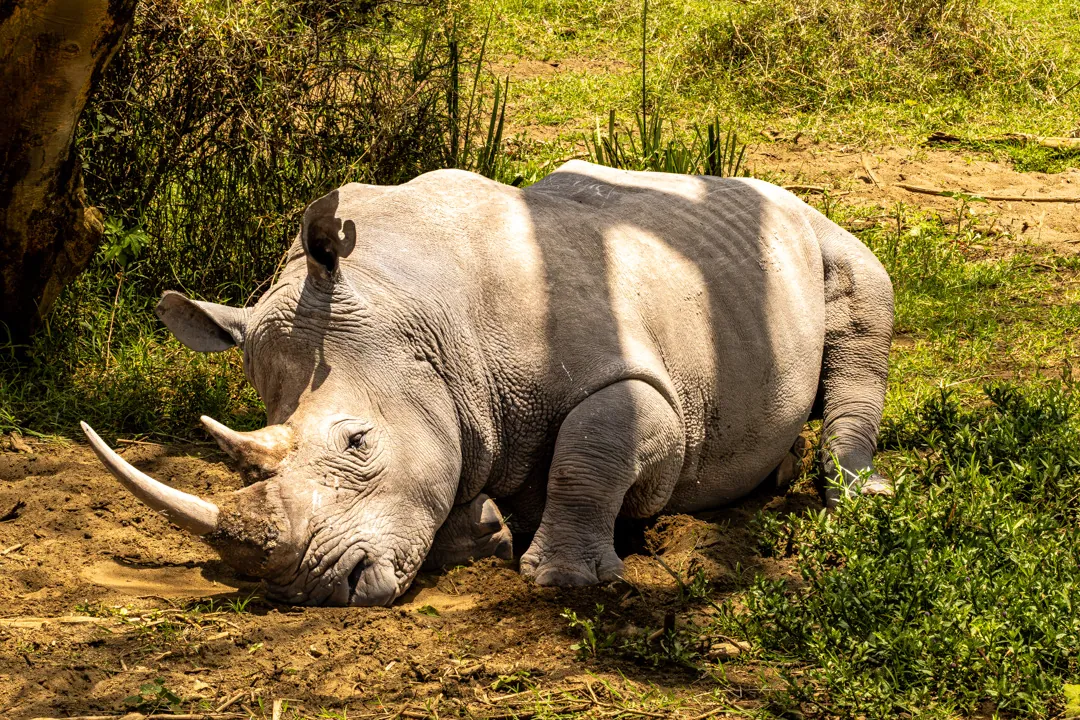
A white rhino resting under a tree in Lake Nakuru. Get this photo on Adobe Stock
Other predators
The big cats get most of the attention, but there are many other predators on the savanna. Some of them hunt, some scavenge, and most do a bit of both.
Cheetah
We saw our first cheetah in the Masai Mara, with the remains of a Grant’s gazelle or an impala. In the Serengeti, we saw a mother with two cubs, which was really nice to watch, and another one standing on the spare tires of a safari vehicle. In Amboseli, we saw a few more, but they were quite hidden and hard to see.
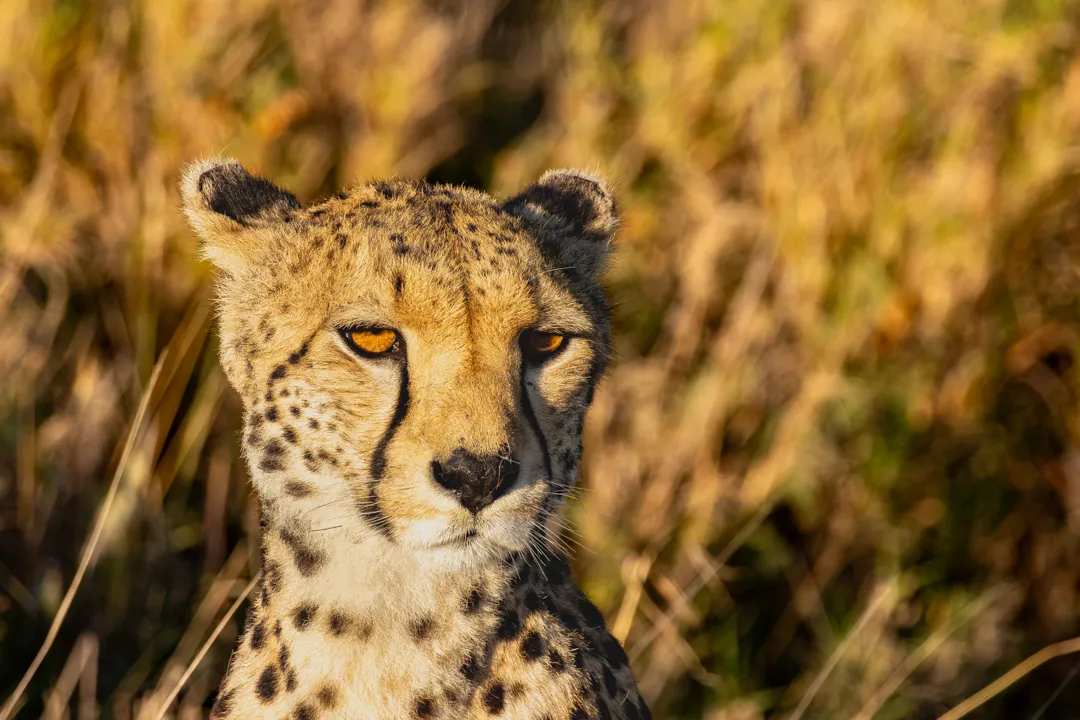
Close-up portrait of a cheetah in the morning light, Serengeti. Get this photo on Adobe Stock
Serval
We spotted this one in Central Serengeti. It looked like a big cat with cheetah-like colors. It was the only one we saw during the whole trip. They are not easy to spot.
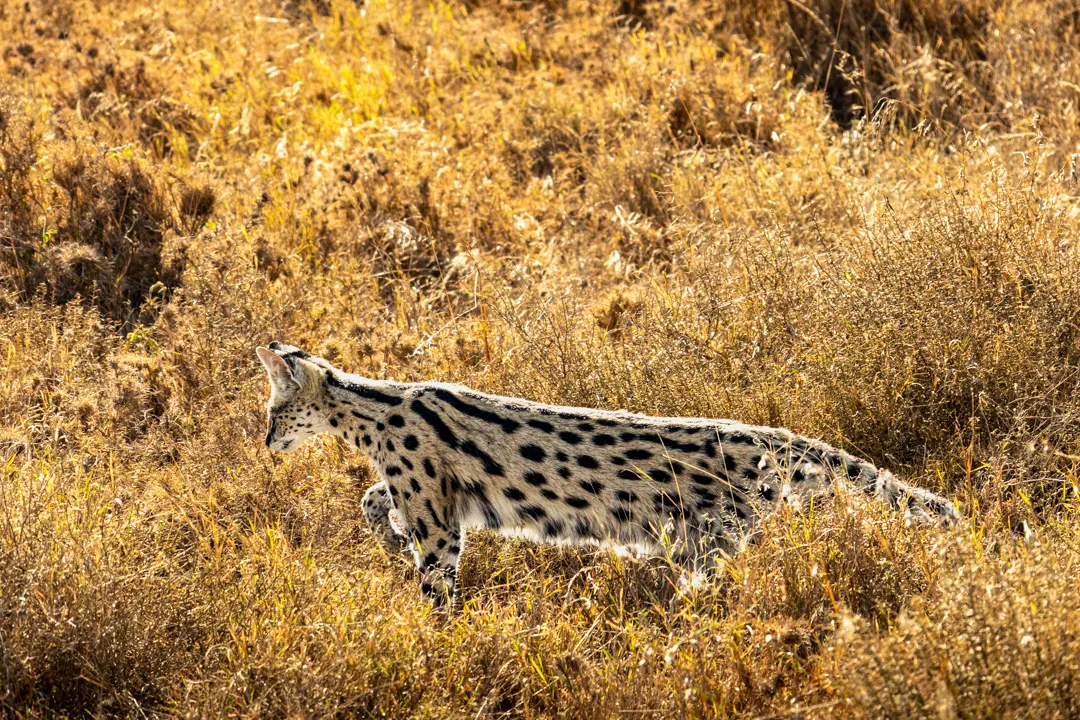
A serval standing in the tall grass of the Serengeti. See my collection on Adobe Stock
Spotted hyena
We saw three hyenas on our first game drive in Lake Nakuru, and later more of them, sometimes in groups, in the Masai Mara and the Serengeti. We even saw some on the road between parks.
In Amboseli, we learned that female spotted hyenas are bigger than the males, and that their front legs are longer than their back legs. Also, they are not just scavengers, they are good hunters too.
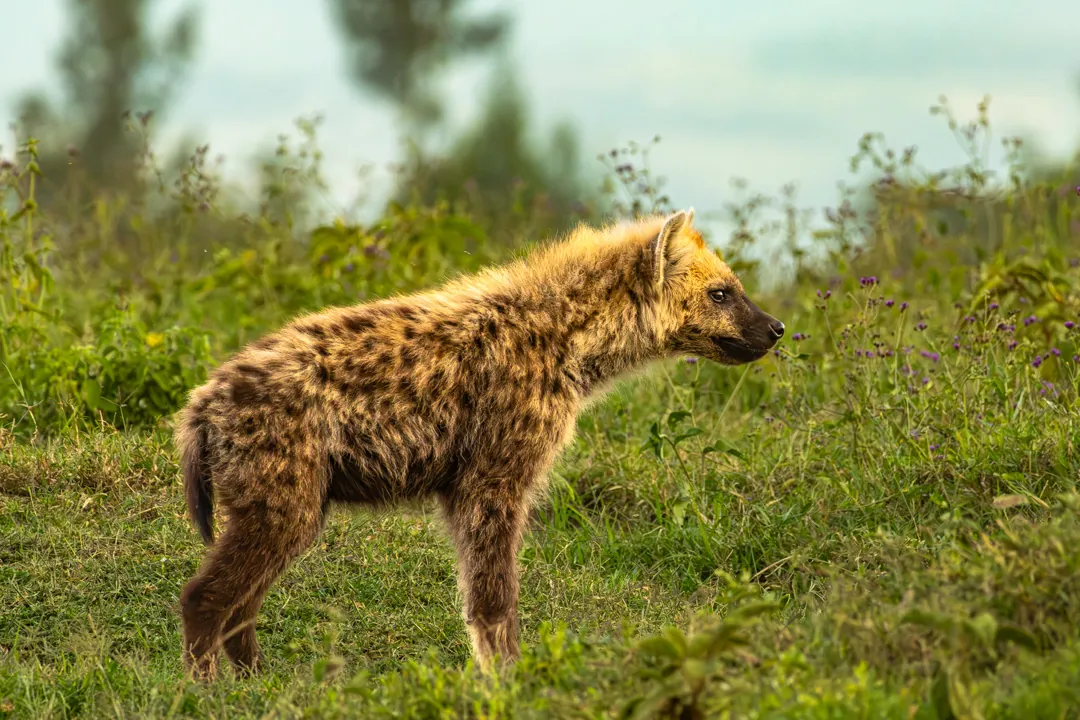
A spotted hyena looking for food in Lake Nakuru. Get this photo on Adobe Stock
Jackals
We saw a golden jackal in the Serengeti. It looked like a small dog. In Lake Nakuru, we saw another animal that looked like a fox but was not a fox. That one is in the photo below, and it is actually a black-backed jackal.
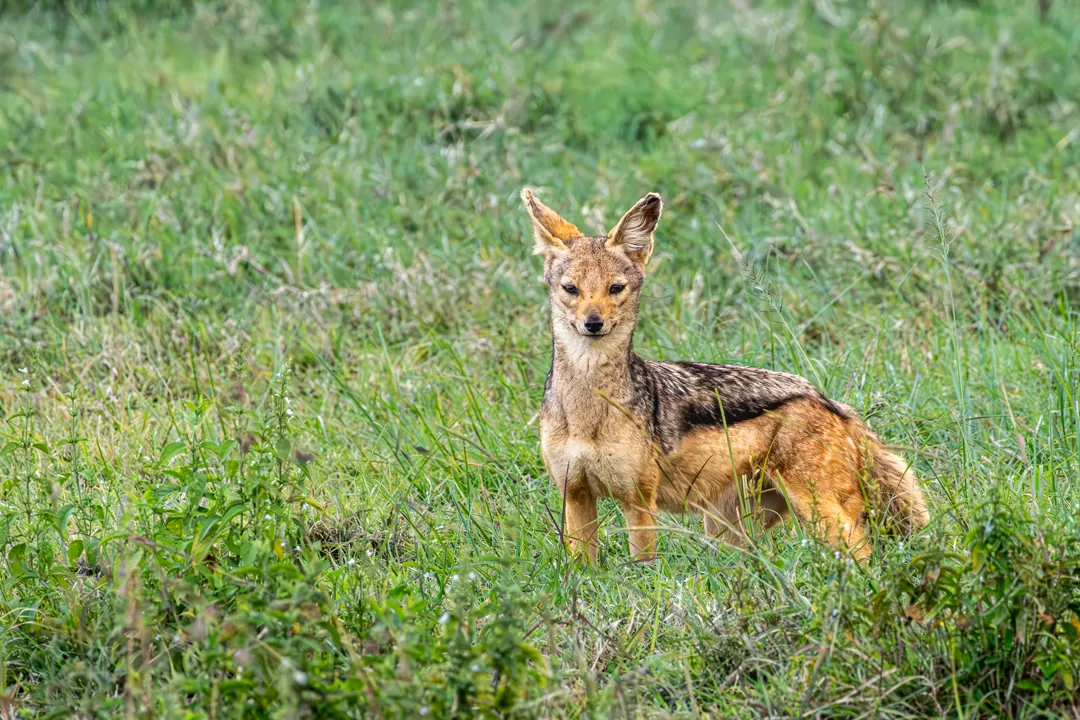
A black-backed jackal on alert in the tall grass of Lake Nakuru. Get this photo on Adobe Stock
Banded mongoose
We saw a group of banded mongooses in the Masai Mara. In the photo, they are foraging together. They usually live in groups of 10 to 20, and the whole group helps raise the pups.
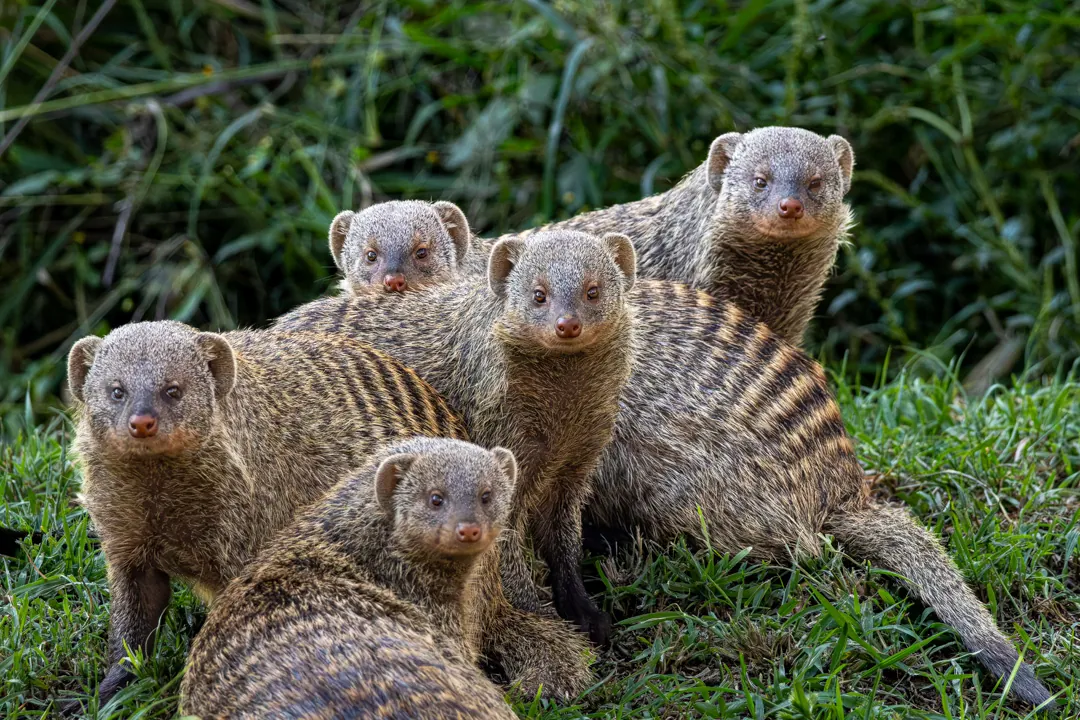
A band of banded mongooses foraging in the Masai Mara. Get this photo on Adobe Stock
Other mammals
This is the biggest group. Grazers like zebras, wildebeest and antelopes were everywhere, and they are the reason the predators are there.
Hippopotamus
We saw hippos in many places. At Zebra River Camp in the Masai Mara, we could see them from our room. Sitting outside with a beer and watching them at dusk, without even needing a game drive, was a highlight in itself. We also saw them in the Mara River, with crocodiles nearby.
In Ngorongoro, we had lunch at a beautiful spot overlooking a lake with hippos, including a baby with its mother. In Tarangire, there were lots of them in the river close to our picnic.
One thing we learned: hippos use their tails to spread their poop and mark their territory. It is as unpleasant as it sounds.
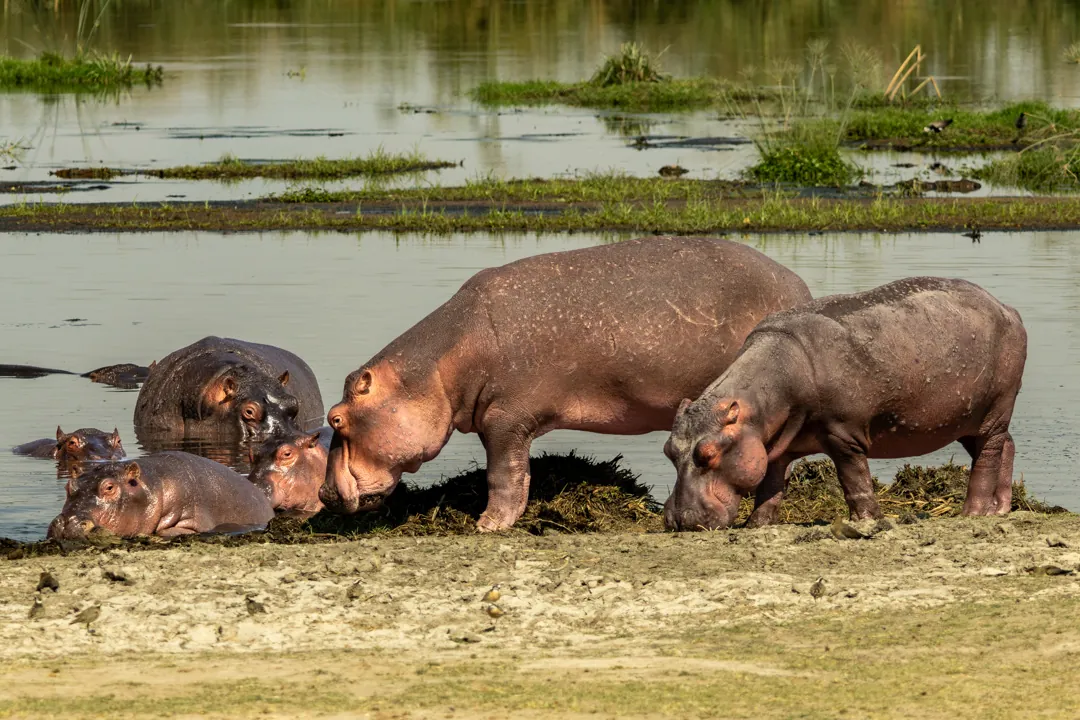
Hippos on the riverbank and in the water in Amboseli. Get this photo on Adobe Stock
Giraffe
Our first giraffes were at the Giraffe Centre in Nairobi, where we were able to feed them. In the parks, they were everywhere in Lake Nakuru, and in Tarangire we watched them awkwardly bending down to drink from the river, together with zebras and elephants. Seeing such different animals sharing the same water was beautiful.
Two things we learned: giraffes have seven neck vertebrae, the same as humans, just much longer. And the horn-like things on their heads are called ossicones.
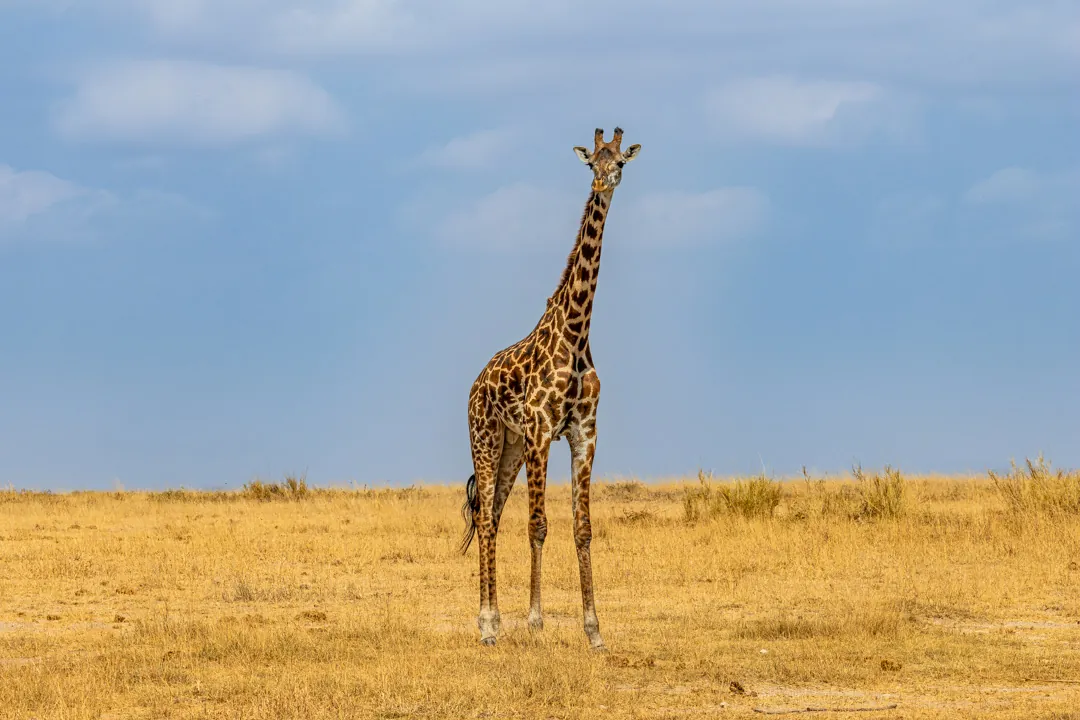
A giraffe standing alone in the savanna of Amboseli. Get this photo on Adobe Stock
Plains zebra
Zebras were everywhere. In Lake Nakuru alone, we saw more than 200 of them in a single day. In the Serengeti and Ngorongoro, they were often mixed with huge herds of wildebeest, and by the time we reached Ngorongoro it felt a bit repetitive.
In Tarangire, we could hear them. Their call sounds surprisingly similar to a donkey.
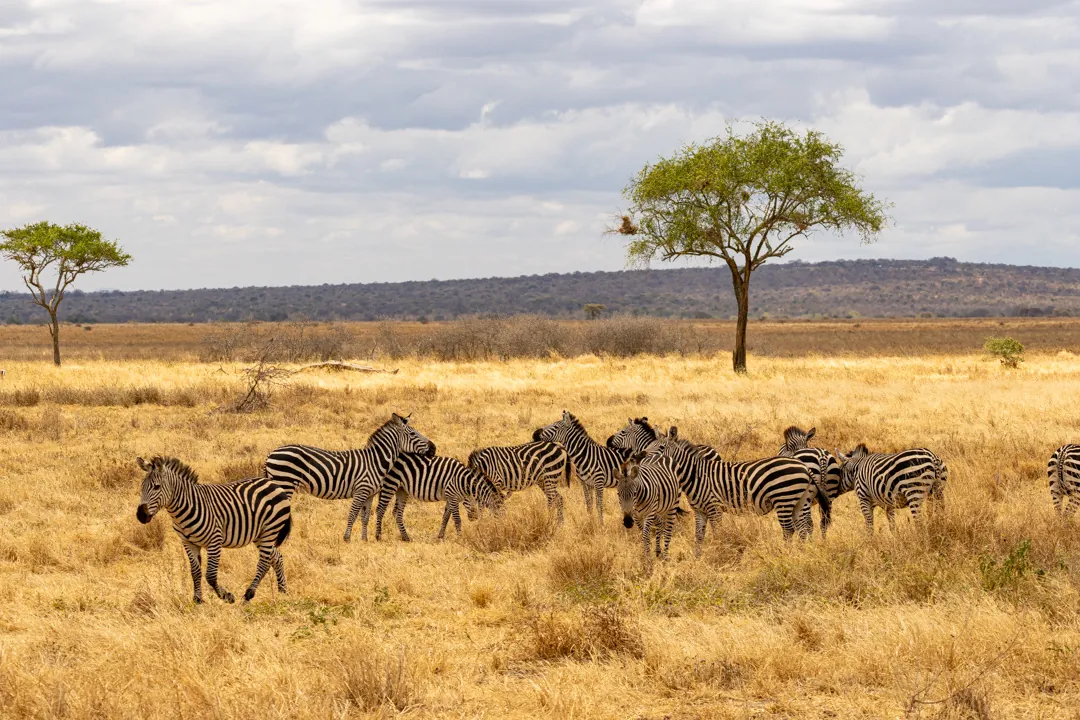
A herd of plains zebras grazing in the golden savanna of Tarangire. Get this photo on Adobe Stock
Wildebeest
The wildebeest migration was one of the main reasons we picked late August. In the Masai Mara, we found a really big herd during a picnic stop.
In Northern Serengeti, we waited around five hours for the Mara River crossing. There were huge numbers of wildebeest at the riverbank, but they were hesitant. They would move closer to the edge and then go back to the herd. Many other drivers gave up, but our driver Jackson encouraged us to stay. We were already looking at the clock when, at around 1:56 PM, one brave wildebeest finally went into the river and the others followed. It was a magical moment and one of the highlights of the trip.
Unfortunately, we also saw dead wildebeest in the river that had drowned while trying to cross.
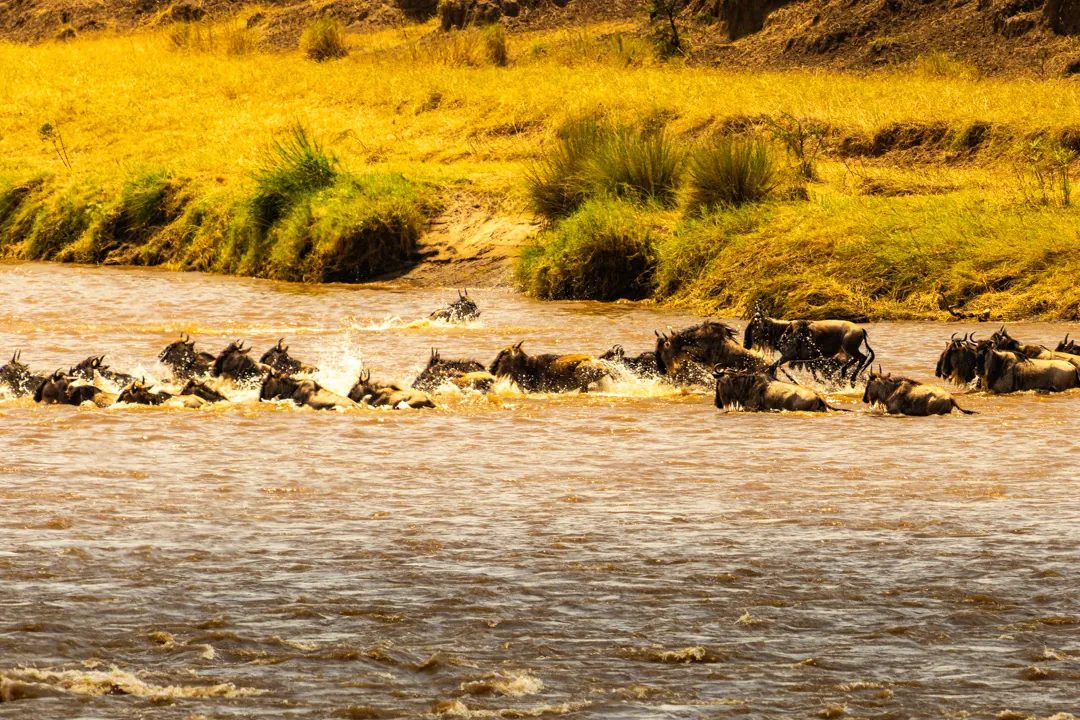
The Great Migration: wildebeest crossing the Mara River in Northern Serengeti. Get this photo on Adobe Stock
Impala
We saw impalas even before reaching the hotel at Lake Nakuru, and there were lots of them during our first game drive. Later we saw many more in the Masai Mara.
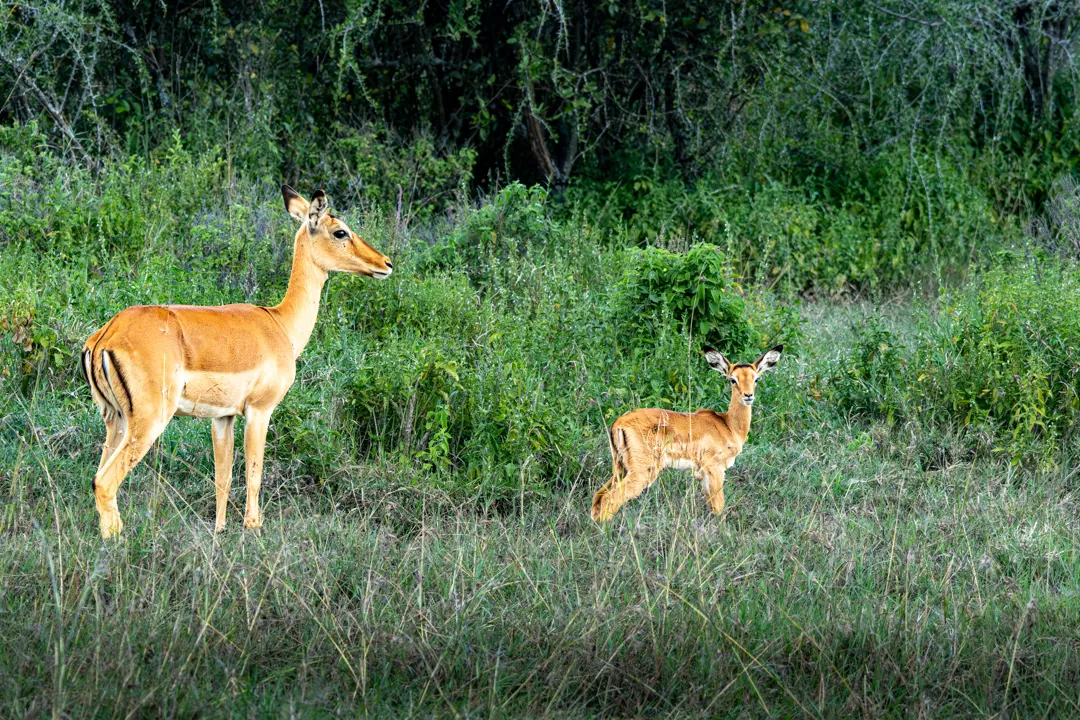
A female impala and her calf standing alert in the bush of Lake Nakuru. See my collection on Adobe Stock
Thomson’s gazelle
We saw Thomson’s and Grant’s gazelles in Lake Nakuru, the Masai Mara, the Serengeti and Amboseli. They are small antelopes and a common prey for cheetahs, so they always need to stay alert, even when they look relaxed while grazing.
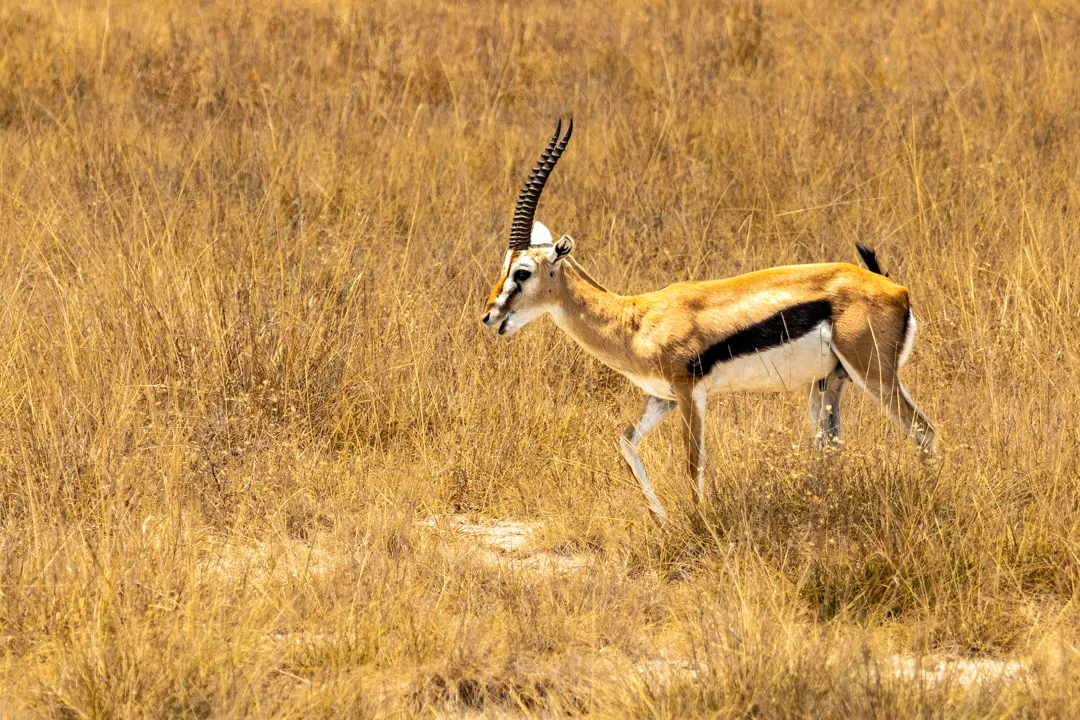
A male Thomson’s gazelle walking through dry grass in Amboseli. Get this photo on Adobe Stock
Topi
We saw many topis during our morning game drives in the Masai Mara, including the day we went looking for the wildebeest migration. We also saw them in the Serengeti.
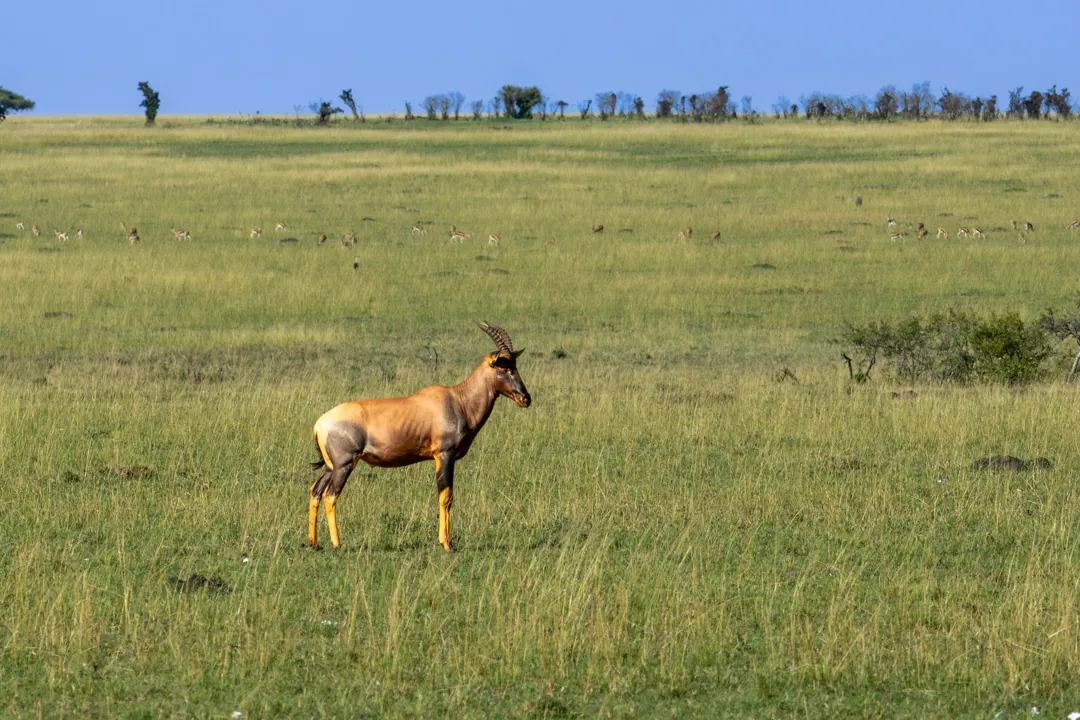
A topi grazing on the open plains of the Masai Mara. Get this photo on Adobe Stock
Eland
We saw them in the Masai Mara and again in the Serengeti. I didn’t know they existed. Together with the giant eland, they are the largest antelopes in the world, really big and majestic. In the photo below, there are oxpeckers on its back, small birds that feed on ticks from large animals.
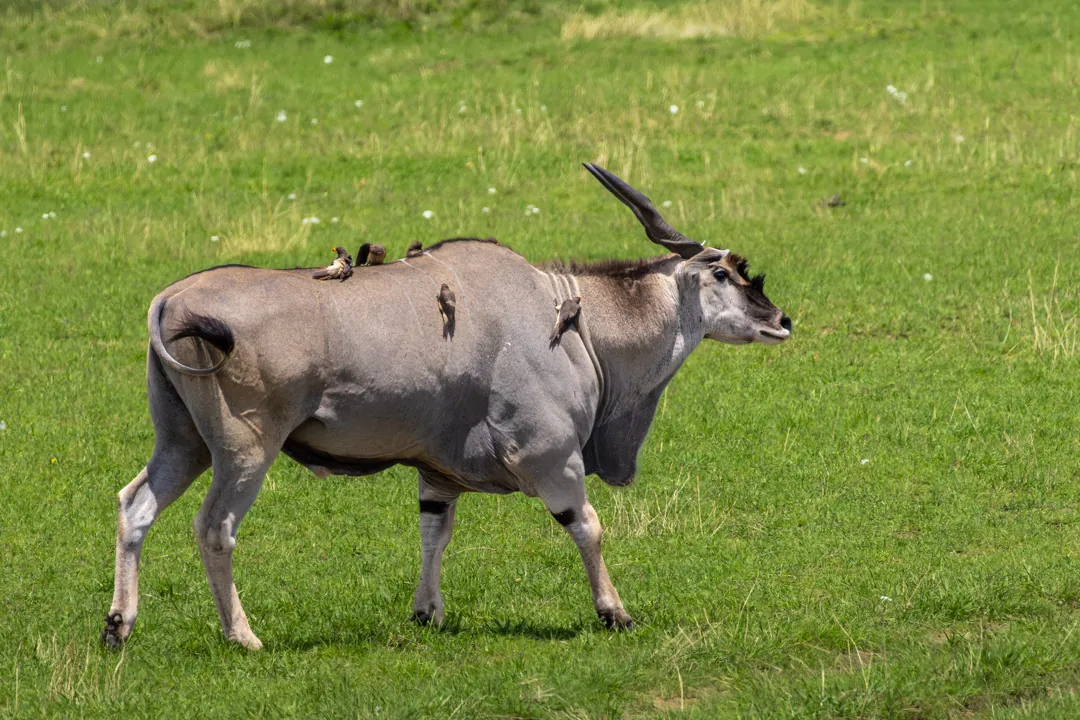
A common eland with oxpeckers on its back in the Masai Mara. Get this photo on Adobe Stock
Coke’s hartebeest
We saw hartebeests in the Serengeti. It looked similar to a topi, but with horns shaped a bit like a heart. These were the only ones we saw.
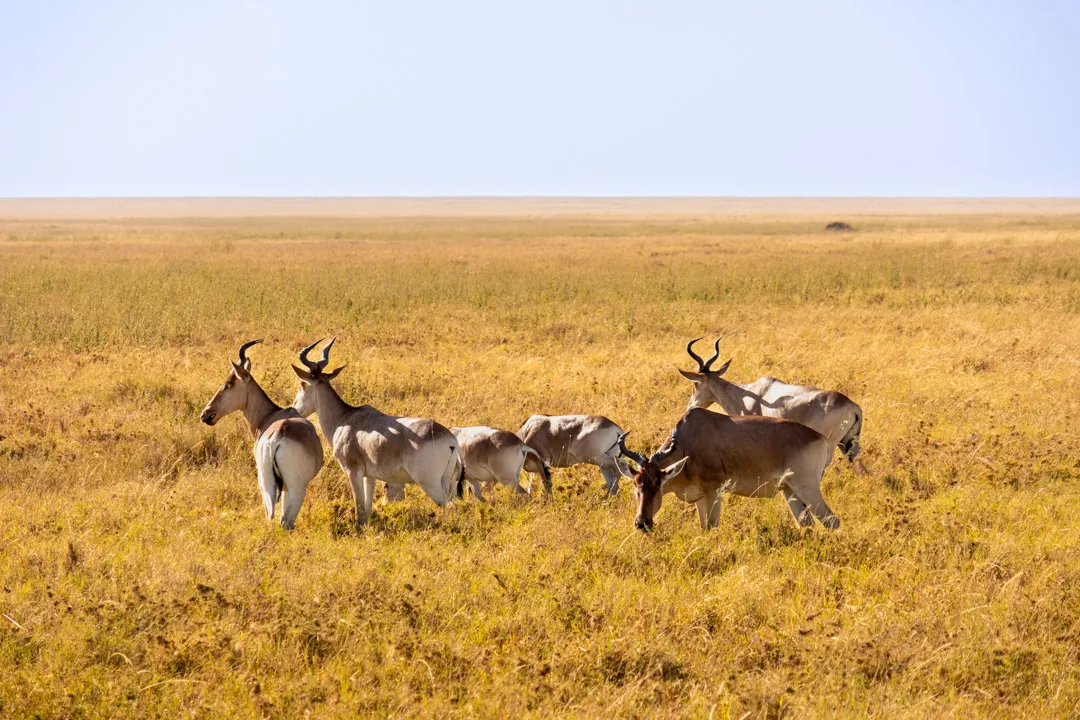
A Coke’s hartebeest standing alert on the short-grass plains of the Serengeti. Get this photo on Adobe Stock
Waterbuck
We saw waterbucks in the Serengeti, near swampy patches, and again in Tarangire. They are large antelopes usually found near water, and many have a pale ring around their rump.
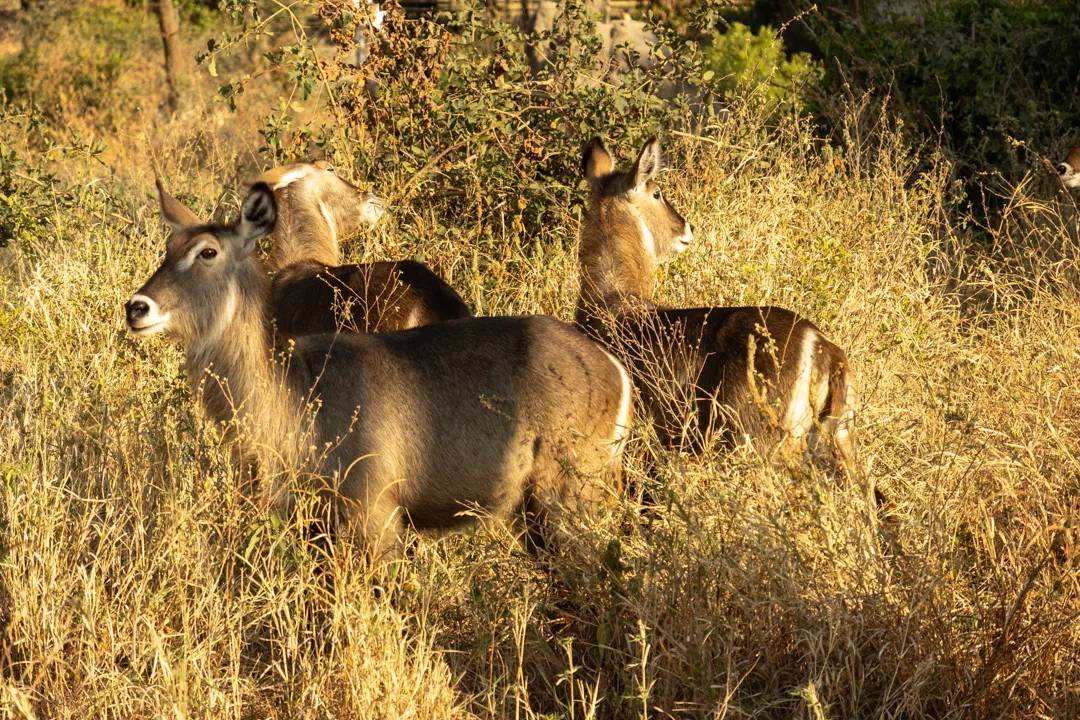
A small herd of waterbuck in the golden grass at sunrise, Tarangire. See my collection on Adobe Stock
Warthog
We saw warthogs in Lake Nakuru. People call them Pumbaa, and it is easy to see why. The one in the photo is from Amboseli, and you can see its big tusks and mane. When they run, they hold their tails straight up in the air, like an antenna.
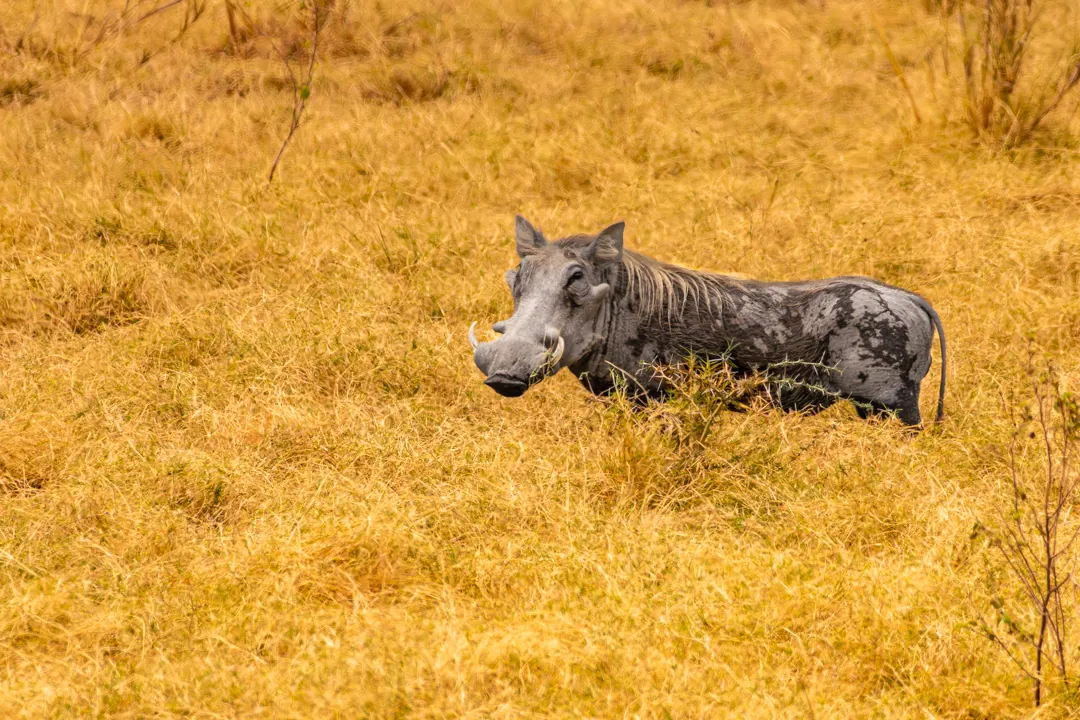
A warthog with big tusks in the grasslands of Amboseli. Get this photo on Adobe Stock
Olive baboon
We saw baboons in Lake Nakuru and Tarangire. This one was in Ngorongoro. It was sitting on a rock in the forest area of Ngorongoro. Baboons live in big troops, and they are smart enough to steal food from cars and camps, so it is better to keep an eye on them.
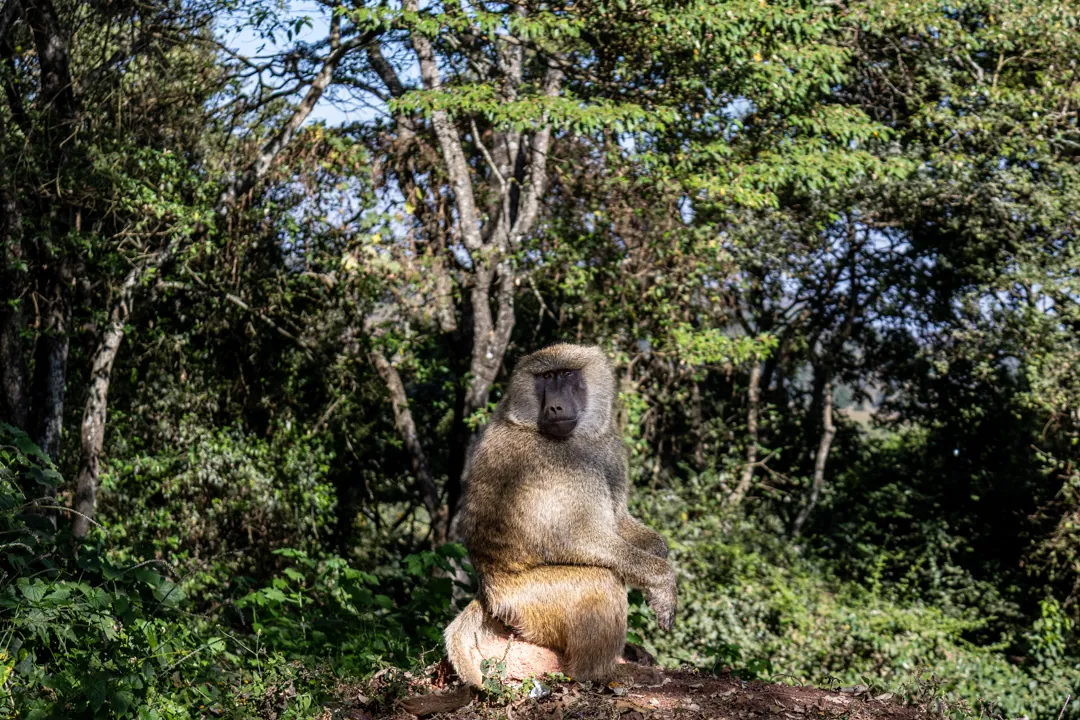
An olive baboon sitting on a rock in the forest of Ngorongoro. Get this photo on Adobe Stock
Vervet monkey
At our picnic in Tarangire, we had some very cheeky monkeys around us. One stole Jackson’s banana, and another grabbed May’s juice, but I was able to get it back. It was funny to see how comfortable they were around people, but it was also a reminder to keep your food close.
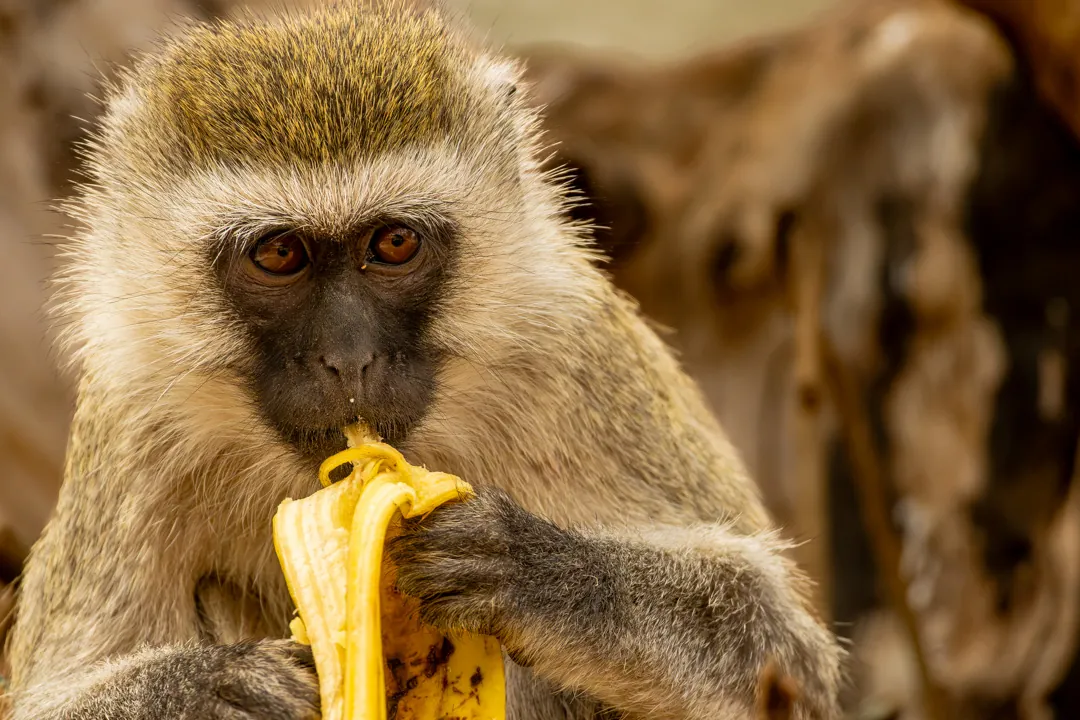
A vervet monkey eating a banana in Tarangire. Get this photo on Adobe Stock
Reptiles
We only saw one reptile during the trip, but it was a memorable one.
Nile crocodile
We saw crocodiles in the Mara River, the same river where the wildebeest were trying to cross. We also saw the remains of wildebeest that had drowned during the crossing. It was a reminder that the migration is not just huge herds moving across the plains. Crossing the river is dangerous, and the crocodiles are waiting.
We also tried crocodile meat at The Carnivore Restaurant in Nairobi. It had a strong, unique flavor, and I actually really liked it.
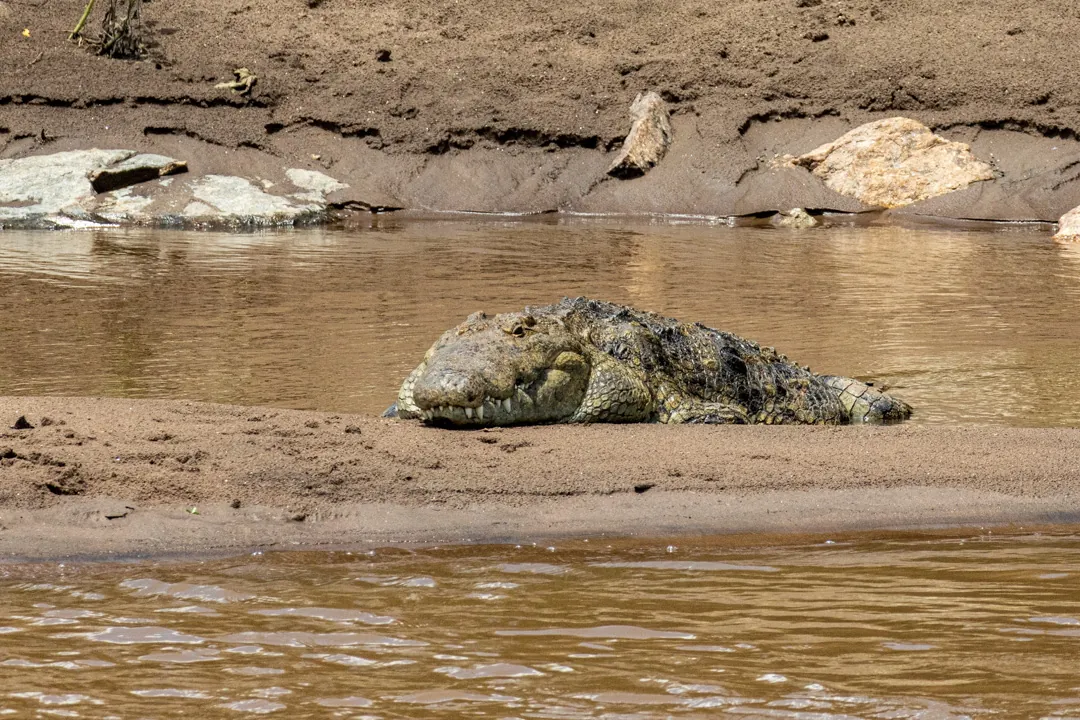
A Nile crocodile resting on a sandbank in the Masai Mara. Get this photo on Adobe Stock
Birds of prey
Eagles, kites, vultures, a tiny owl and the secretary bird, which hunts on foot.
Secretary bird
We saw a secretary bird in Amboseli. They are unusual birds of prey because they spend most of their time walking on the ground instead of hunting from the air, and they are known for hunting snakes.
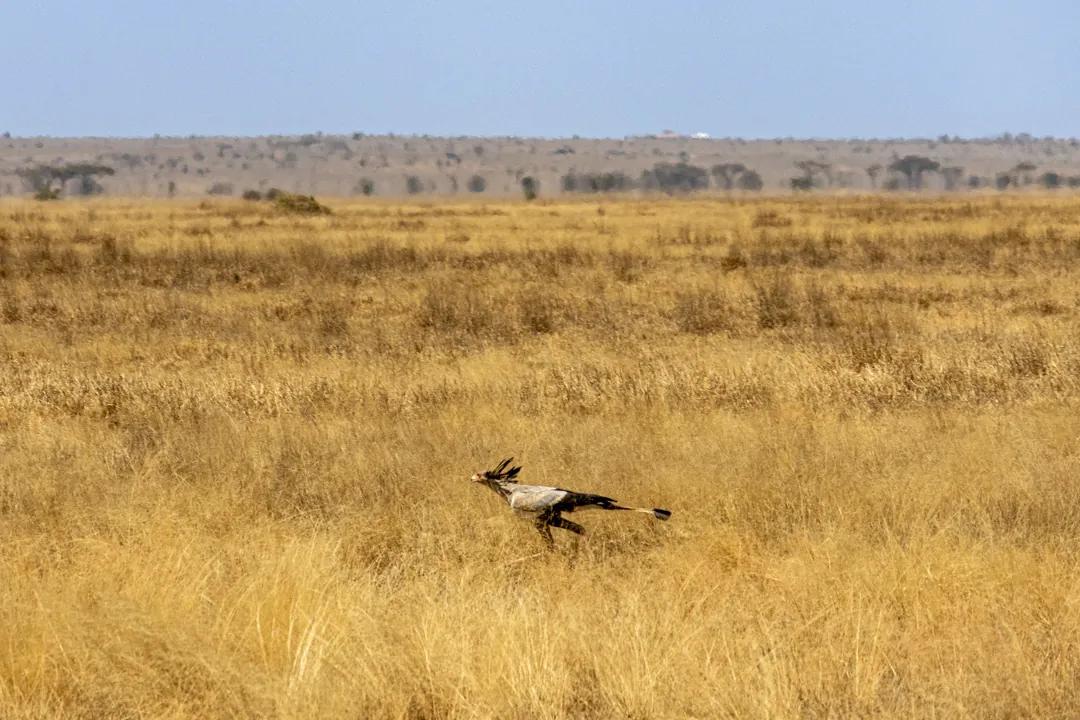
A secretary bird running across the grassland of Amboseli. Get this photo on Adobe Stock
African fish eagle
We saw an African fish eagle in Amboseli. In the photo, it is standing in the tall dry grass, away from the water where it usually hunts. Its call is one of the most famous sounds in Africa, and it is the national bird of several countries, including Zambia, Zimbabwe and Namibia.
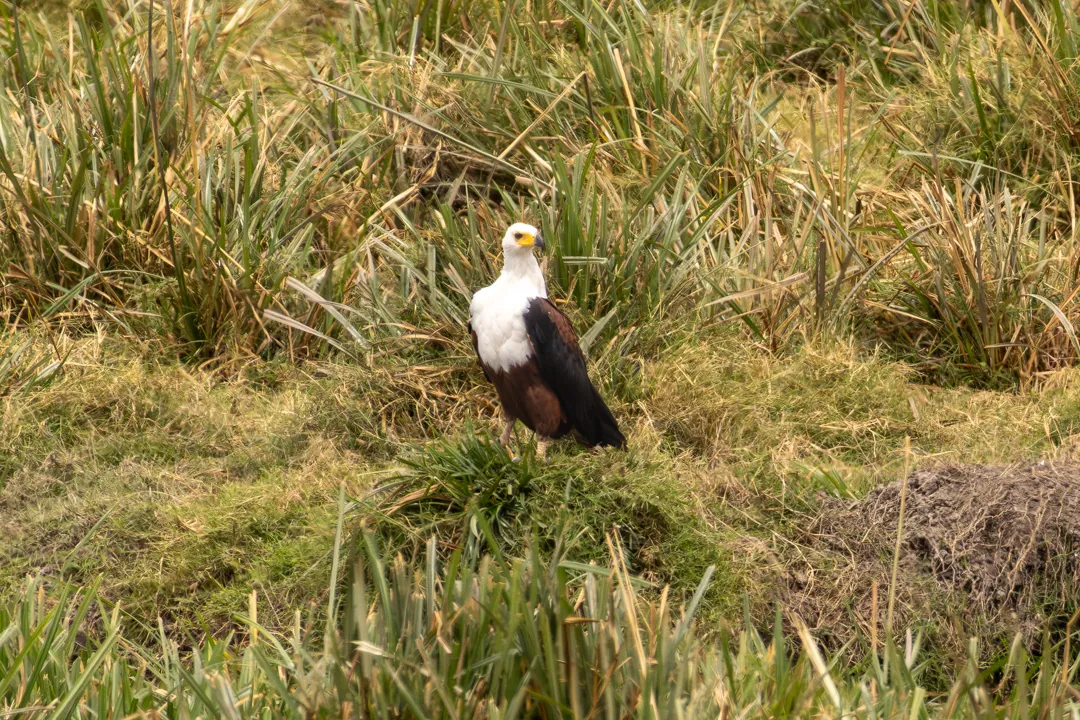
An African fish eagle standing in the dry grass of Amboseli. Get this photo on Adobe Stock
Long-crested eagle
We saw this one in Lake Nakuru, and we also saw one in another park, but I don’t recall which. In the photo, it is perched on top of a thorny bush, and you can see the long crest of feathers on the back of its head that gives it its name. They usually hunt from a perch like this, watching the ground for rodents.
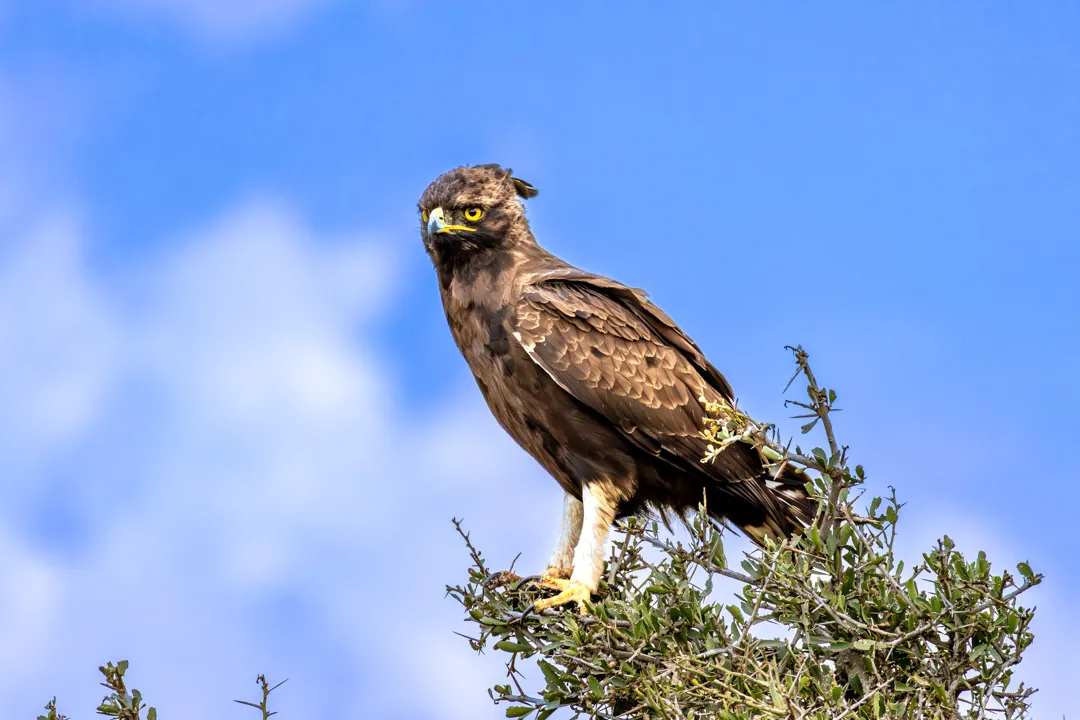
A long-crested eagle perched on a thorny bush in Lake Nakuru. Get this photo on Adobe Stock
Black-winged kite
We saw a black-winged kite in Amboseli. It was eating some kind of animal. In the photo, it is perched on a dead tree, feeding on what looks like a small mammal. They are known for hovering in the air, staying in the same spot while beating their wings, before dropping on their prey.
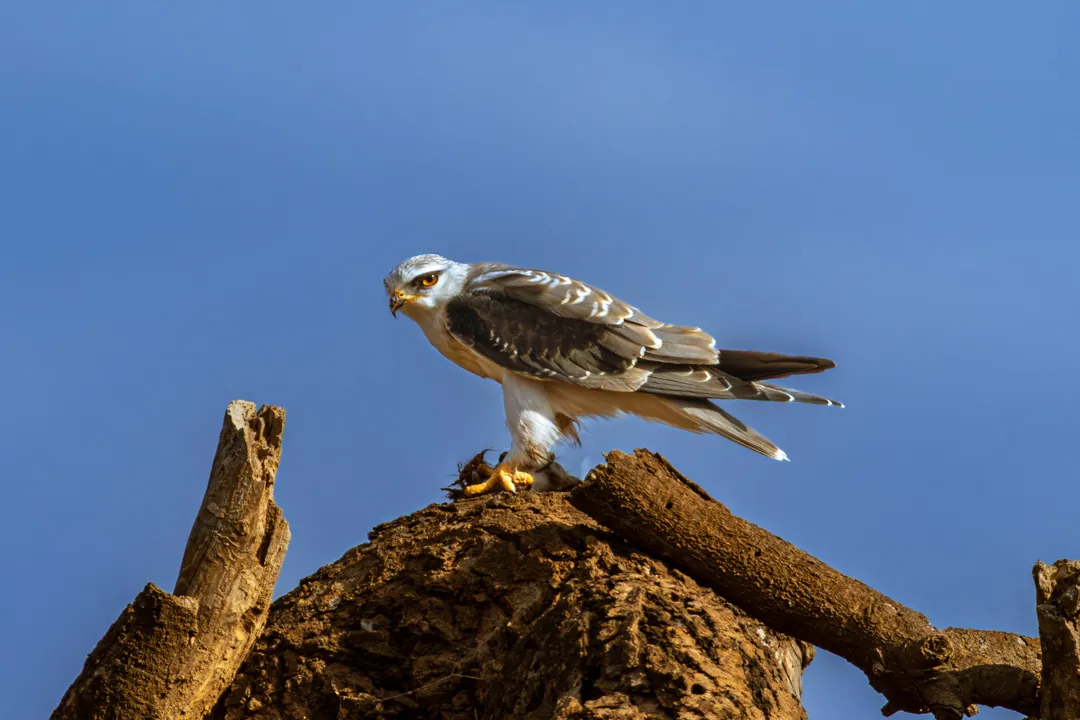
A black-winged kite eating a small mammal on a dead tree in Amboseli. Get this photo on Adobe Stock
Yellow-billed kite
We saw a yellow-billed kite in Ngorongoro Crater. It was flying close to a lake, so the photo was not as good as I expected. Kites are very agile in the air, and they are known for snatching food, sometimes even from people’s hands.
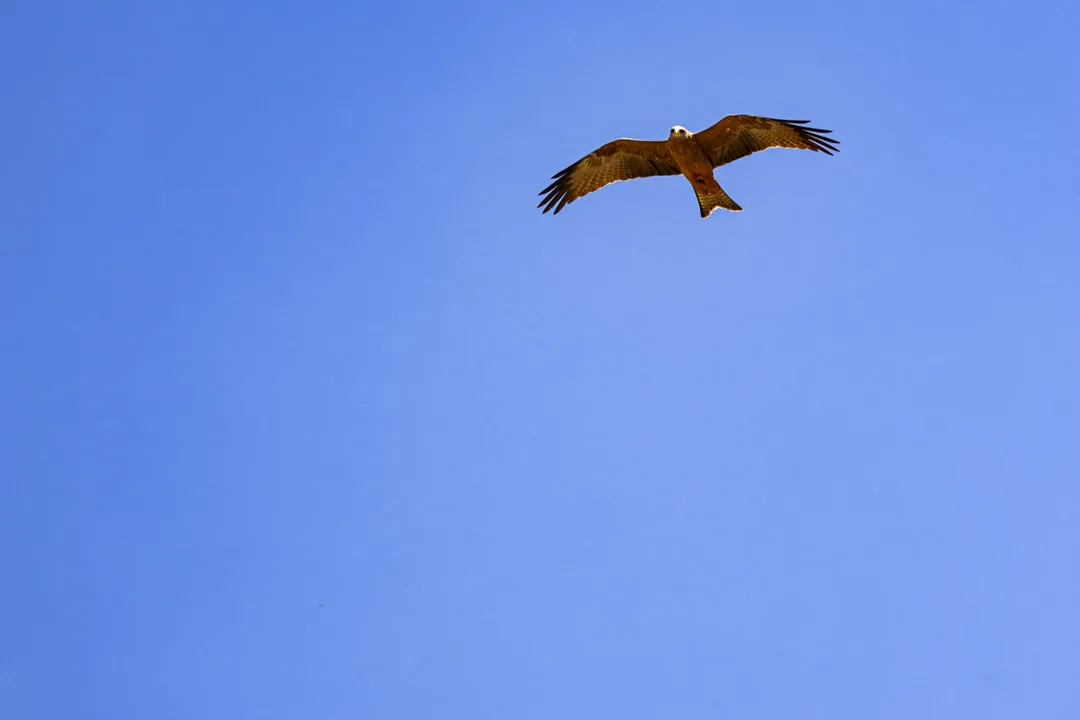
A yellow-billed kite soaring over Ngorongoro Crater. Get this photo on Adobe Stock
Vulture
We saw vultures in the Masai Mara, the Serengeti and Tarangire. They are easy to overlook when you are focused on the big animals, but they play a very important role by cleaning up the carcasses.
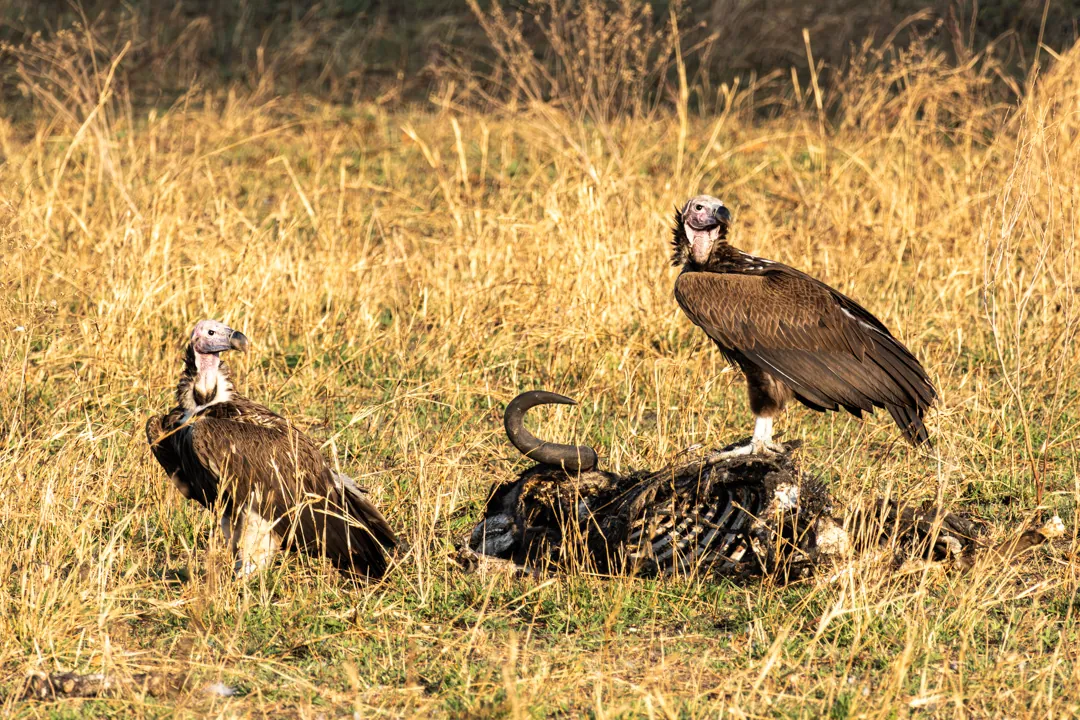
Two vultures feeding on a carcass in Tarangire. Get this photo on Adobe Stock
African scops owl
Early one morning in Tarangire, we saw a very small owl. It was the first owl of the entire trip, and it was a nice surprise because they are not easy to find during daytime game drives. But it is even hard to spot it in the photo.
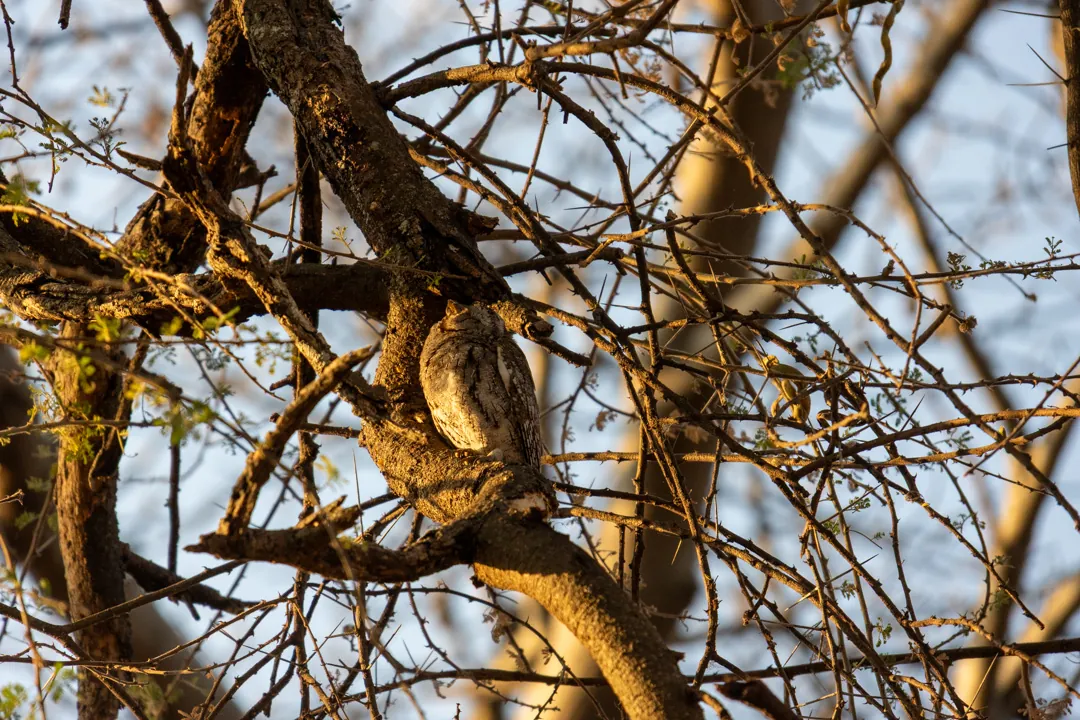
An African scops owl camouflaged in an acacia tree in Tarangire. See my collection on Adobe Stock
Water birds
Lake Nakuru, the lake in Ngorongoro Crater and the swamps of Amboseli were full of water birds, from thousands of flamingos to pelicans, herons and storks.
Flamingo
We saw thousands of flamingos in Lake Nakuru on our first day, and again in Ngorongoro Crater, where some of them were fighting in the lake. The water there was so salty that we could see salt forming around the edges. Their pink color comes from the pigments in the algae and tiny organisms they eat.
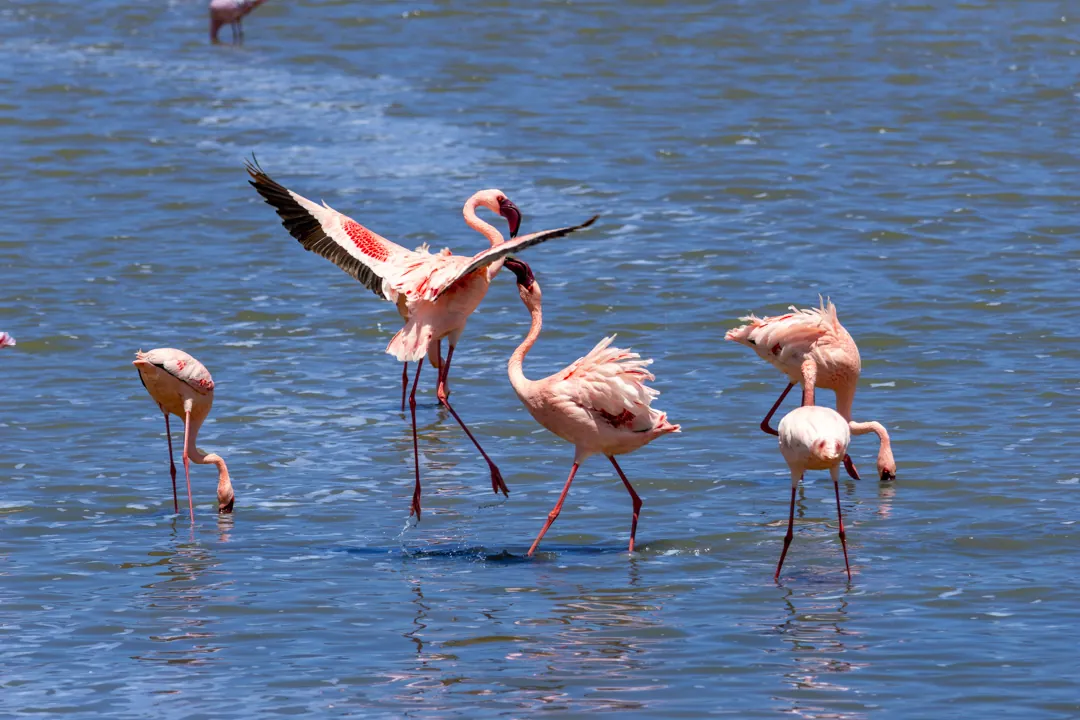
Lesser flamingos squabbling in Lake Magadi, inside Ngorongoro Crater. See my collection on Adobe Stock
Pelican
We saw pelicans in Lake Nakuru during our first game drive. It was really nice to see them fishing in a group and diving. I was even able to capture one with a fish in its mouth.
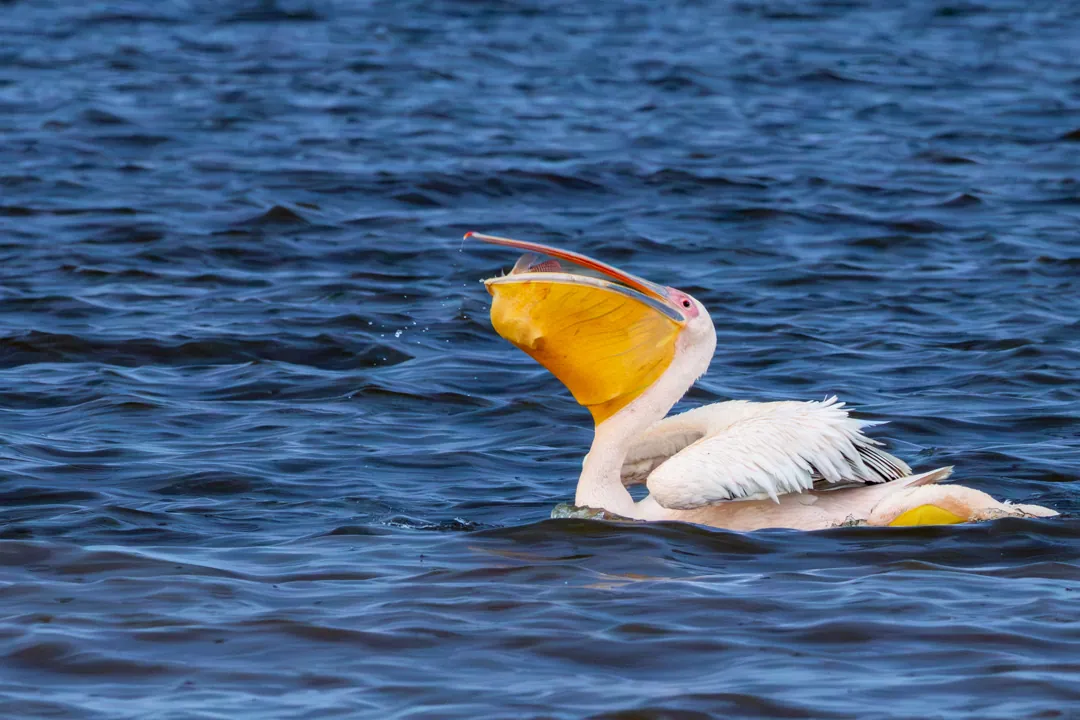
A great white pelican eating a fish in Lake Nakuru. Get this photo on Adobe Stock
White-breasted cormorant
Another one from Lake Nakuru. Cormorants dive to catch fish, and their feathers are not completely waterproof, so they often spread their wings to dry.
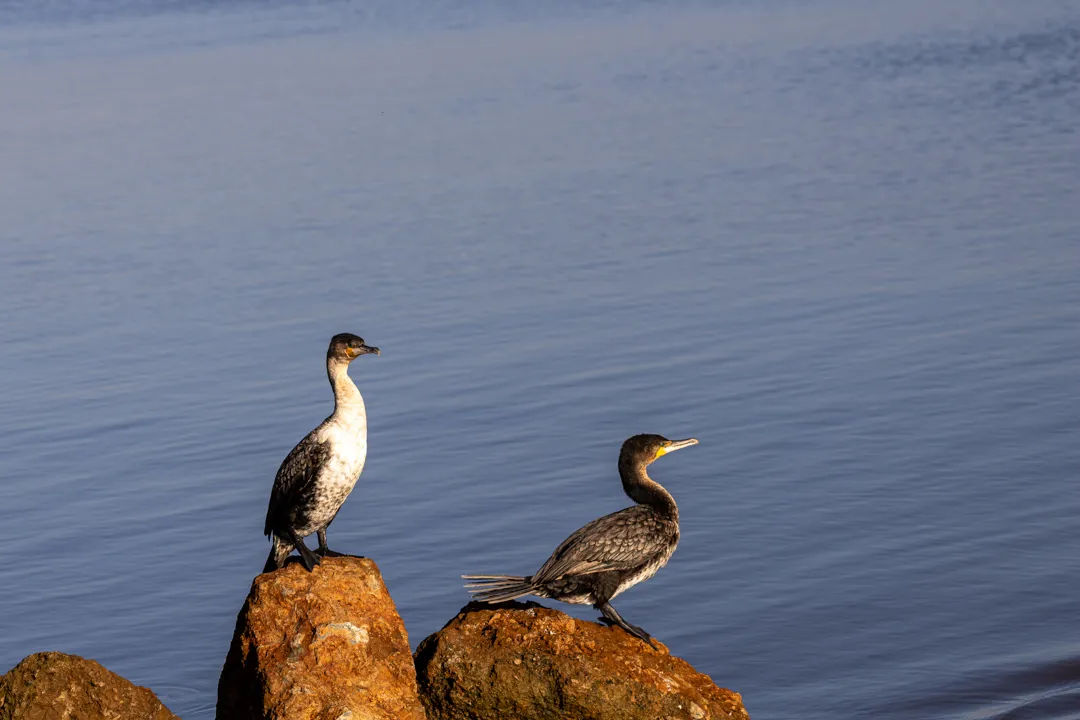
Two white-breasted cormorants resting on rocks in Lake Nakuru. Get this photo on Adobe Stock
Grey heron
We saw a grey heron in Lake Nakuru. In the photo, it is wading in the shallow water. They hunt by standing very still and then striking fast with their long bills to catch fish. It is the same species found in Europe and Asia.
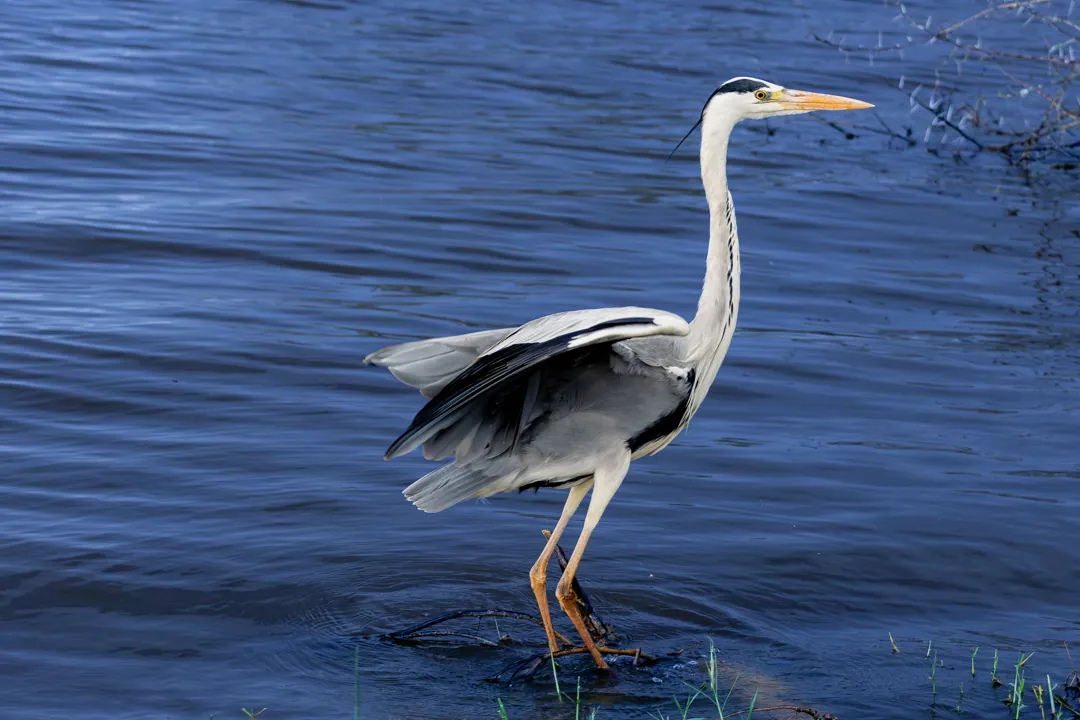
A grey heron wading in the shallow water of Lake Nakuru. Get this photo on Adobe Stock
Goliath heron
We saw a Goliath heron in Amboseli. Goliath and grey herons look similar, so I may have the name wrong here. It is the largest heron in the world and can stand up to 1.5 meters tall. In the photo, it is wading in shallow water hunting for fish.
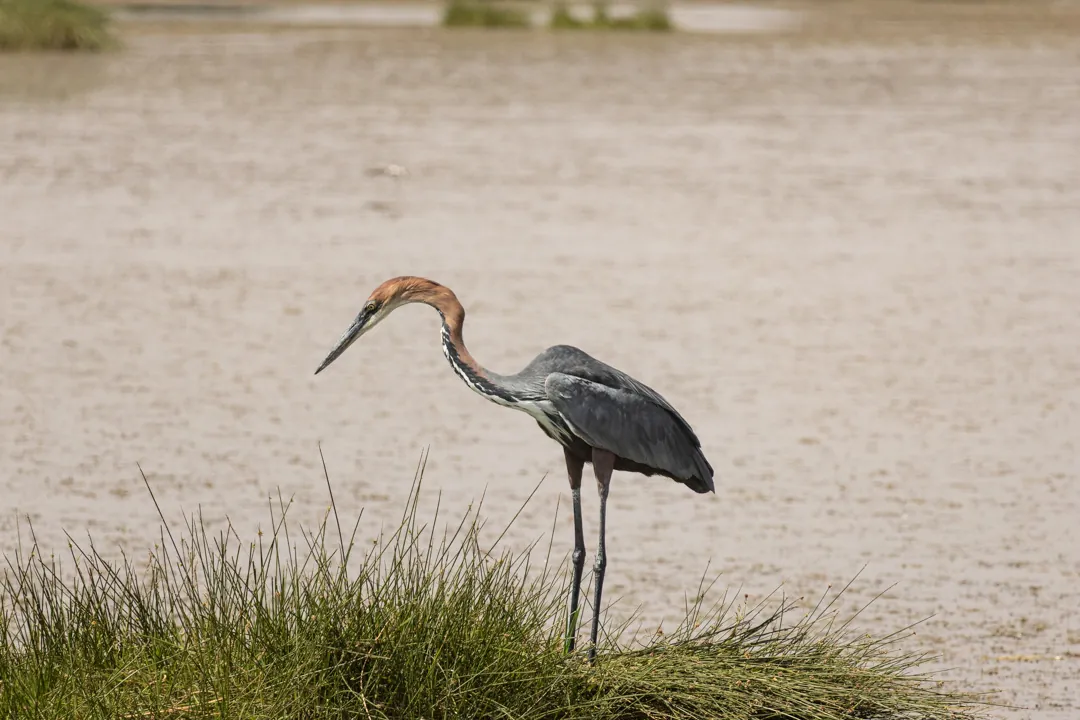
A Goliath heron hunting for fish in the shallow water of Amboseli. Get this photo on Adobe Stock
Cattle egret
We saw cattle egrets in Amboseli. They were usually in the swamps around the elephants. In the photo, one is riding on an elephant’s back. They follow large animals to catch the insects they disturb while walking and grazing.
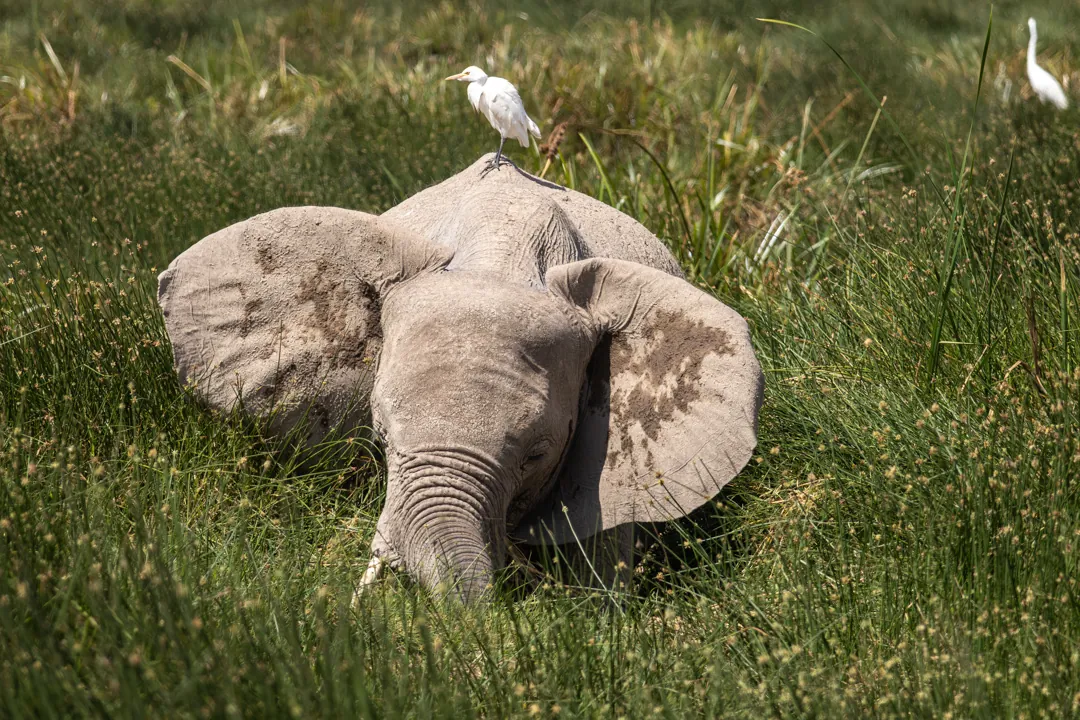
A cattle egret riding on an elephant’s back in Amboseli. Get this photo on Adobe Stock
African spoonbill
We saw spoonbills during our first game drive in Lake Nakuru. Their bills really look like spoons, and they sweep them through the shallow water to find food.
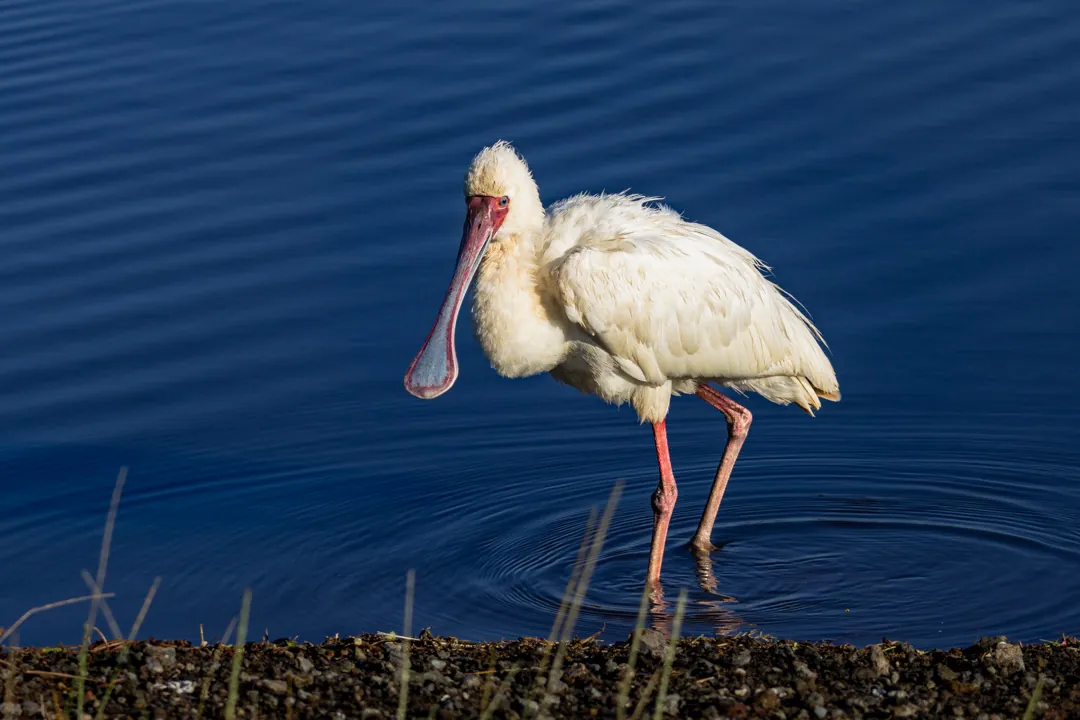
An African spoonbill wading in Lake Nakuru. Get this photo on Adobe Stock
Saddle-billed stork
We saw a saddle-billed stork in Amboseli. It is a very tall bird with black, white and red colors and a yellow saddle-like mark on its bill.
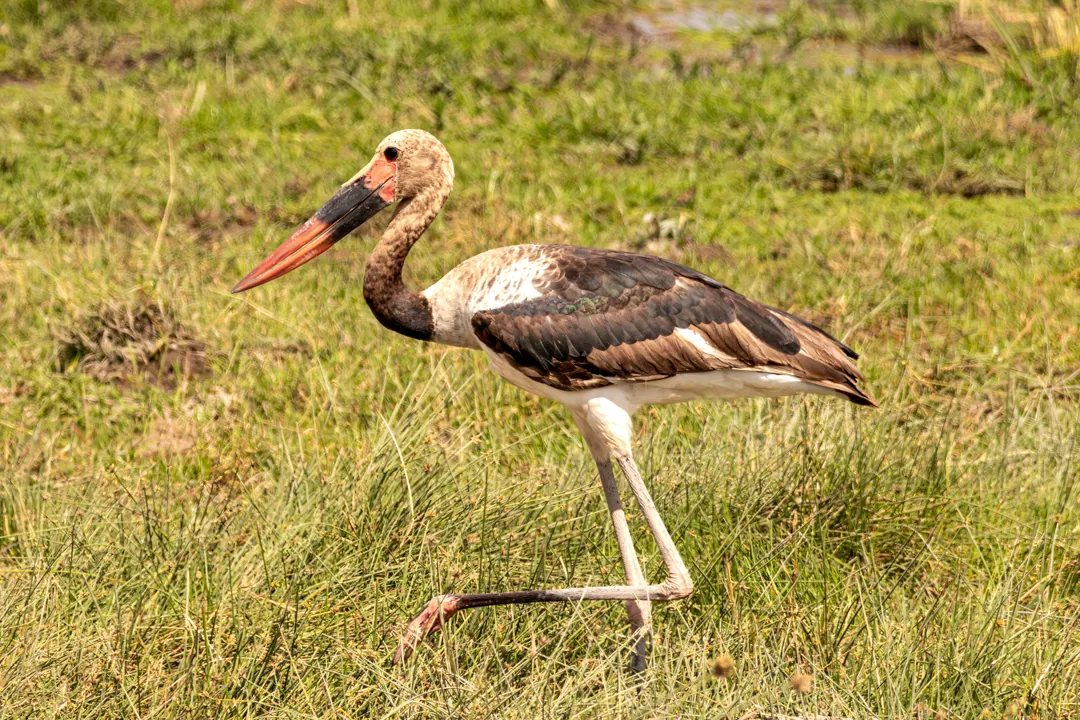
A juvenile saddle-billed stork foraging in the grass of Amboseli. See my collection on Adobe Stock
Yellow-billed stork
We saw yellow-billed storks in Lake Nakuru. In the photo, you can see its bright yellow bill and red face. They feed by walking with the bill open in the water and snapping it shut as soon as they touch a fish.
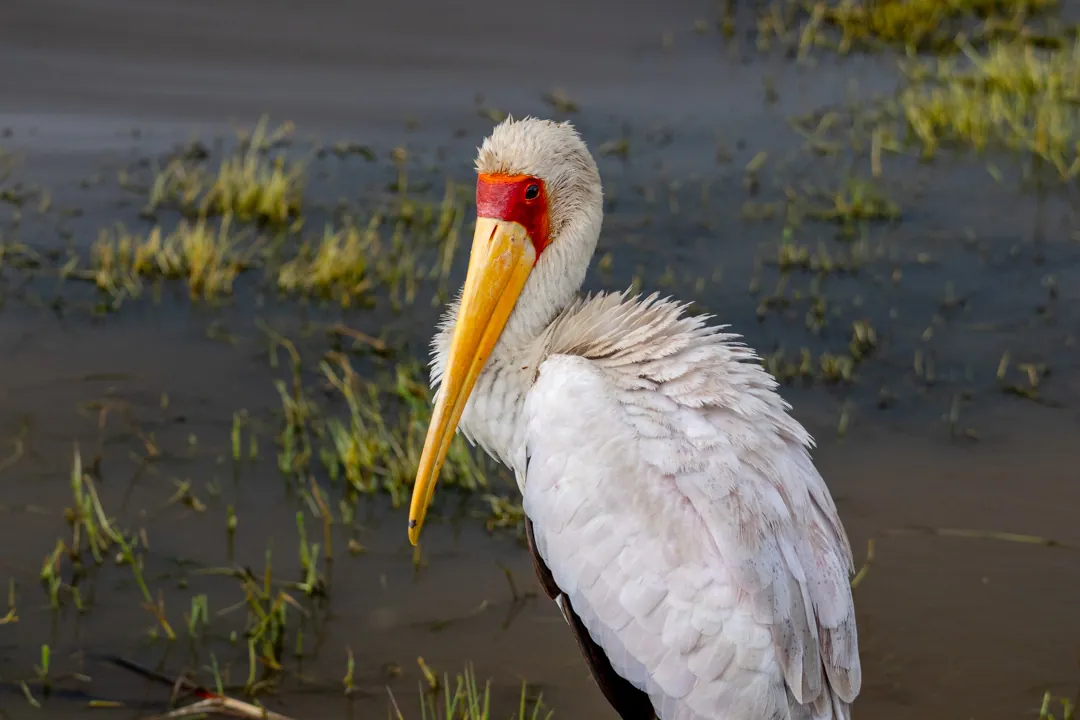
A yellow-billed stork with its yellow bill and red face in Lake Nakuru. Get this photo on Adobe Stock
Marabou stork
We saw marabou storks in Lake Nakuru and in other places. They are known as the ugly stork. In the photo, one is feeding among lesser flamingos. They are huge birds, with one of the largest wingspans of any land bird, and they often eat carrion together with vultures.
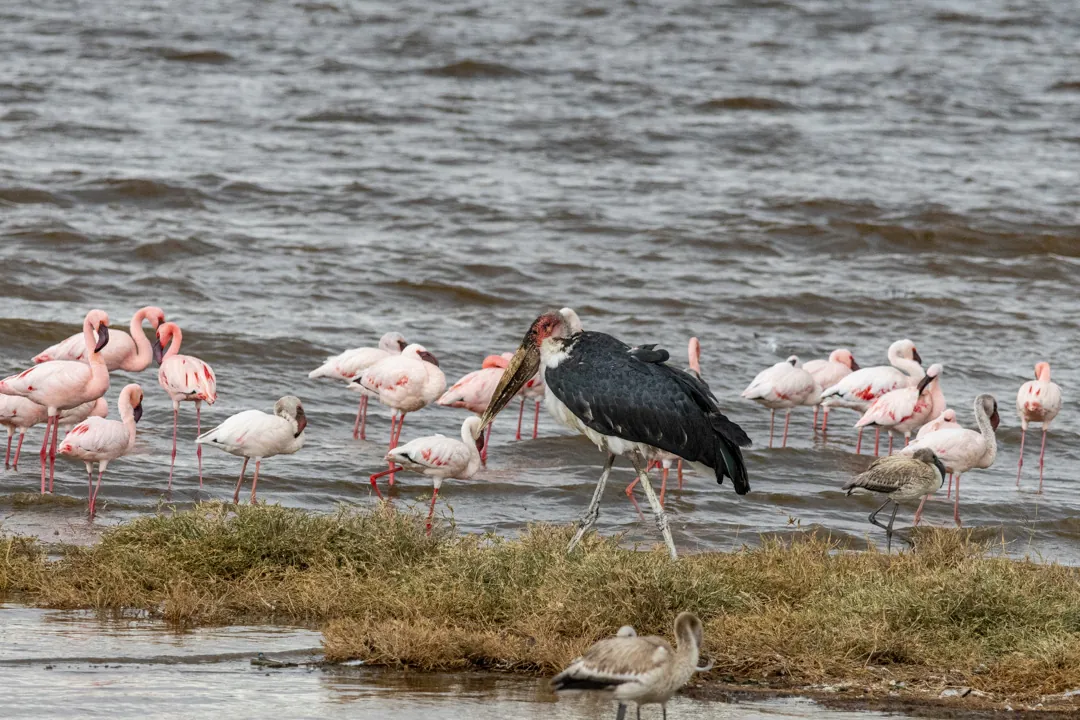
A marabou stork among lesser flamingos in Lake Nakuru. Get this photo on Adobe Stock
African jacana
We saw an African jacana in Amboseli. They are also called Jesus birds. In the photo, you can see its big feet. Their very long toes spread their weight, so they can walk on floating plants, and it looks like they are walking on water.
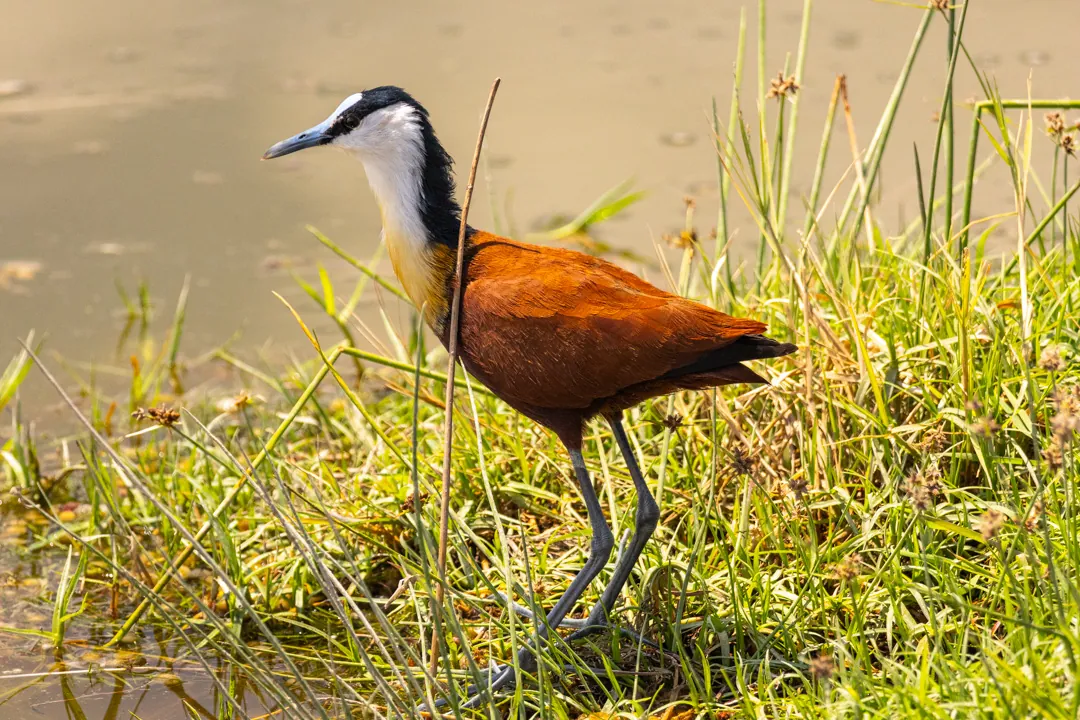
An African jacana walking by the water on its big feet, Amboseli. Get this photo on Adobe Stock
Blacksmith lapwing
We saw blacksmith lapwings in the Masai Mara and Amboseli. It was nice to see a different lapwing from the ones we have in Brazil. The name comes from its call, which sounds like a hammer hitting an anvil.
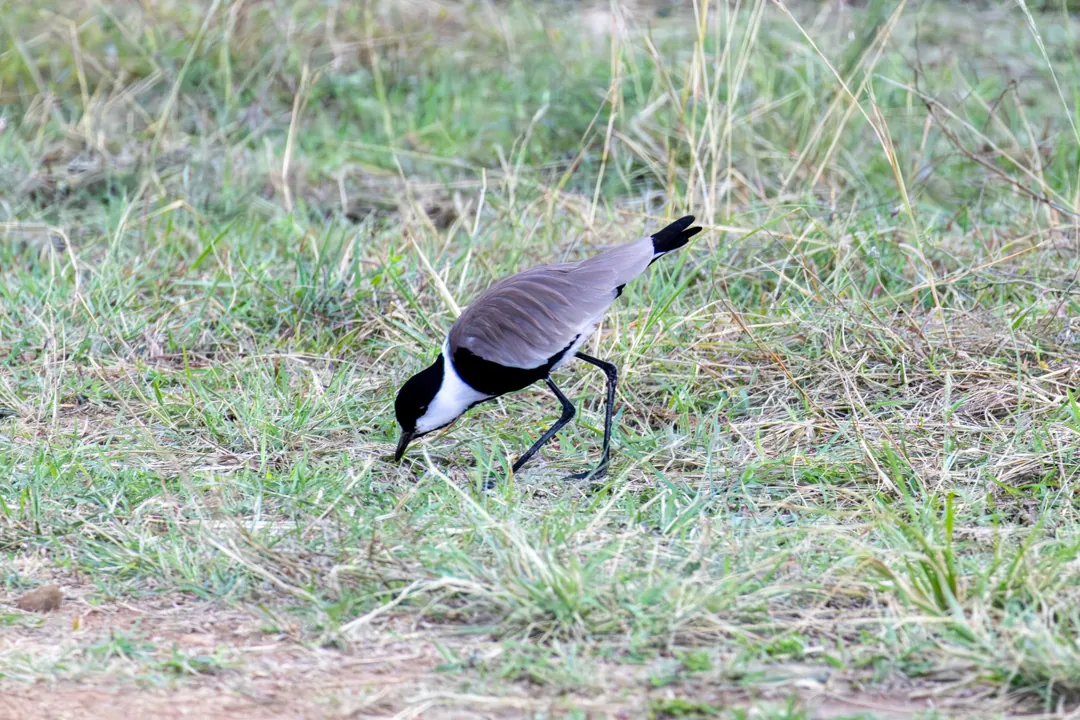
A blacksmith lapwing foraging in the grass of the Masai Mara. Get this photo on Adobe Stock
Red-knobbed coot
We saw red-knobbed coots in Amboseli. In the breeding season, they have two small red knobs on top of the white shield on their heads, which is where the name comes from.
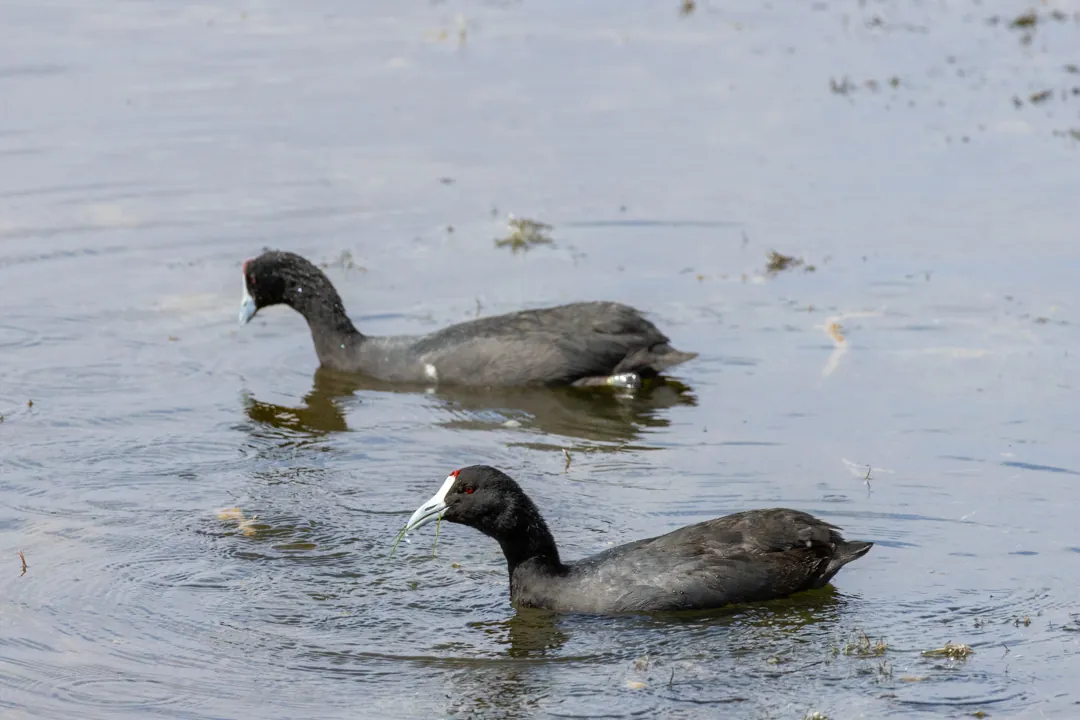
Two red-knobbed coots swimming in Amboseli, one carrying nesting material. Get this photo on Adobe Stock
Egyptian goose
We saw an Egyptian goose in the Serengeti. In the photo, one of them is spreading its wings. Despite the name, they are not true geese, they are closer to shelducks. They were also considered sacred in ancient Egypt.
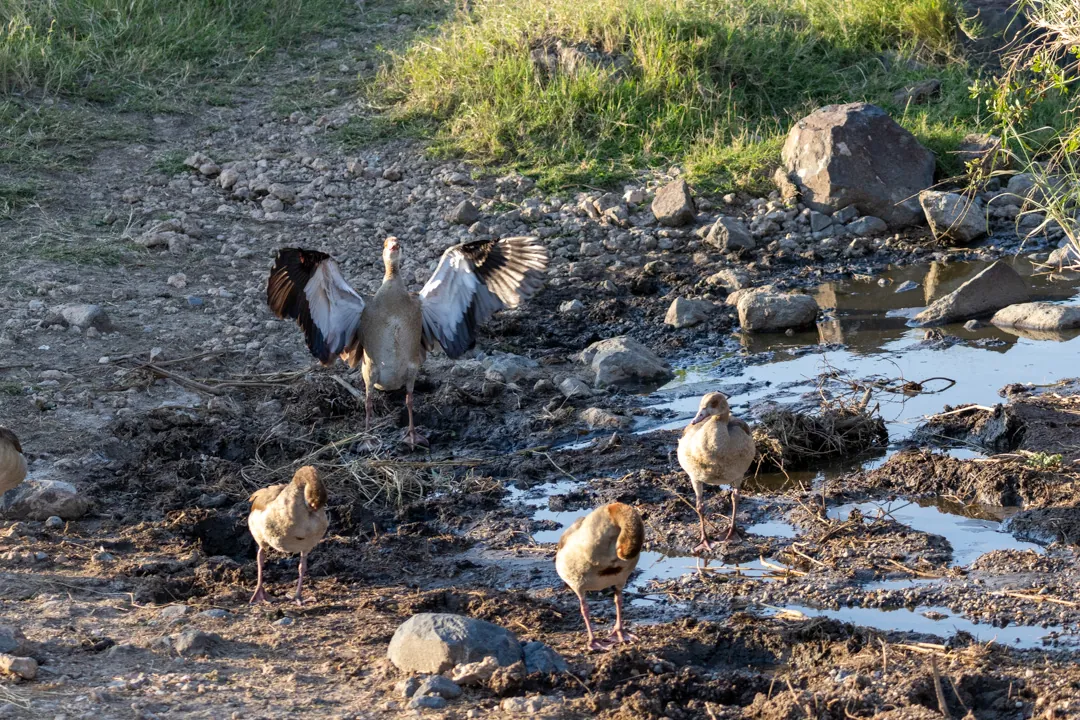
Egyptian geese on muddy ground in the Serengeti, one spreading its wings. See my collection on Adobe Stock
Other birds
The rest of the birds, from the ostrich, the largest bird in the world, to small colorful ones like starlings, weavers and the lilac-breasted roller.
Ostrich
We saw ostriches in the Masai Mara and Amboseli. We also tried ostrich meat at The Carnivore Restaurant in Nairobi. The photo is from Amboseli, where a pair was taking a dust bath. The black one is the male and the brown one is the female. Ostriches are the largest birds in the world, and they can run at around 70 km/h.
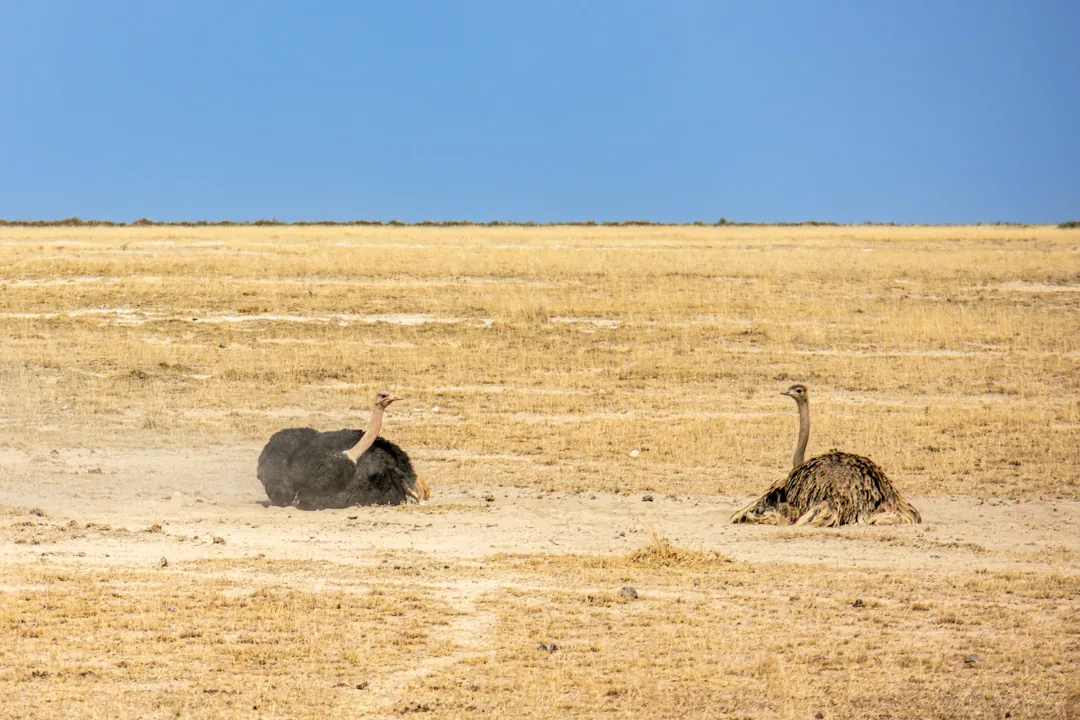
A pair of ostriches taking a dust bath in Amboseli. See my collection on Adobe Stock
Kori bustard
We saw a kori bustard in Ngorongoro Crater. It is one of the heaviest flying birds in the world. They spend most of their time walking slowly through the grass looking for food, like in the photo.
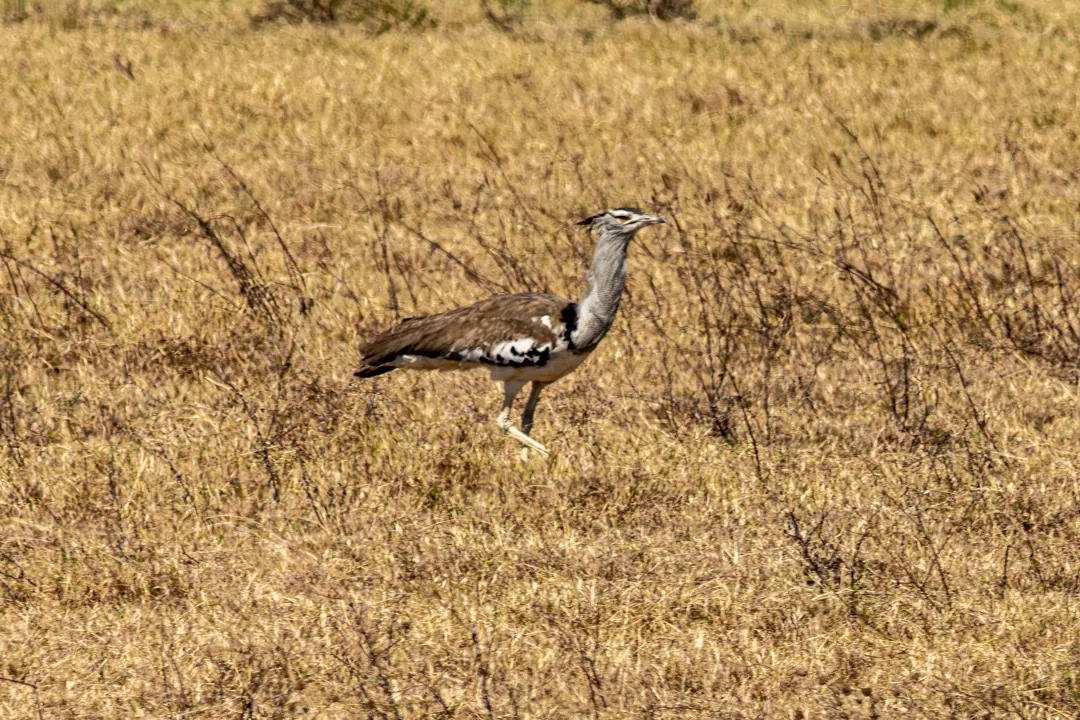
A kori bustard walking in the dry grass of Ngorongoro Crater. Get this photo on Adobe Stock
Grey crowned crane
We saw our first crowned crane in Ngorongoro Crater. It was a new bird for us, which made the sighting even nicer. The photo below is from Amboseli.
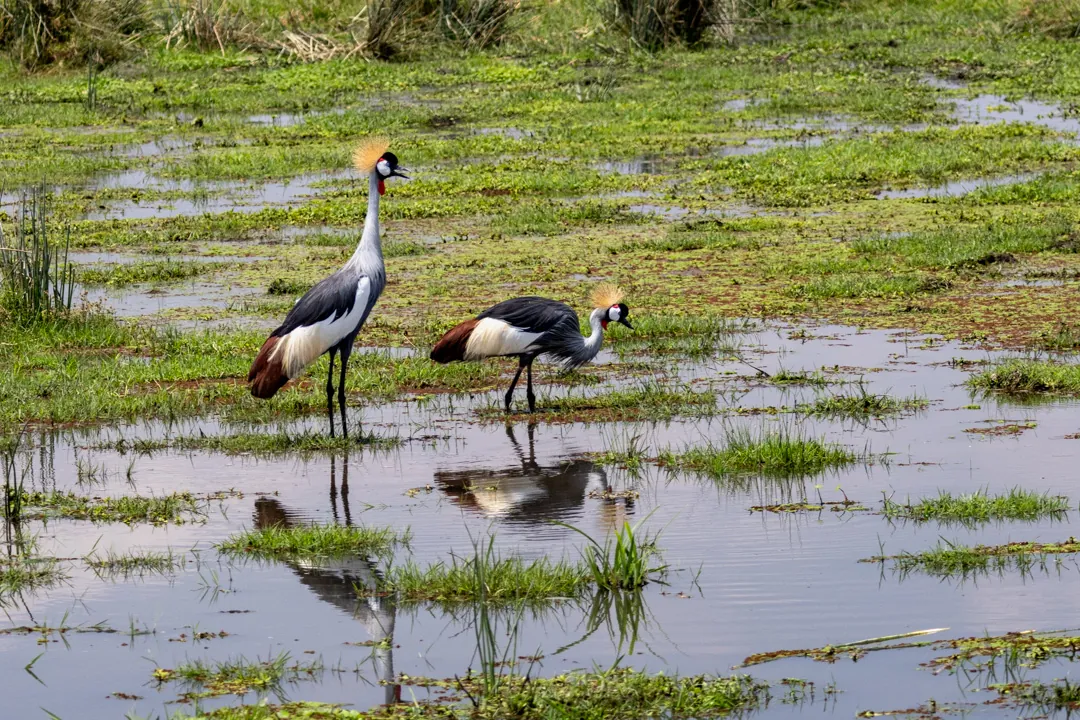
Two grey crowned cranes foraging in the marshes of Amboseli. Get this photo on Adobe Stock
Southern ground hornbill
We saw this one in the Masai Mara. It is a large bird that spends most of its time walking on the ground looking for food.
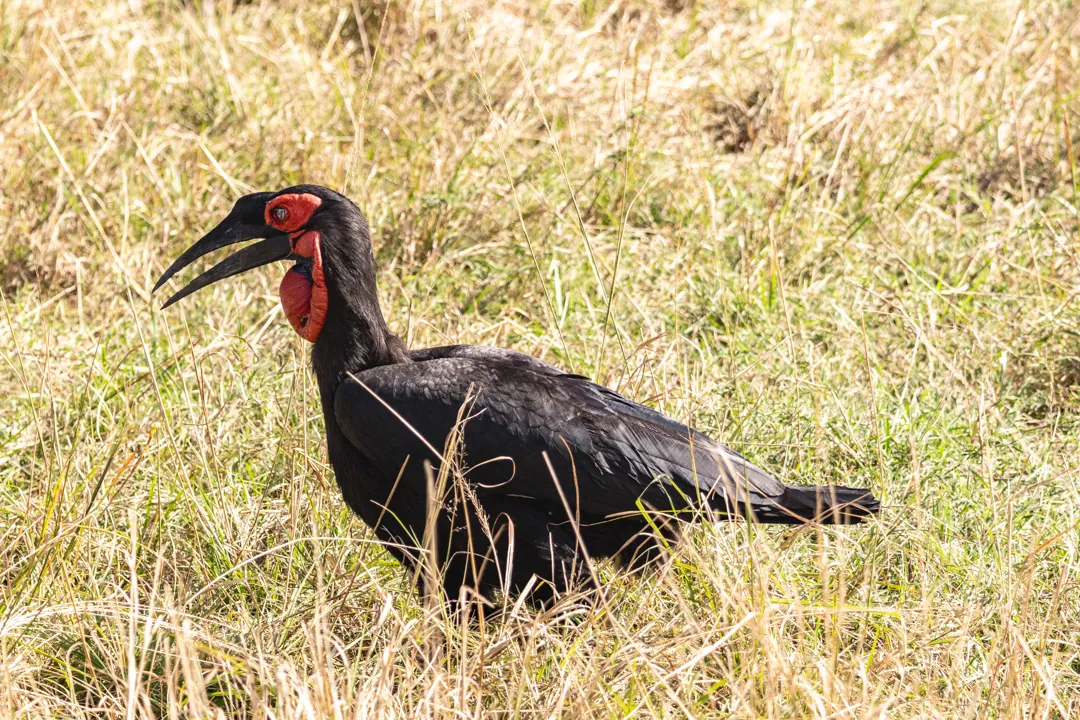
A southern ground hornbill walking in the dry grass of the Masai Mara. Get this photo on Adobe Stock
Red-billed hornbill
In Tarangire, we saw red-billed hornbills from very close. We called them Zazu, after the bird from The Lion King. It was nice to see the real version of a character we already knew.
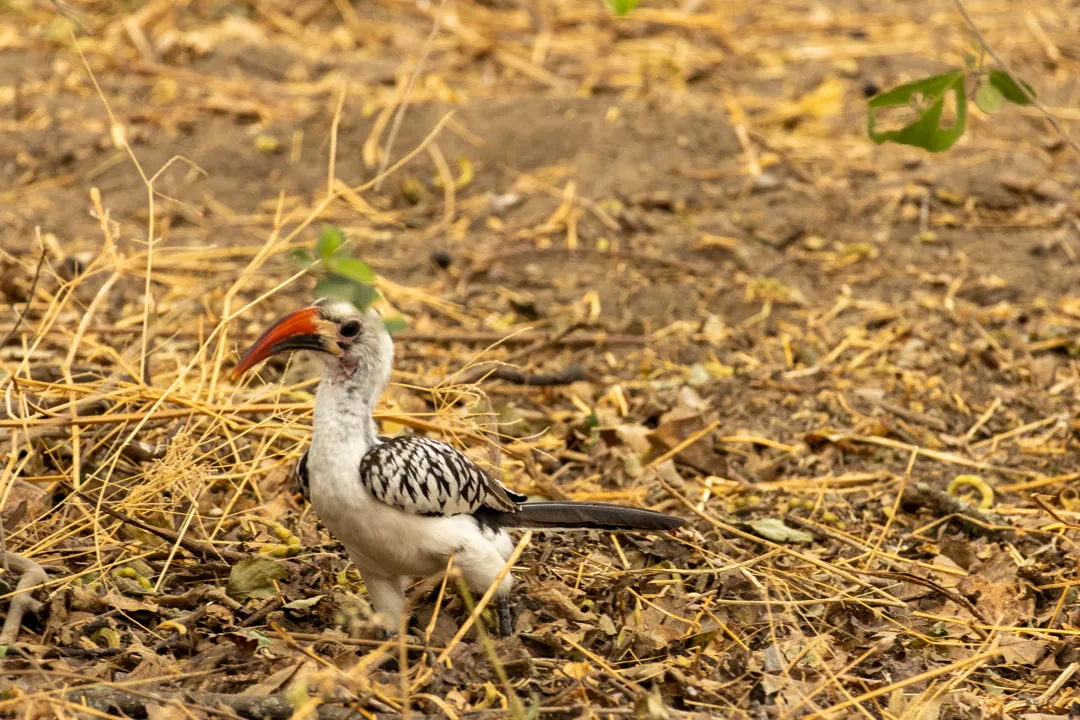
A red-billed hornbill foraging on the ground in Tarangire. See my collection on Adobe Stock
Von der Decken’s hornbill
We saw Von der Decken’s hornbills in Tarangire. The one in the photo is a male, which has a red and ivory bill, while the female has a black bill. They are related to the red-billed hornbills, the Zazus we saw in the same park.
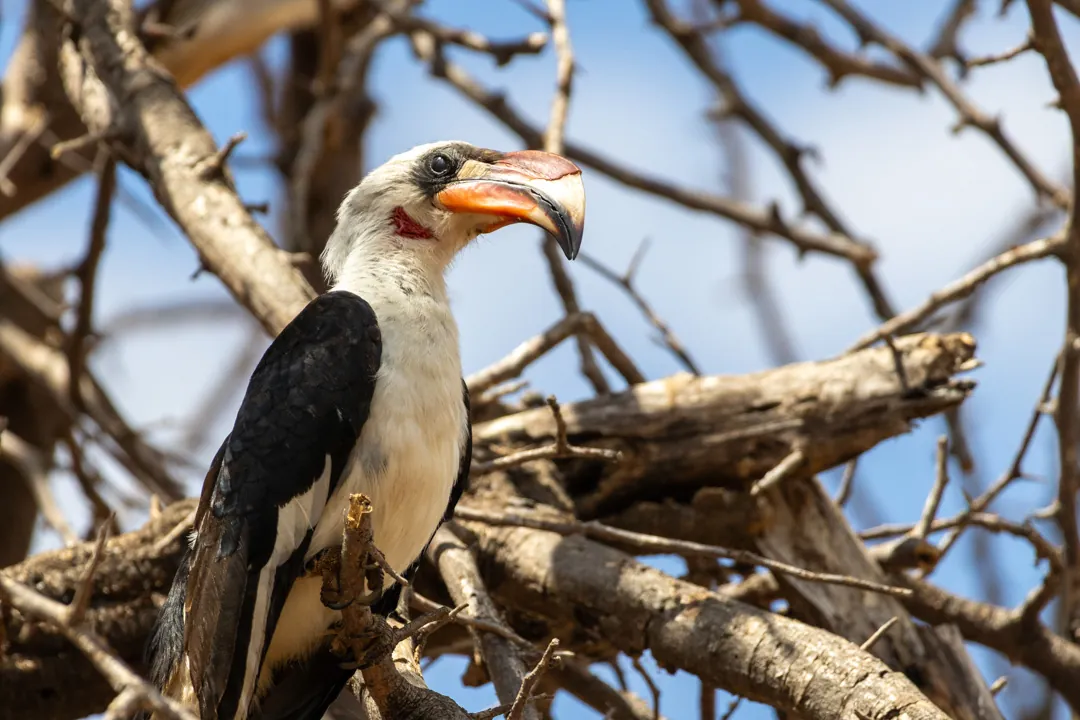
A male Von der Decken’s hornbill perched on a branch in Tarangire. Get this photo on Adobe Stock
Lilac-breasted roller
We saw lilac-breasted rollers in the Masai Mara and the Serengeti. With all those colors, it is one of the most beautiful birds of the savanna, and it is often called Kenya’s national bird.
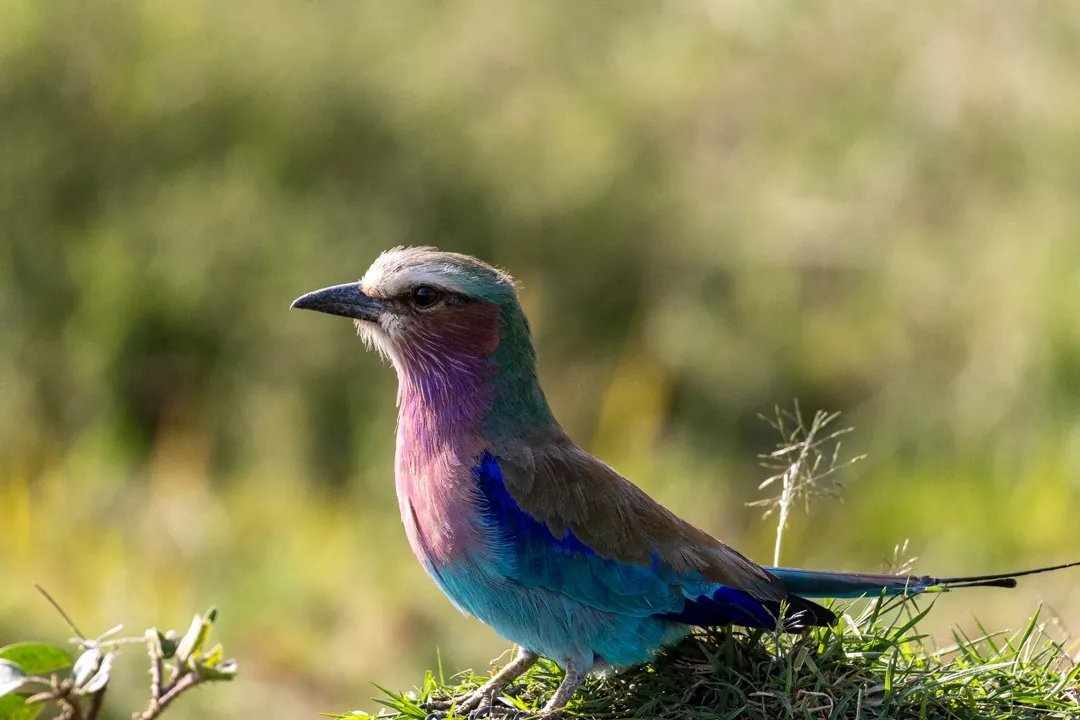
A lilac-breasted roller perched in the Masai Mara. Get this photo on Adobe Stock
Red-and-yellow barbet
We saw a red-and-yellow barbet in Tarangire. In the photo, it is perched on a termite mound. They dig their nests into termite mounds, which is why they are often seen around them.
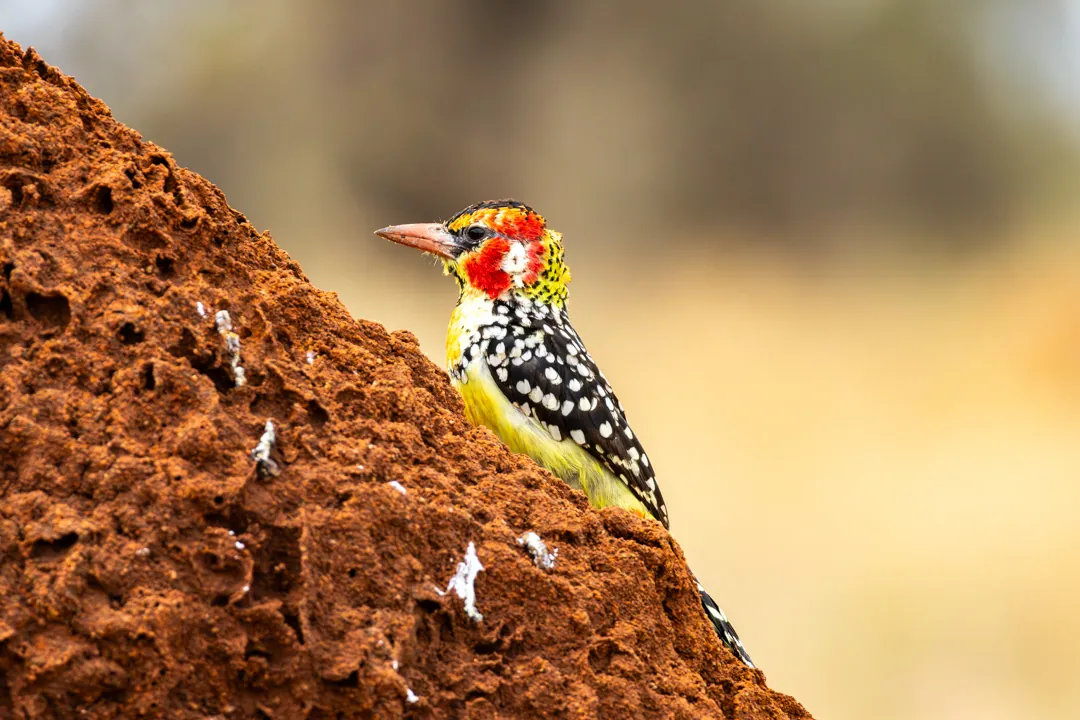
A red-and-yellow barbet perched on a termite mound in Tarangire. Get this photo on Adobe Stock
Superb starling
We saw superb starlings in Amboseli. In the photo, it is standing on a rock, showing its shiny blue and green feathers and orange belly. They are very common in East Africa and often seen around lodges and camps.
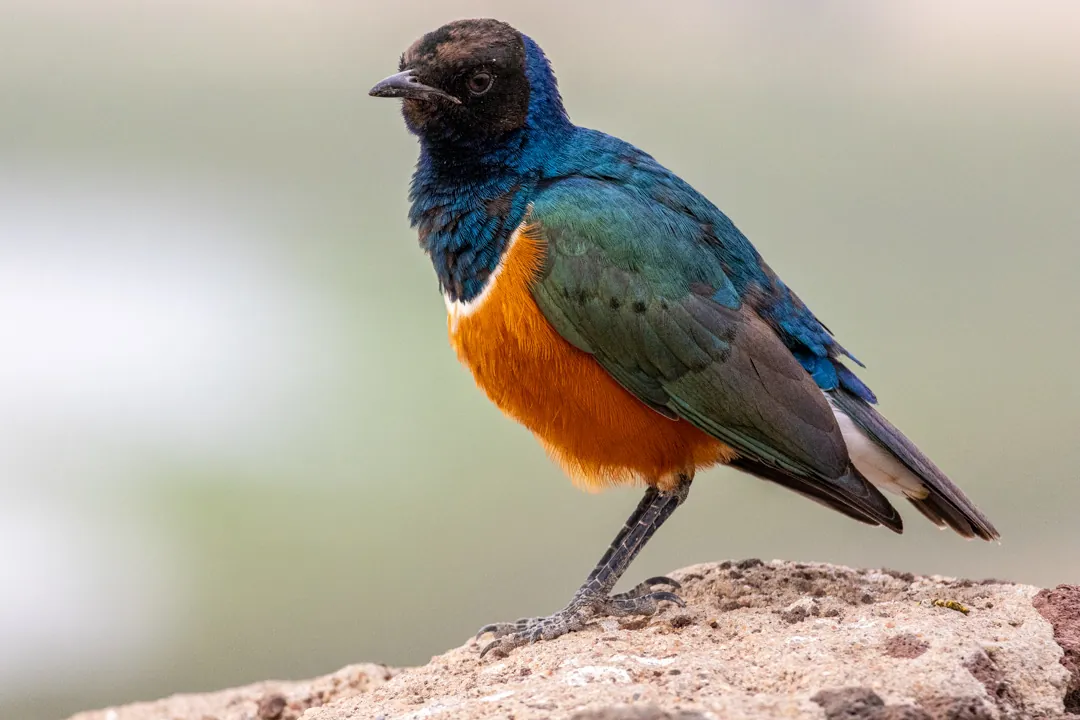
A superb starling standing on a rock in Amboseli. Get this photo on Adobe Stock
Ashy starling
We saw an ashy starling in Tarangire. Unlike the superb starling, it is plain grey-brown, and it is only found in Tanzania.
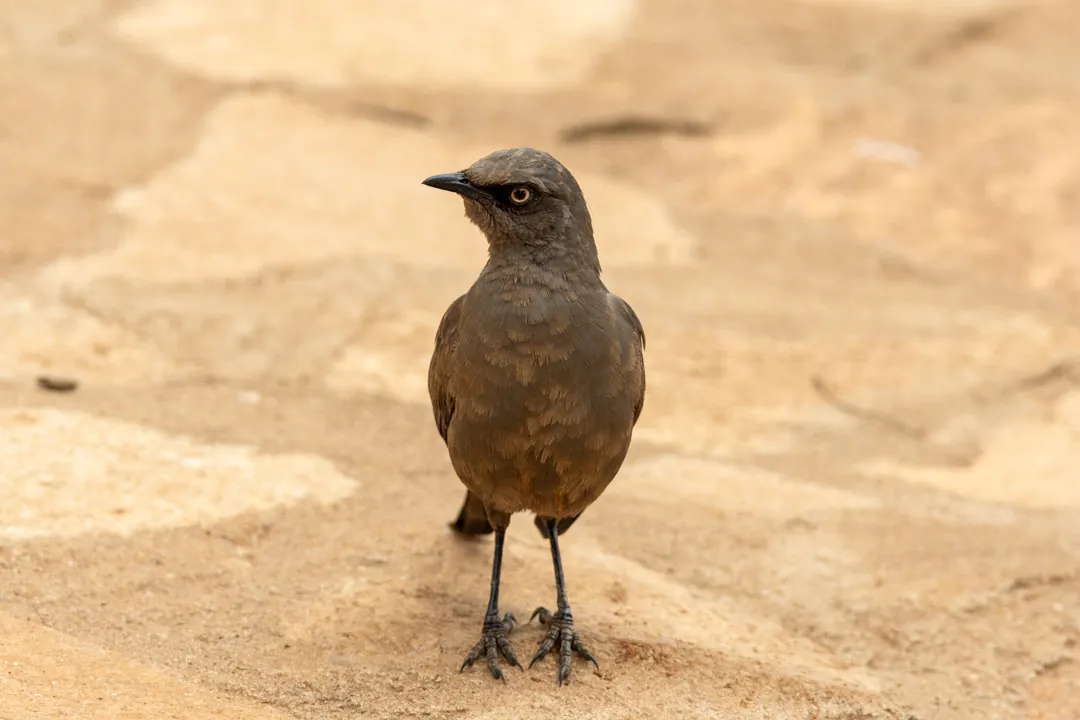
An ashy starling on the sandy ground of Tarangire. Get this photo on Adobe Stock
Taveta golden weaver
We saw Taveta golden weavers in Amboseli. In the photo, there are four of them together. Weavers build their nests by weaving grass, and this species is only found in a small area along the border between Kenya and Tanzania.
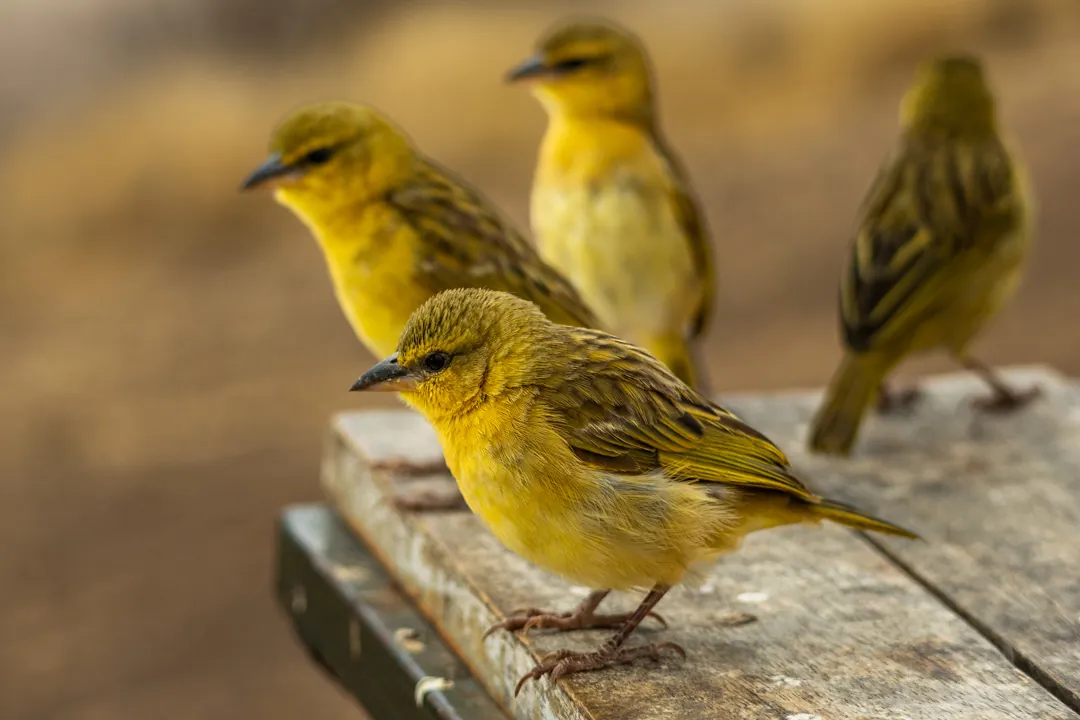
Four Taveta golden weavers perched together in Amboseli. Get this photo on Adobe Stock
Pied crow
We saw a pied crow in Tarangire. It is different from the crows we have here in British Columbia. In the photo, it is calling from a metal railing. It is easy to recognize by its white chest and the white collar on the back of its neck.
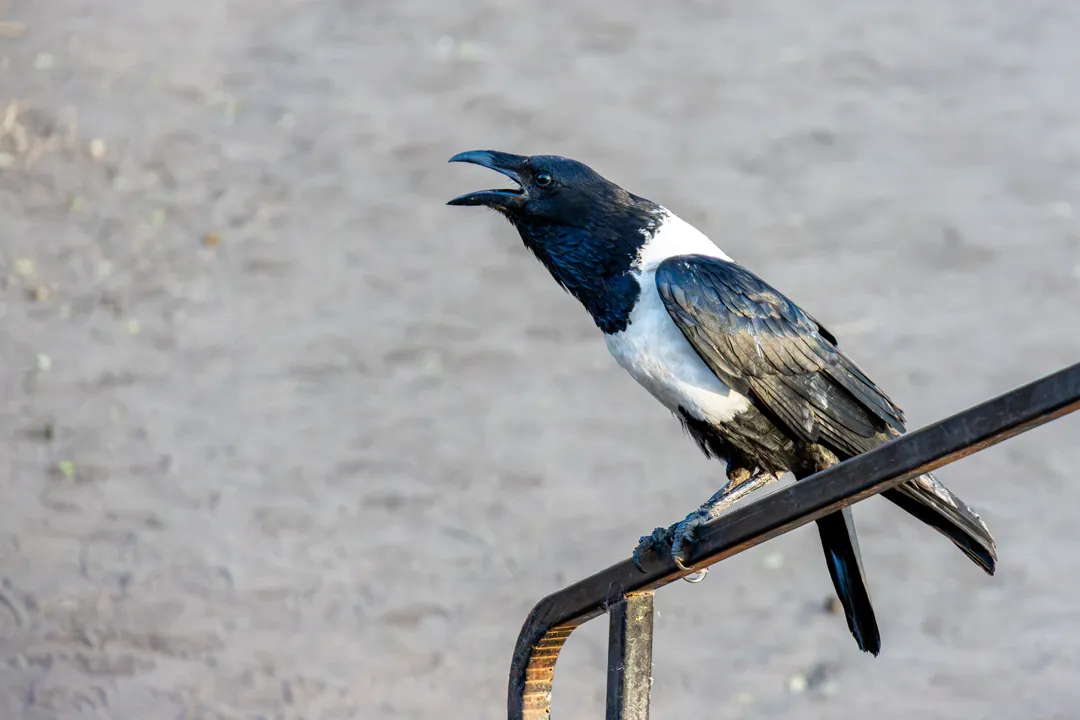
A pied crow calling from a metal railing in Tarangire. Get this photo on Adobe Stock
If you’d like to see more photos from this trip, they are available in my Africa collection on Adobe Stock. I also wrote about why I started selling my photos on stock websites.
If you enjoyed this one, I also keep a gallery of the wildlife of British Columbia.
Cheers.